When people ask, “What is Vietnamese salted coffee?” the honest first answer surprises most of them: it doesn’t taste salty. Cà phê muối is coffee, condensed milk, and a thin layer of salted cream, and the salt’s job isn’t to season the drink. It’s to cancel out bitterness and push the sweetness forward. The result tastes rounder and smoother than a regular Vietnamese iced coffee, not saltier.
It’s a relatively young drink by Vietnamese standards, invented in the 2010s, and it has since spread from one city’s cafés to menus across the country.
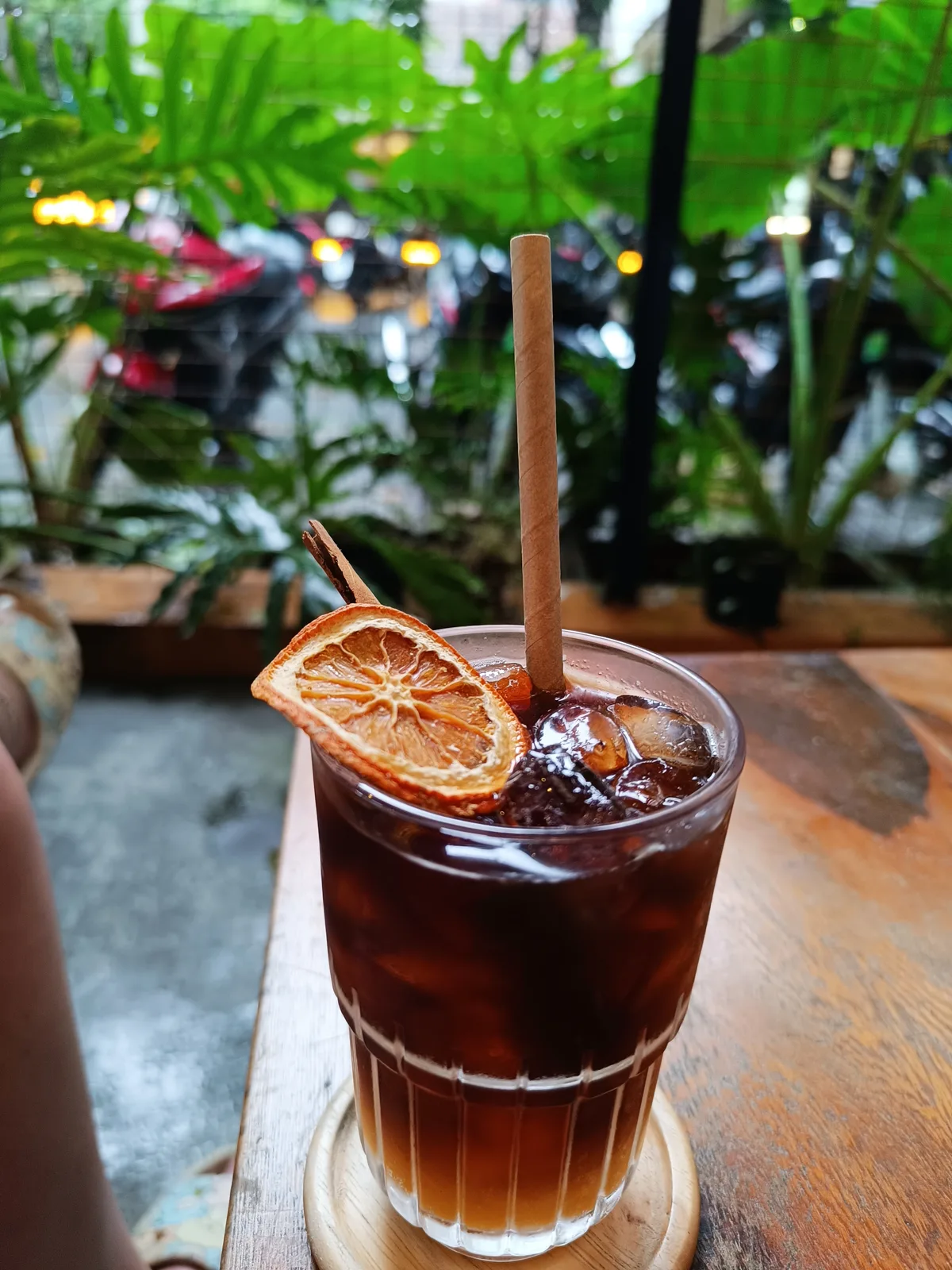
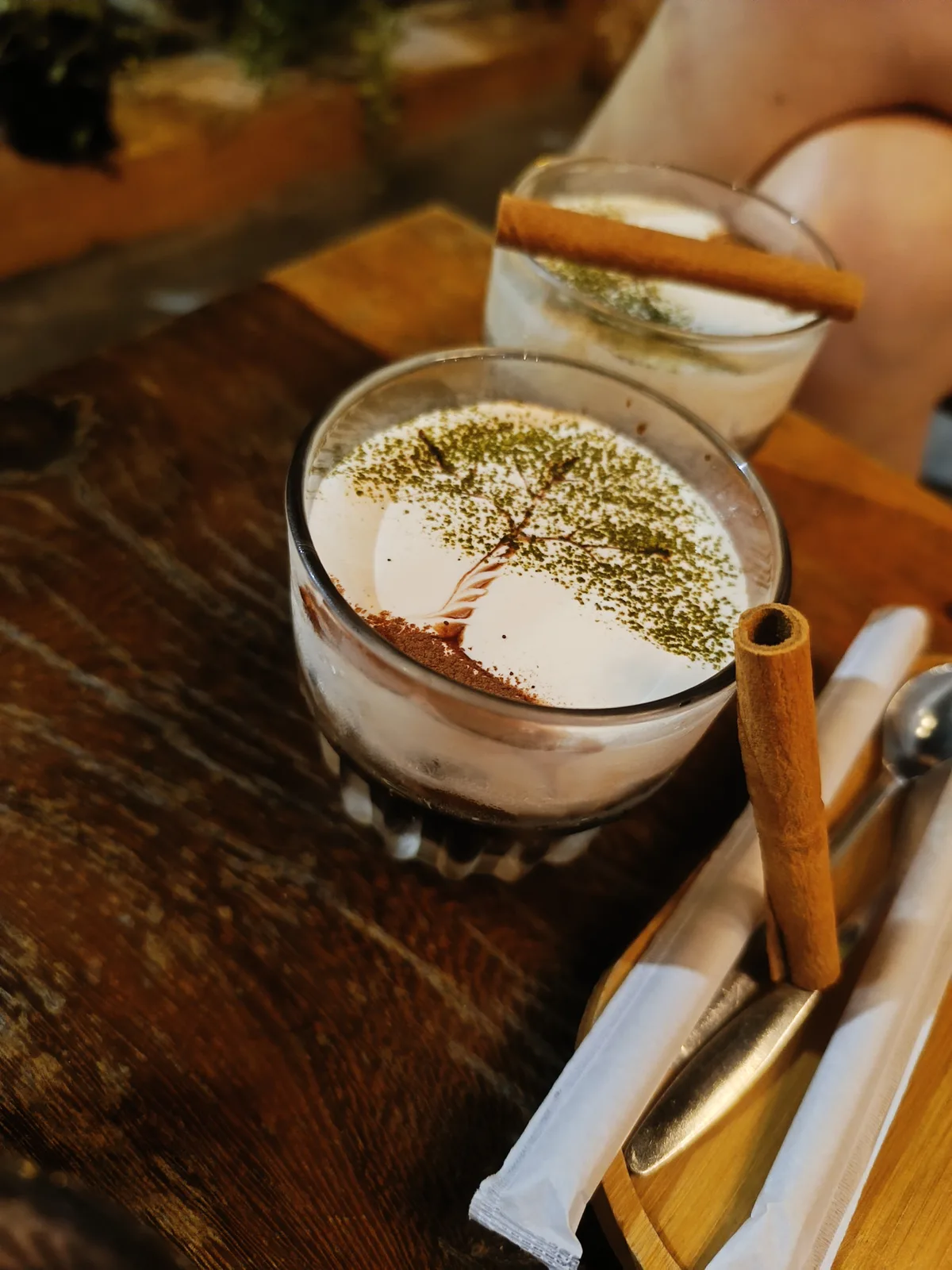
[Hero image: layered coffee with cream and cinnamon stick on a wooden table, Da Nang]
Caption: Cà phê muối served with a cinnamon garnish in Vietnam, the salted cream sits on top, the coffee underneath.
Where does salted coffee come from?
Cà phê muối was invented in Huế, Vietnam’s former imperial capital, and its origin is recent enough that the people involved are still around to tell it.
The most commonly cited account credits Hồ Thị Thanh Hương and Trần Nguyễn Bửu Phong, a husband-and-wife café owner pair in Huế, who created the drink around 2010. For years they kept the exact formula private while the drink built a local following. A separate account credits a barista named Chu Long with independently developing a similar salt-and-coffee combination around the same period.
Whichever version is more accurate, the pattern afterward is clear: cà phê muối stayed a Huế specialty through most of the 2010s, then spread to cafés across central Vietnam, and by the end of the decade had reached Hanoi, Ho Chi Minh City, and beyond. It’s now common enough that spotting it on a café menu outside Vietnam, including in diaspora coffee shops, is no longer unusual.
How is Vietnamese salted coffee made?
The construction is simple, but the order matters:
- Condensed milk goes into the glass first, at the bottom
- Robusta coffee, brewed through a traditional aluminium phin filter, drips slowly on top
- A thin layer of salted whipped cream is spooned or piped on top of that
- Ice, if served cold, which is how it’s most commonly ordered
The drinker stirs it together before drinking, mixing the three layers rather than sipping them separately, though the layered presentation is part of the appeal and usually held for a photo before it’s stirred.
Why robusta, not arabica
Most Vietnamese coffee, including cà phê muối, is made with robusta beans rather than the arabica more common in Europe and North America. Robusta has roughly double to triple the caffeine content of arabica and a noticeably more bitter, heavier profile on its own, which is exactly why the Vietnamese tradition of pairing coffee with condensed milk developed in the first place, well before salted coffee existed. Salt coffee extends that same logic one step further.
Why does salt make coffee taste less bitter?
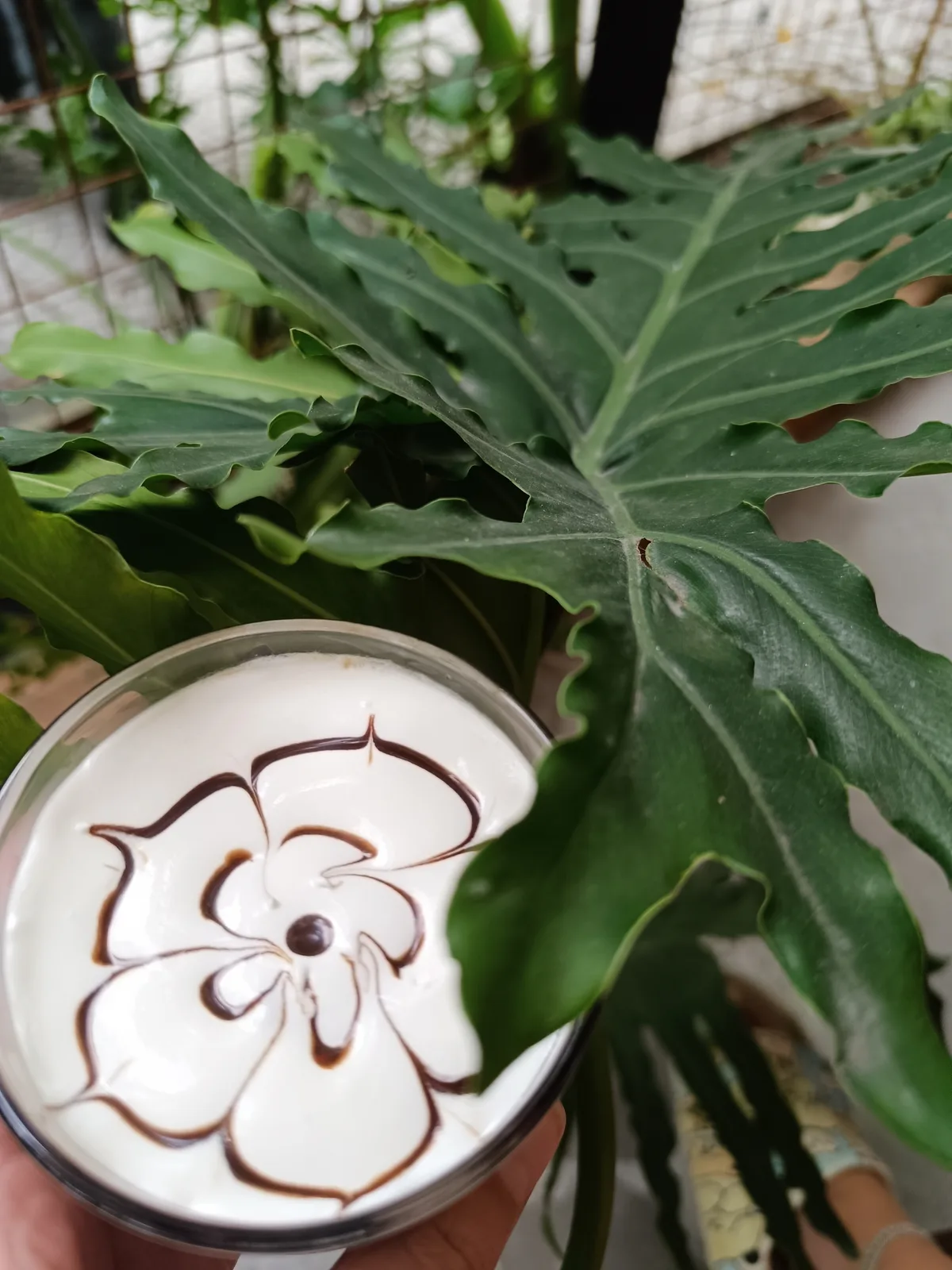
This is the part people usually want explained, and the mechanism is genuinely established food chemistry, not a myth.
Sodium ions suppress the perception of bitterness at a receptor level. The same reason a pinch of salt is sometimes added to chocolate or caramel. In cà phê muối, the thin salted cream layer sits on top and is sipped through along with the coffee and condensed milk underneath, so the bitterness of the strong robusta brew is muted while the sweetness from the condensed milk becomes more noticeable. The drink doesn’t taste like salt. It tastes like a smoother, less bitter, slightly more complex version of standard Vietnamese iced coffee.
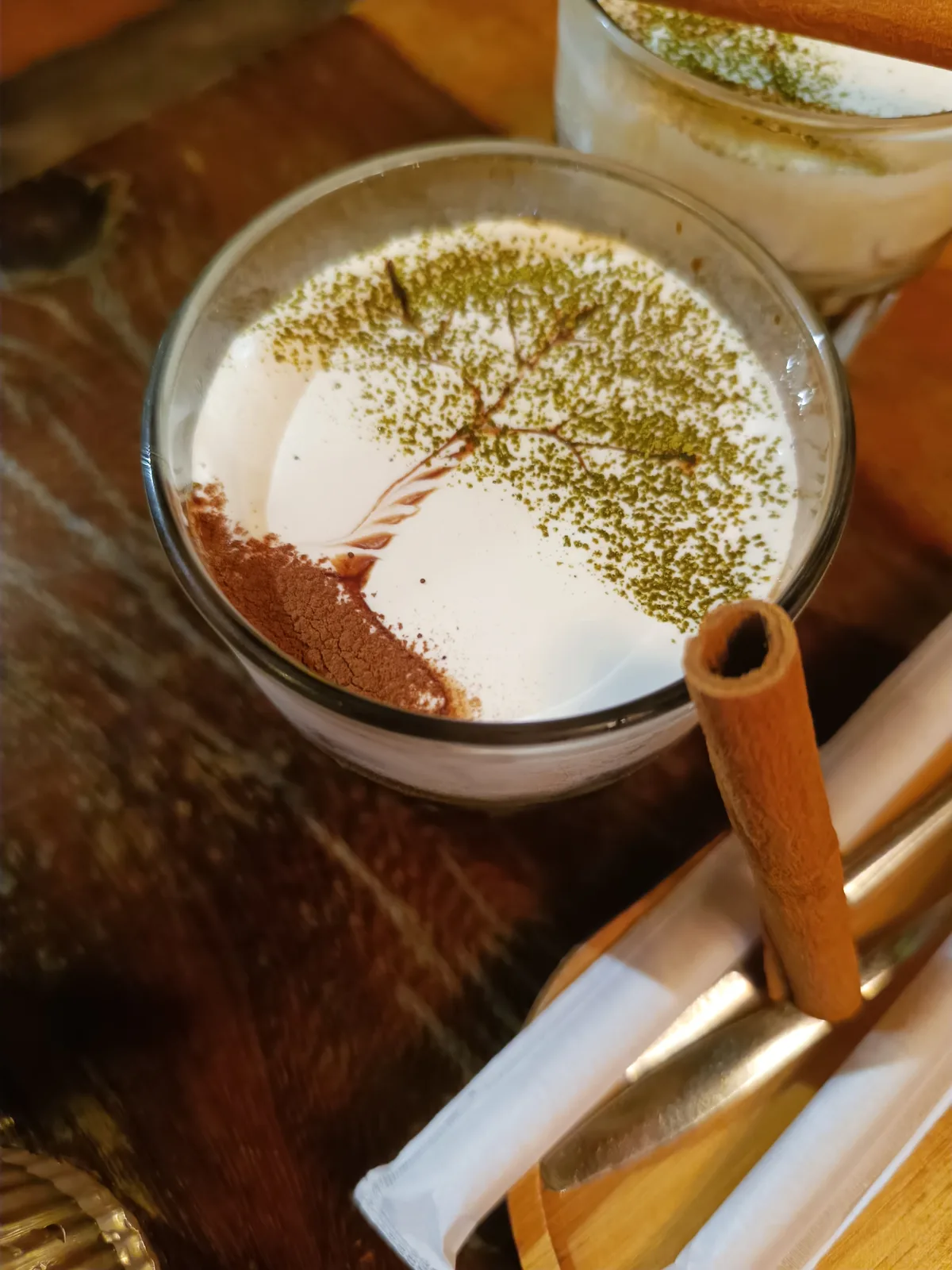
[Image: close-up of the drink with the tree/leaf design on top]
Caption: The salted cream top of cà phê muối, often finished with a simple design before it’s stirred in.
How is it different from regular Vietnamese iced coffee?
| Cà phê đá (regular iced coffee) | Cà phê muối (salted coffee) | |
|---|---|---|
| Sweetener | Condensed milk only | Condensed milk + salted cream |
| Texture | Coffee and milk, mixed | Layered: milk, coffee, cream |
| Taste profile | Strong, sweet, bitter edge | Smoother, rounder, less bitter |
| Origin | Widespread, older tradition | Huế, invented ~2010 |
| Serving | Usually just stirred and served | Often presented layered first |
Cà phê muối is best understood as a refinement of the older drink rather than a separate category. Same beans, same base method, one added layer that changes how the bitterness reads.

Where to try it
Central Vietnam, and Huế specifically, remains the place most associated with the drink, but it’s now sold widely enough in Da Nang, Hanoi, and Ho Chi Minh City that seeking out a specific café isn’t necessary the way it once was. Independent coffee shops are generally a better bet than large chains, which have been slower to add it to standard menus.
Ordering it is straightforward: ask for “cà phê muối” and specify hot or iced. Some cafés serve it with a light garnish, a cinnamon stick, a dusting of cocoa or matcha powder, or a simple design piped into the cream, though none of that is essential to the drink itself.
Frequently asked questions
Does Vietnamese salted coffee actually taste salty?
No. The salt is present in small enough quantity that its main effect is suppressing bitterness and enhancing perceived sweetness, not adding a salty flavor you’d notice on its own.
What kind of coffee beans are used?
Robusta, the dominant bean in Vietnamese coffee generally. It’s stronger and more bitter than arabica, which is part of why the sweetened, layered preparation style developed in Vietnam in the first place.
When was salted coffee invented?
Around 2010, in Huế, Vietnam. It’s a relatively recent addition to Vietnamese coffee culture compared to older traditions like phin-filtered iced coffee, which dates back much further.
Is cà phê muối served hot or cold?
Both, though iced is more common, especially outside the cooler months. The layering, condensed milk, coffee, salted cream, works the same way in either version.
Can I make Vietnamese salted coffee at home?
Yes. You need robusta coffee (or a strong dark roast if robusta isn’t available), a phin filter or strong drip method, condensed milk, and cream whipped with a small pinch of salt. Layer condensed milk first, coffee on top, then the salted cream last.
The short answer
Vietnamese salted coffee is strong robusta coffee layered over condensed milk and topped with lightly salted cream, invented in Huế around 2010 and now found across Vietnam. The salt isn’t there to be tasted. It’s there to make the coffee taste less bitter and more balanced, and it works.
For more on how coffee traditions vary across cultures, see our guide to can children drink coffee, which covers coffee customs from Ethiopia to Vietnam.