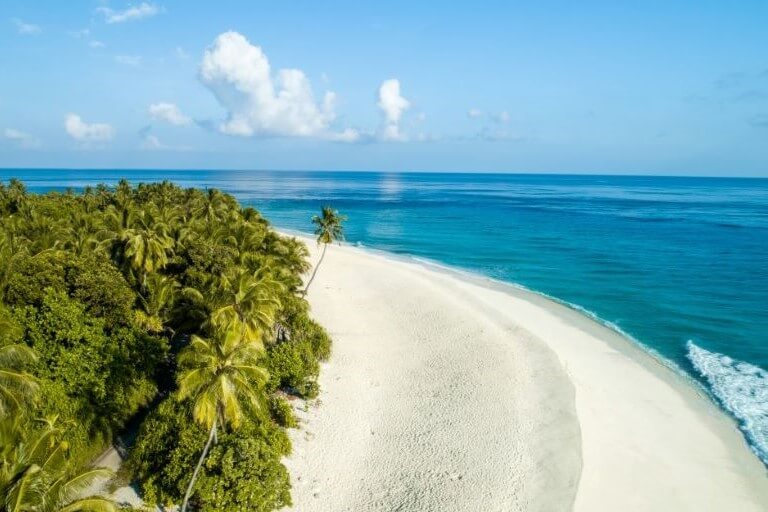
What’s the real minimum budget for Maldives? When you hear “Maldives,” you probably picture overwater villas with glass floors, private butlers, and price tags that start with a four. It’s an image carefully curated by resorts and influencers. But the reality on the ground is different. Since 2009, the Maldivian government has allowed tourism on local inhabited islands, which quietly opened the door for travelers who want the turquoise water without the four-figure nightly rate.
I spent two weeks moving between local islands, tracking every dollar, and learning how the place actually works. The strange thing is that the water, beaches, and reefs look almost identical to the ones people pay thousands for at resorts. The difference is just where you sleep and who you eat with.
This guide breaks down what affordable Maldives travel actually looks like, based on recent local island prices, and how to make it work without cutting corners on safety or experience.
Why most people think the Maldives is too expensive
Let’s be honest — the branding works. Open any travel feed, and you’ll see champagne sunsets and infinity pools. Resorts naturally control most of the imagery, and flight costs to Malé are rarely cheap. But accommodation doesn’t have to follow that script.
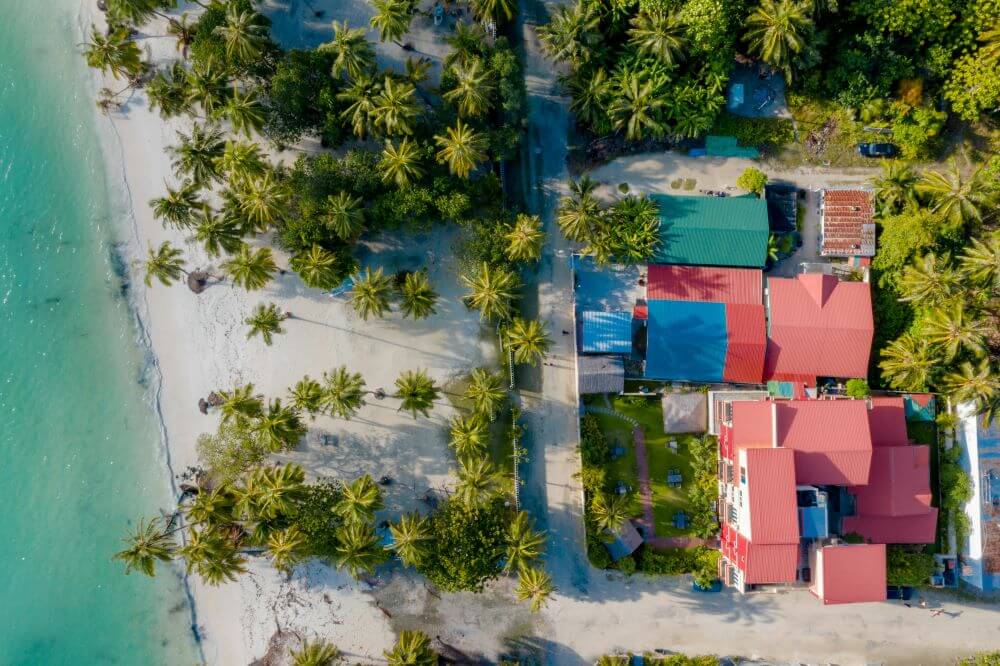
Over 200 inhabited islands now host family-run guesthouses, and many beaches near local islands remain publicly accessible, even when you’re close to resort zones. You don’t need a VIP wristband to swim in a lagoon or walk on white sand. The infrastructure for budget travel is already there; you just have to know where to look.
Real minimum budget for Maldives (per person, per day)
Okay, let’s talk numbers. These are the actual prices I paid during two weeks on local islands.
📊 Daily budget breakdown (recent local Island prices)
Accommodation: Guesthouse on Maafushi, Fulidhoo, or Thulusdhoo — $30–50/night
Food: Local cafes + self-cooking (rice, tuna, fruit) — $10–15/day
Transport: Public ferry + bicycle rental — $5–10/day
Activities: Free snorkeling + one paid excursion/week — $5–10/day
👉 Total: $50–85 per person per day
It’s absolutely possible to do the Maldives on a budget for under $85 a day, and if you’re careful with meals and transport, you can lean closer to $50. Here’s how each piece fits together.
Where to stay: local Islands that won’t break the bank
When calculating your minimum budget for Maldives accommodation, focus on local islands like Maafushi, Fulidhoo, or Thulusdhoo. Forget the resort islands for a moment…
Forget the resort islands for a moment. The real day-to-day Maldives lives on local communities where tourism is still woven into normal island life.
Maafushi: The Gateway Island
Maafushi is the most developed local island for visitors. That means more guesthouses, more restaurants, and more dive shops. It also means more people. If you’re okay with sharing the space with other travelers, this is your most practical base.
Rooms usually run $30–50/night. Most include breakfast — fresh bread, eggs, fruit, and strong local tea. You’ll get A/C, a private bathroom, and often free snorkel gear. Some places have rooftop terraces where you can catch the sunset. Maafushi is also one of the few local islands that allows alcohol in licensed venues, which matters to some travelers.
Fulidhoo: quiet and untouched
If Maafushi feels too busy, head to Fulidhoo. This smaller island has maybe a dozen guesthouses, fewer crowds, and some of the calmest beaches I’ve seen. Prices are similar ($35–50/night), but the pace is slower. You’ll likely share dinner with the host family, hear stories about fishing seasons, and wake up to a beach that feels mostly yours.
Thulusdhoo: for surfers and Manta lovers
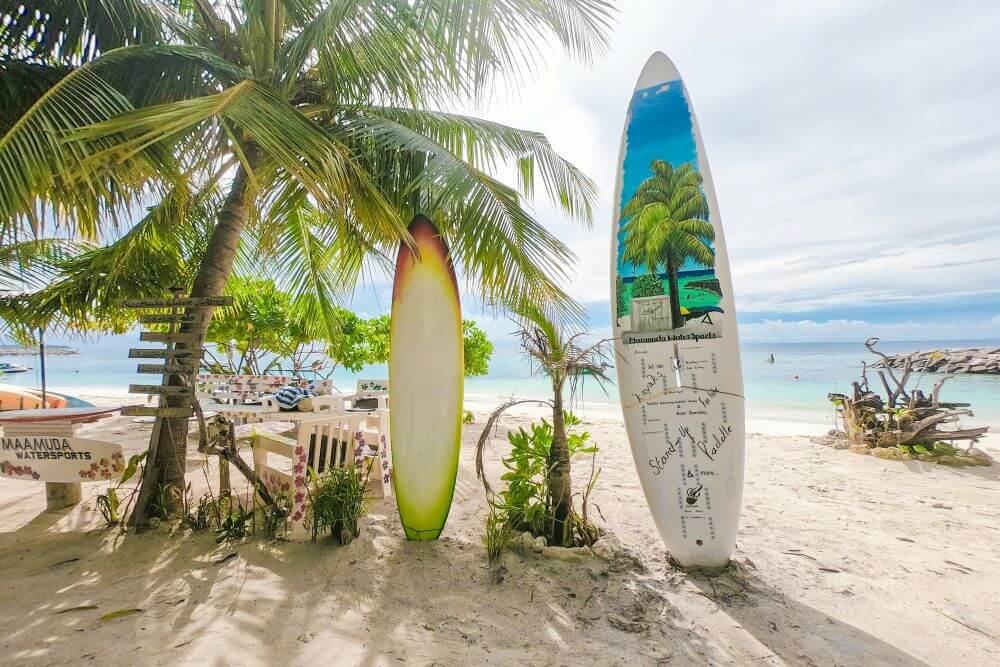
Thulusdhoo has a different rhythm. It’s known for consistent surf breaks and seasonal manta ray sightings. The vibe is laid-back, with surfboards leaning against café walls and reggae drifting from open windows. Accommodation runs $30–45/night. Time your visit between November and April, and you can often catch mantas at cleaning stations without paying resort prices.
How to get there without emptying your wallet
Flights are usually the biggest upfront cost. But once you land in Malé, transport can fit your minimum budget for Maldives plan if you choose wisely.
I made the rookie mistake of arriving on a Friday afternoon without checking the public ferry schedule. In the Maldives, local ferries often pause or run on reduced timetables during prayer times and weekends. I ended up splitting a speedboat transfer I hadn’t budgeted for, which instantly added $25 to my day. Learn from that: check the schedule, message your guesthouse ahead, and build a small buffer for transport hiccups.
Flights: timing matters
Book 3–6 months out. Use Skyscanner’s “whole month” view to catch price dips. The shoulder seasons (April–May, October–November) usually offer better fares and fewer crowds than the peak winter months.
From Malé to your Island
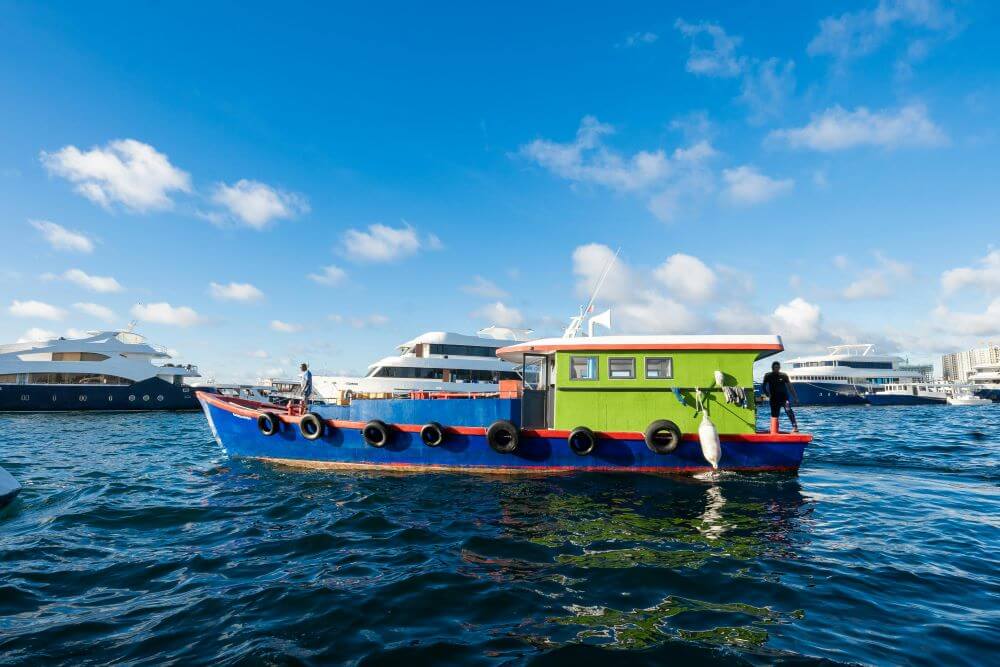
Resorts will offer speedboat or seaplane transfers that cost $200–500. Skip that. The public ferry costs $2–5. Yes, it’s slower (about 90 minutes to Maafushi), and yes, it runs on a fixed schedule. But you’ll sit alongside locals heading home from work, kids coming back from school, and fishermen unloading their catch. It’s how the islands actually move.
If you’re pressed for time, your guesthouse can arrange a shared speedboat for $20–30. Still a fraction of the resort rate.
Eating on a budget: where locals eat
Food costs can make or break your minimum budget for Maldives trip. Resort restaurants charge premium prices, but local islands run on a completely different economy.
Local “Hotaa” Cafés
Every island has small cafés, often called “hotaa,” where locals grab breakfast and lunch. I’d order mas huni — shredded tuna mixed with fresh coconut, onion, and a bit of chili, served with roshi flatbread. The food is simple, usually spicy, and far better than I expected for the price. A meal runs $2–4. Add a glass of sweet black tea for a dollar.
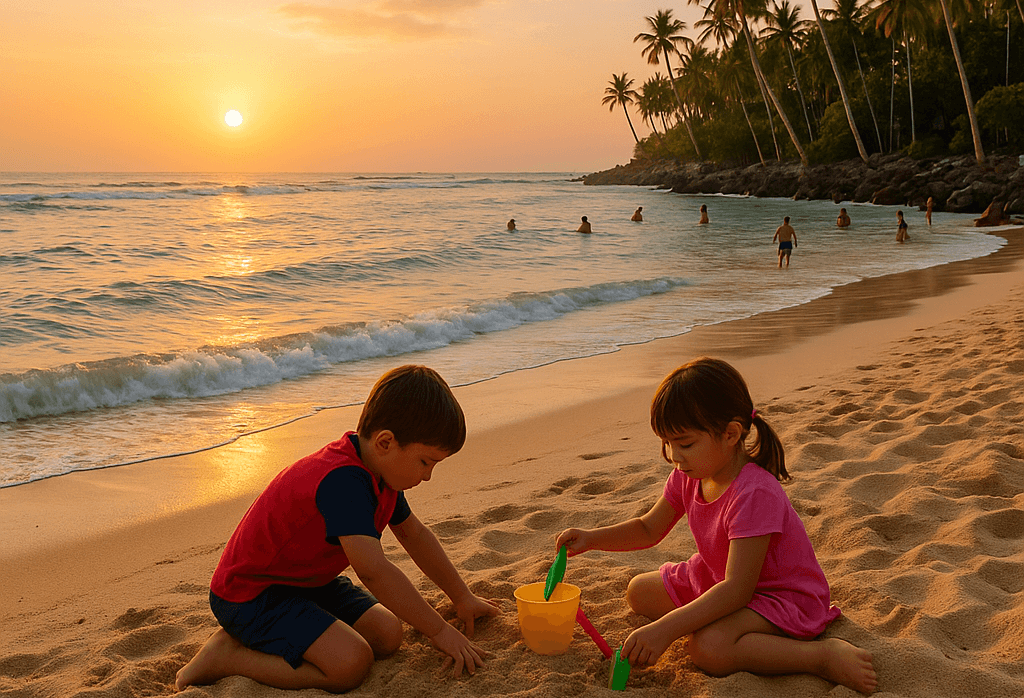
By noon, the wooden pier was often too hot to walk on barefoot, and the air smelled like salt, sunscreen, and grilled fish drifting from someone’s backyard kitchen. That’s the rhythm of island life.
Guesthouse dinners
Most guesthouses offer home-cooked dinners for $6–8. Think fish curry with rice, sautéed vegetables, and that unmistakable Maldivian coconut base. I ate dinner with a host family on Fulidhoo. The mother cooked for two hours. The father talked about monsoon fishing routes. The kids practiced their English with me. It cost $7. It was the best meal of the trip.
Markets and self-catering
Small island shops sell fresh fruit, bottled water, biscuits, and canned tuna. A banana is $0.50. Water is $1. Tuna is $2. If your guesthouse has a shared kitchen, use it. Cooking breakfast or packing snacks for boat trips saves money without sacrificing quality.
Free & cheap activities that rival resort experiences
The best parts of a minimum budget for Maldives itinerary aren’t the paid tours — they’re the things that don’t cost anything.
Snorkeling right off the beach
Many local islands have house reefs just a short swim from the shore. Fulidhoo, Dhigu, and Maafushi all have accessible coral drop-offs. I snorkeled off Fulidhoo’s beach and saw reef sharks, rays, and dense schools of tropical fish. Cost? Zero. Gear rental runs $3–5/day, but many guesthouses include it for free.
Visit uninhabited Islands
Guesthouses organize group boat trips to nearby sandbanks. These usually cost $15–25 and include a simple BBQ lunch. You’ll cruise through shallow turquoise water, jump off the boat into the ocean, and eat grilled fish on a beach with no one else around. It’s quiet, slow, and genuinely memorable.
Watch sunset at Biyadoo Island
Biyadoo is a tiny uninhabited island about 10 minutes from Maafushi. Local boats run there throughout the day. The return trip costs $5. Spend the afternoon swimming, reading, and watching the light change. Bring your own water and snacks. Stay until the last boat leaves. Total cost: $5 plus your nightly room rate.
Swim with Manta Rays
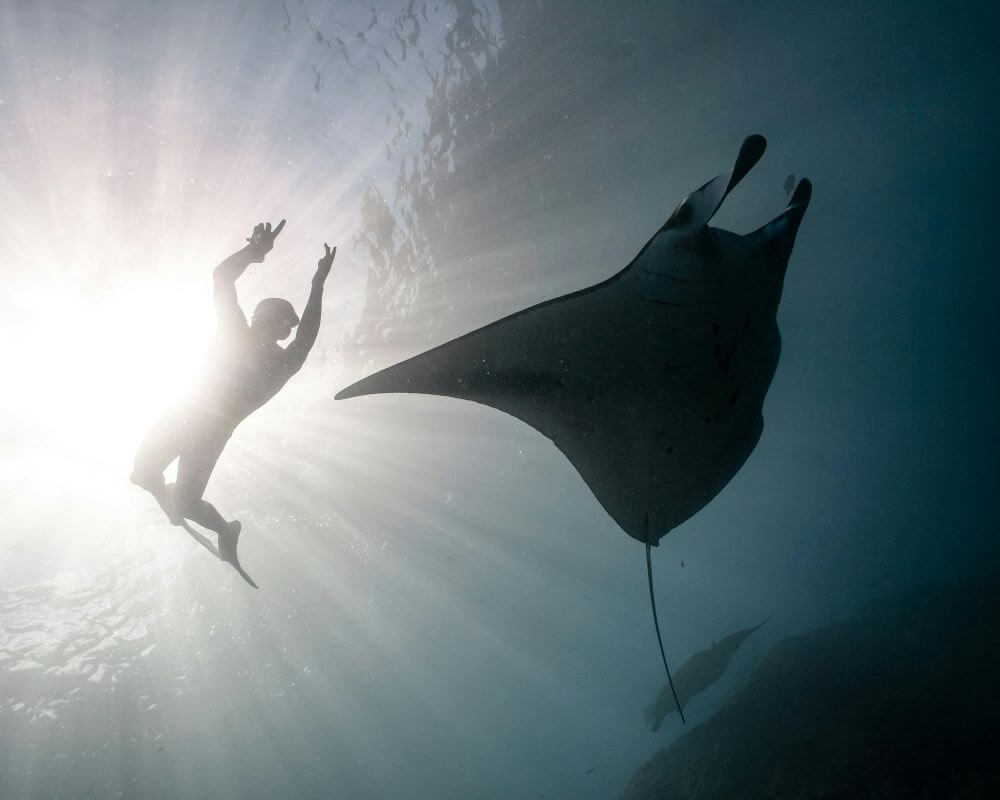
From Thulusdhoo, you can snorkel with mantas for $30–40. The mantas visit cleaning stations during plankton season (November–April). You float on the surface, looking down as they glide beneath you. Resorts charge $150+ for the same window. The ocean doesn’t check your booking confirmation.
Important rules for local Islands
The Maldives is a Muslim country. Local islands follow Islamic customs. Respect them, and you’ll be welcomed. Ignore them, and you’ll quickly learn why boundaries exist.
Swimwear rules
Women can’t wear bikinis or revealing swimwear in village areas. Most islands have a designated “bikini beach” — a specific stretch of sand or a nearby sandbank where regular swimwear is fine. Your guesthouse will show you exactly where to go.
Alcohol restrictions
Alcohol is banned on local islands, with Maafushi being the main exception (it has a few licensed bars). You can bring one bottle per person from airport duty-free. Resorts serve alcohol freely, but local islands keep it dry.
Dress respectfully in villages
When walking through residential areas, cover your shoulders and knees. Beachwear is for the beach. It’s a small adjustment that keeps tourism sustainable and respects daily life.
Who is this budget Maldives for?
What surprised me most wasn’t how achievable the minimum budget for Maldives could be. It was how quickly the resort version started feeling disconnected from the actual country. The budget side is raw, sometimes slow, and definitely not polished. But it’s also where you actually meet people, share meals, and see how island life works day to day.
It’s perfect for:
- Backpackers and solo travelers who value experiences over luxury
- Couples seeking authenticity over all-inclusive buffets
- Families with older kids (many guesthouses are family-run and welcoming)
- Snorkelers and nature lovers who care more about what’s underwater than what’s in the minibar
It’s NOT for:
- People who want nightlife (local islands are quiet — very quiet)
- Those expecting constant convenience or room service
- Travelers who need a perfectly curated, frictionless experience
The real takeaway
So, what’s the realistic minimum budget for Maldives? If you’re careful, you can manage around $50 a day. If you want a bit more comfort and a few guided trips, $70–85 is more realistic. Throw in a couple of splurge activities, and you’re looking at $100.
Would I still love to stay in an overwater villa one day? Of course. But honestly, traveling on a minimum budget for Maldives gave me memories that had nothing to do with luxury resorts. They were about slow ferry rides, shared dinners with guesthouse families, and realizing that paradise doesn’t have to come with a premium price tag.
If you’re willing to trade convenience for authenticity, the local islands deliver exactly what you came for.
More budget travel guides for travelers who believe paradise shouldn’t cost a fortune.
Before you go: quick answers
What’s the real minimum budget for Maldives travel?
You can achieve a minimum budget for Maldives of $50–85 per person per day by staying on local islands like Maafushi, Fulidhoo, or Thulusdhoo. Guesthouses cost $30–50/night, local food is $2–8 per meal, and public ferries are $2–5.
What’s the cheapest month to visit?
May–November (low season) offers the best deals on flights and accommodation. You’ll see more rain, but shoulder months (April–May, October–November) balance price and weather well.
Is food expensive on local islands?
No. Local cafés charge $2–4 per meal. Guesthouse dinners cost $6–8. Resort restaurants are expensive, but you don’t need to eat there. Self-catering is also an option.
How much does snorkeling cost?
Free if you snorkel from the beach. Gear rental is $3–5/day. Boat excursions to uninhabited islands cost $15–25. Manta ray snorkeling from Thulusdhoo is $30–40.
Can you drink alcohol on local islands?
Most local islands don’t allow alcohol. Maafushi is an exception with a few licensed bars. You can bring one bottle from airport duty-free. Resorts serve alcohol freely.
Are public ferries reliable?
They run 1–2 times daily and cost $2–5. They’re reliable but slow. Schedules can shift on Fridays or during prayer times. Always confirm with your guesthouse before booking flights.