When researching Traditional food in Marshall Islands, most travelers find only vague references to “fish and coconut.” In truth, Marshallese cuisine is a refined adaptation to life on low-lying atolls with no rivers, minimal soil, and vast ocean horizons. For over 2,000 years, Marshallese people have turned coral, sea, and sky into nourishment through ingenious farming, seasonal fishing, and deep respect for natural cycles. This guide reveals the true flavors of the Marshall Islands — from ceremonial breadfruit feasts to the sacred coconut crab — and how food remains a pillar of cultural identity in a changing climate. If you’re planning your journey to this Pacific paradise, don’t miss our curated Oceania travel guides, where you’ll discover not just beaches, but cultures, cuisines, and timeless traditions like Traditional food in Marshall Islands.
The core ingredients of traditional food in Marshall Islands
Marshallese food relies on four essential local resources — all shaped by the rhythm of tides and seasons. These are not just ingredients; they are the foundation of survival, ceremony, and community. Understanding them is key to appreciating Traditional food in Marshall Islands.
- Coconut (ni) – Used for milk, oil, sap (toddy), and cooking. The entire tree is utilized — leaves for weaving, husks for fuel, water for drinking. Coconut is the soul of Traditional food in Marshall Islands.
- Reef and pelagic fish – Including tuna, parrotfish, grouper, and octopus, caught with nets, spears, or traditional canoes. Fish isn’t just protein — it’s heritage. Many families still use ancestral fishing routes passed down for generations.
- Breadfruit (mā) – Roasted, boiled, or fermented into sour paste (jime) for long-term storage. Breadfruit trees were once planted as family heirlooms — each one tied to lineage and land.
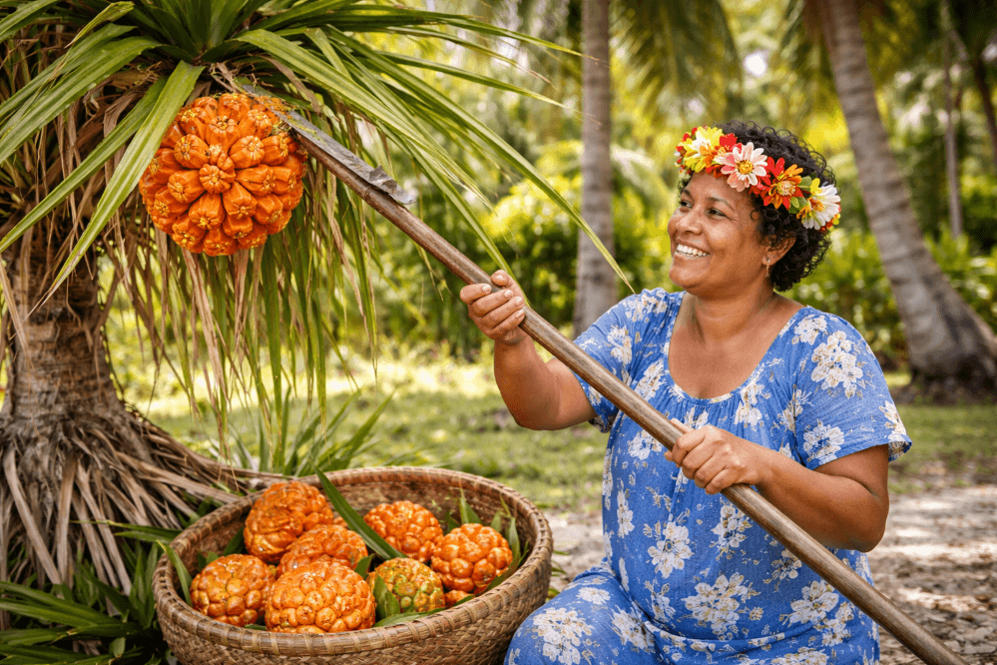
- Pandanus fruit (bōb) – Stripped, sun-dried, and pressed into dense, sweet cakes that can last for years. A critical famine food, pandanus was carried on voyages and shared during droughts — a true symbol of resilience in Traditional food in Marshall Islands.
“Our ancestors didn’t farm land — they farmed the tide, the wind, and the stars.” — Elder from Majuro Atoll
Iconic traditional dishes of the Marshall Islands
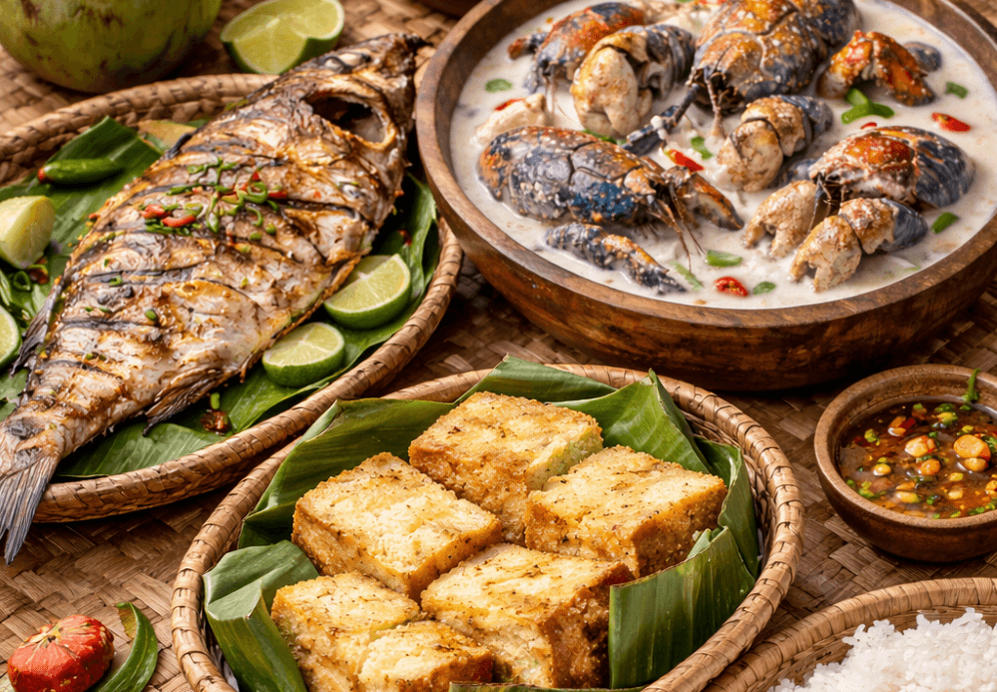
Grilled reef fish with coconut cream
The everyday staple: freshly caught fish grilled over coconut husks, then drizzled with raw coconut cream (wajur). Simple, flavorful, and rich in omega-3s. This dish embodies the essence of Traditional food in Marshall Islands — minimalism, freshness, and harmony with nature.
Coconut crab (Kōnōn)
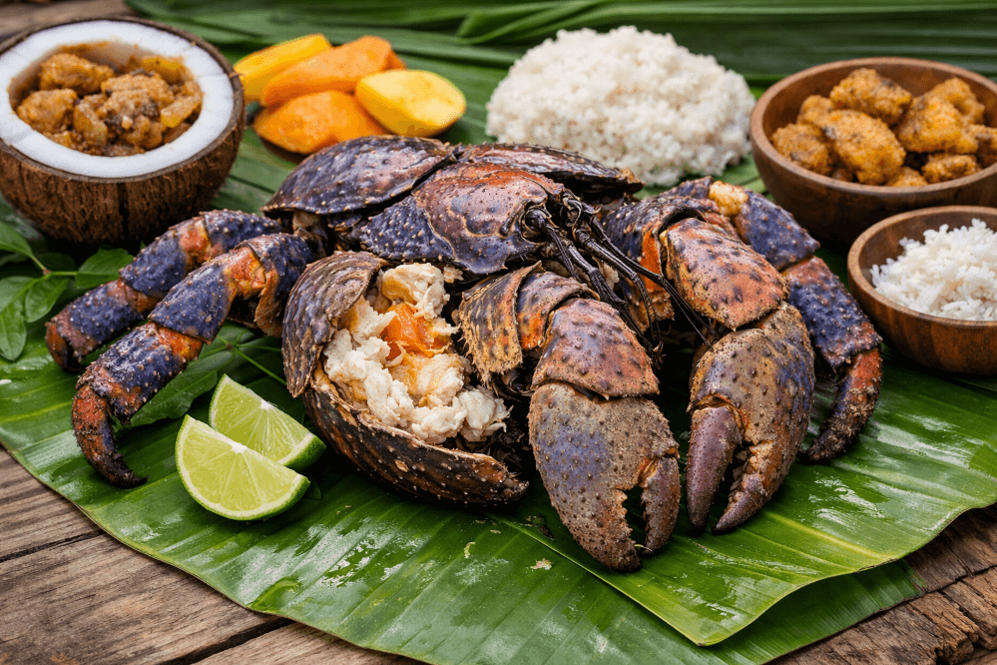
Known as kōnōn, this giant land crab is a ceremonial delicacy served at weddings, chiefly gatherings, and Independence Day. Its meat is tender, sweet, and infused with the flavor of coconut it consumes. Harvesting is seasonal and regulated by custom — often requiring permission from local elders. Kōnōn is more than food — it’s a ritual, a gift, and a reminder of the island’s bounty. No exploration of Traditional food in Marshall Islands is complete without mentioning this iconic crustacean.
Pandanus bread (Bōb Kōr)
Not bread in the Western sense — this is dried pandanus pulp pressed into flat, chewy cakes. Eaten with fish or coconut, it provides slow-release energy and was historically stored in woven baskets for voyages. Bōb kōr is a testament to ingenuity — turning a fibrous fruit into sustenance. It’s rarely found outside the islands, making it a rare gem of Traditional food in Marshall Islands.
Fermented breadfruit (Jime)
Breadfruit is buried in leaf-lined pits for weeks to ferment, developing a sour, tangy flavor. Jime is mixed with coconut cream and served during communal feasts. It’s an acquired taste but deeply traditional — a flavor that connects modern Marshallese to their ancestors. Jime is a living archive of Traditional food in Marshall Islands, preserved not in books, but in taste and memory.
Daily meals vs. festive feasts
In rural atolls like Arno or Ailinglaplap, daily meals remain traditional: – **Morning**: Coconut toddy (kōrā) or leftover fish – **Midday**: Grilled fish + boiled breadfruit + coconut – **Evening**: Similar, sometimes with pandanus cake
In urban Majuro and Ebeye, however, imported foods dominate: – White rice – Canned corned beef – Instant noodles – Sugary soft drinks
This dietary shift correlates with high rates of diabetes. Community groups now promote “eat local” campaigns to revive traditional foodways — a movement that celebrates Traditional food in Marshall Islands as both culture and medicine.
Can vegans or vegetarians eat traditional Marshallese food?
Partially — with care. Plant-based elements include:
- Pandanus cakes
- Breadfruit (fresh or fermented)
- Coconut (milk, flesh, oil)
- Occasional bananas or papaya
But challenges remain:
- Coconut cream is often prepared in fish-contaminated bowls.
- “Vegetarian” is not a cultural concept — protein = fish.
- No dedicated plant-based eateries exist.
Tip for travelers: Request “bōb kōr and ni only” (pandanus and coconut only). Bring your own protein if staying long-term. While vegan options are limited, the core ingredients of Traditional food in Marshall Islands — coconut, breadfruit, pandanus — are naturally plant-based when prepared separately.
Climate change and the future of traditional food in Marshall Islands
Rising seas, coral bleaching, and saltwater intrusion threaten traditional food systems:
- Breadfruit trees are dying from drought and salinity.
- Pandanus yields are declining due to shifting rainfall.
- Reef fish are migrating deeper or disappearing.
Yet, innovation thrives:
- Youth groups planting salt-tolerant pandanus varieties
- Revival of traditional fish traps (lōb) to reduce pressure on reefs
- School gardens growing moringa and sweet potato as supplements
These efforts ensure that Traditional food in Marshall Islands doesn’t vanish — it evolves. Climate change may reshape the menu, but not the spirit.
How to experience traditional food in the Marshall Islands
Tourism is limited, but respectful visitors may be invited to share meals. Key tips:
- Stay in a ri-jerbal (family-run guesthouse) on outer atolls — this is where Traditional food in Marshall Islands is still prepared daily.
- Attend a kōrā (community feast) during Constitution Day (May) or Gospel Day (September) — these events showcase the full spectrum of Traditional food in Marshall Islands.
- Never refuse food — it’s deeply offensive. Accepting a meal is accepting hospitality.
- Bring gifts: tea, rice, or school supplies are appreciated — a small token for sharing their culture.
Food as cultural navigation
To eat Traditional food in Marshall Islands is to taste a culture that navigated oceans without maps — and fed families from coral and tide. Every pandanus cake, every grilled fish, every drop of coconut cream carries the wisdom of survival. For visitors, sharing a meal here is not dining — it’s dialogue. It’s a chance to connect with a people whose cuisine was never about luxury, but about life. Whether you’re drawn to the islands for their beaches, their history, or their cuisine, remember: Traditional food in Marshall Islands is not just what’s on the plate — it’s the story behind it.
Explore more Oceania travel guides to discover sustainable, culturally rooted journeys across the Pacific — including the hidden flavors of Traditional food in Marshall Islands.
Frequently Asked Questions
What is the national dish of the Marshall Islands?
There is no official national dish, but grilled reef fish with coconut cream is the most iconic everyday meal — and the heart of Traditional food in Marshall Islands.
Is coconut crab eaten in the Marshall Islands?
Yes — as kōnōn. It’s a ceremonial food, not daily fare, and harvesting is culturally restricted. A rare treat for those who seek authentic Traditional food in Marshall Islands.
Can you drink tap water in the Marshall Islands?
No. Drink only bottled, boiled, or filtered water. Always carry a reusable bottle — it’s eco-friendly and practical.
Are there restaurants serving traditional food?
A few in Majuro (e.g., Tradewinds Hotel) offer simplified versions, but authentic meals are shared in homes. To truly taste Traditional food in Marshall Islands, you must be welcomed into a family kitchen.