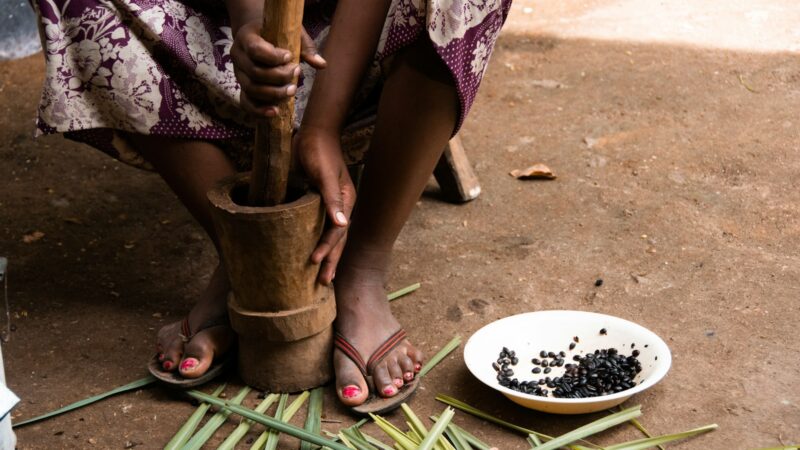
When travelers ask, “What do people eat in Niue?” the honest answer starts with a geological fact. Niue is one enormous raised coral atoll, a single slab of limestone pushed out of the sea, with no rivers, no lakes, and almost no topsoil. Everything eaten here either grows in pockets of soil trapped in coral crevices, comes out of the ocean, or arrives by ship.
That constraint shapes everything. With roughly 1,800 residents, Niue is one of the world’s smallest self-governing nations, and its food culture rests on three pillars: taro and root crops, reef and deep-sea fish, and coconut, all brought together in the umu, the earth oven.
[Hero image: takihi or Niuean meal]
Caption: Takihi, layered taro and papaya baked in coconut cream, the dish at the center of what people eat in Niue.
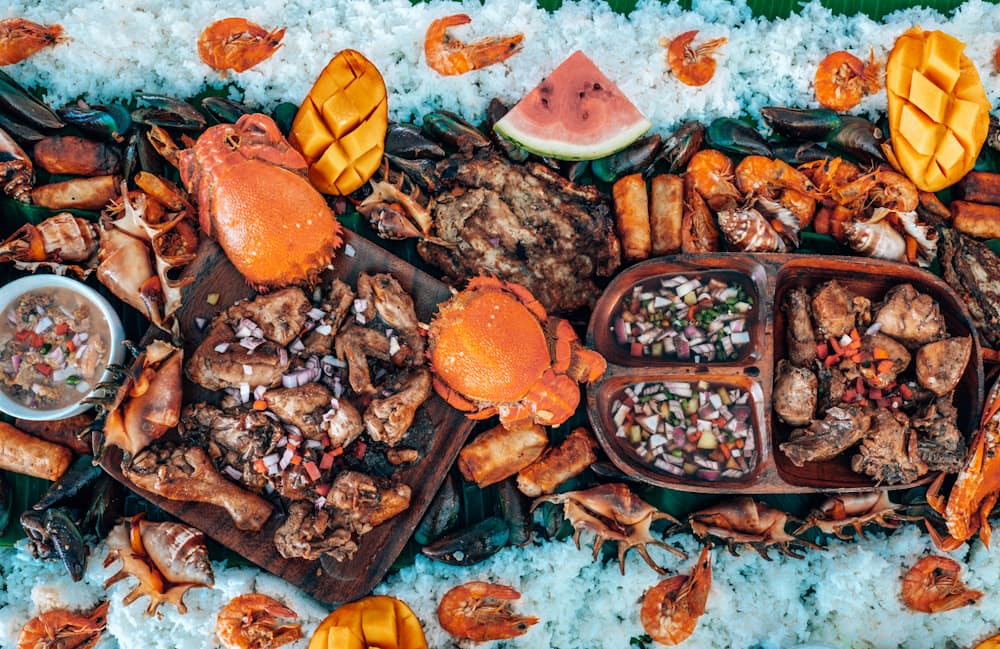
What do people eat in Niue? The three pillars
1. Taro and root crops: grown in coral
Niue has no soil in the usual sense. Farmers plant in pockets of earth caught between limestone, clearing bush and using the ash and decomposed leaf matter that collects there.
Despite that, the island produces:
- Taro (talo). The staple and the prestige crop; Niue exports it to New Zealand
- Yam (ufi), ceremonial, harvested seasonally
- Cassava (manioka), hardy and reliable
- Sweet potato (kumala)
- Breadfruit (mei), seasonal, roasted or baked
- Papaya (loku). Used as a vegetable when green, not just as fruit
Niuean taro is genuinely good, and it’s one of the few things the island exports. That agricultural competence on solid coral is the part outsiders rarely appreciate about what people eat in Niue.
2. Fish and seafood: the ocean drops away fast
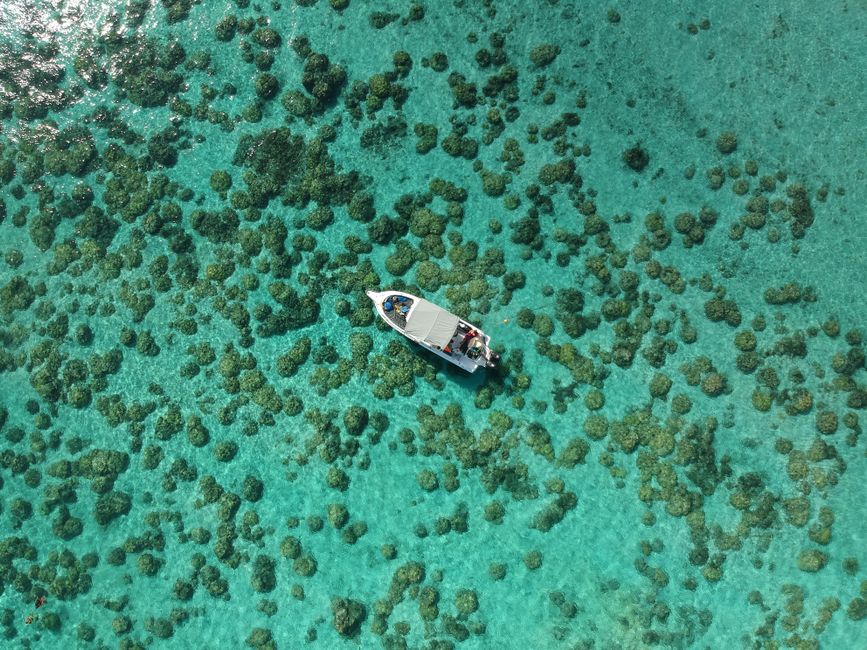
Niue has no lagoon and no continental shelf. The reef ends and the sea floor falls to over a thousand meters within a short distance of shore.
That geography means deep-water fish are close:
- Tuna, wahoo, and mahi-mahi
- Parrotfish, snapper, and reef species
- Crayfish (ula)
- Uga, the coconut crab, Niue’s most famous food
- Sea snakes (katuali), traditionally eaten on some occasions
Fishing is done from small boats and, historically, from canoes launched down the cliffs into deep water. There is no sheltered harbour.
3. Coconut: the cooking base
Coconut cream, pressed by hand from grated flesh, is the liquid that binds Niuean cooking. It goes into takihi, into ota, into fish dishes, and into desserts.
As across the Pacific, the whole tree is used. Husks for fuel, leaves for wrapping and weaving, shells for containers.
Takihi: the national dish
Takihi is Niue’s national dish and the first thing to understand about the local table.
Taro and papaya are sliced thin, layered alternately in a dish, covered with coconut cream, wrapped in leaves, and baked in the umu. Green or barely-ripe papaya is used, so it behaves like a vegetable rather than a fruit.
The result is soft, faintly sweet from the papaya, rich from the coconut cream, and smoky from the earth oven. It’s served at feasts, church gatherings, weddings, funerals, and the show days that structure the island’s year.
Takihi answers the question of what people eat in Niue better than any other single dish, because it uses the two things the island reliably produces and the one technique everyone shares.
Uga: the coconut crab Niue is known for
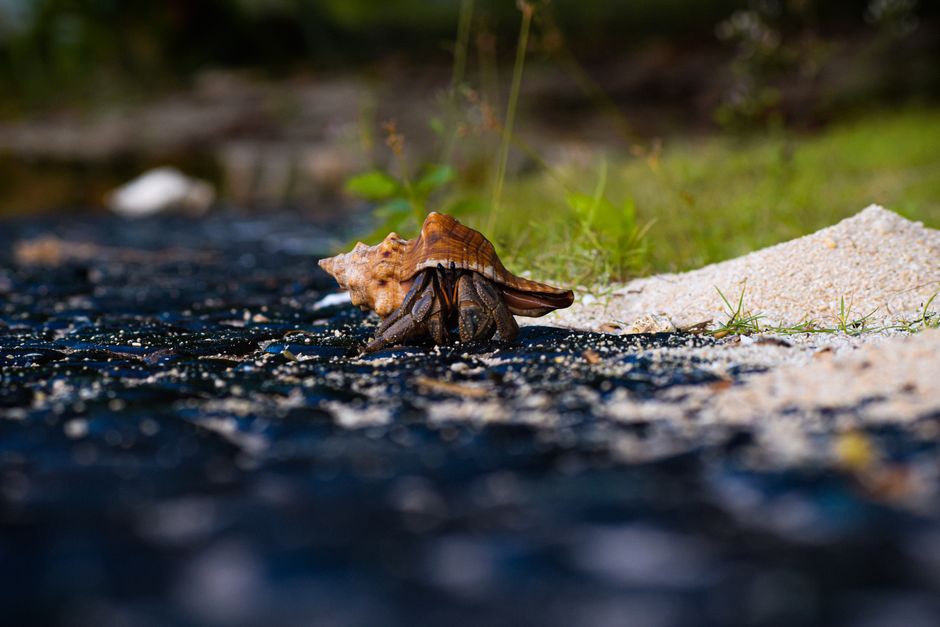
Uga is the coconut crab, and on Niue it’s an institution.
The coconut crab is the largest land-living arthropod on earth, reaching up to a metre across the legs and four kilograms in weight. It climbs palms, cracks coconuts with its claws, and can live for decades. Its meat is sweet and rich, with a distinct coconut character from its diet.
Uga is hunted at night, traditionally by hand with a torch, and it’s served grilled, boiled, or cooked in coconut cream. It’s typically eaten with coconut bread or mashed taro.
The conservation problem
Coconut crabs are slow-growing and slow-breeding, which makes them extremely vulnerable to harvesting pressure. Niue has introduced size limits and seasonal restrictions, and there’s ongoing local debate about whether they go far enough.
If you eat uga in Niue, it’s worth asking where it came from and whether it was legally sized. This is one of the few Pacific delicacies where an individual meal has a measurable population impact.
[Image: coconut crab / uga]
Caption: Uga, the coconut crab. The most famous element of what people eat in Niue, and the most tightly regulated.
Other popular traditional Niuean dishes
| Dish | What it is | When it’s eaten |
|---|---|---|
| Takihi | Layered taro and papaya in coconut cream, baked in umu | Feasts, Sundays, celebrations |
| Uga | Coconut crab, grilled or in coconut cream | Delicacy, special occasions |
| Ota | Raw fish marinated in coconut cream and lime | Everyday, gatherings |
| Povi masima | Salted corned beef, boiled | Everyday, imported staple |
| Coconut bread | Baked bread enriched with coconut cream | Daily, served with uga |
| Faikai | Root crop or fish cooked in coconut cream in leaves | Traditional |
| Grilled reef fish | Whole fish over coals | Everyday |
| Nane | Coconut cream and arrowroot dessert | Celebrations |
Ota: raw fish, Niuean version
Ota is Niue’s take on the Pacific raw fish dish. Fresh tuna or reef fish is cubed and marinated in lime or lemon juice, then dressed with thick coconut cream, onion, and sometimes cucumber or tomato.
The coconut cream distinguishes it from the leaner Palauan and Kiribati versions. It’s richer, softer, and closer to Samoan oka than to a straight ceviche.
Povi masima: the imported staple nobody mentions
Povi masima, salted corned beef, sold in barrels or tins, is genuinely part of what people eat in Niue day to day. It arrived through New Zealand trade and stayed because it keeps without refrigeration.
Travel writing tends to skip it in favour of takihi and uga. That’s a distortion. On an island where shipping arrives infrequently, shelf-stable protein is not a footnote.
How is food cooked in Niue?
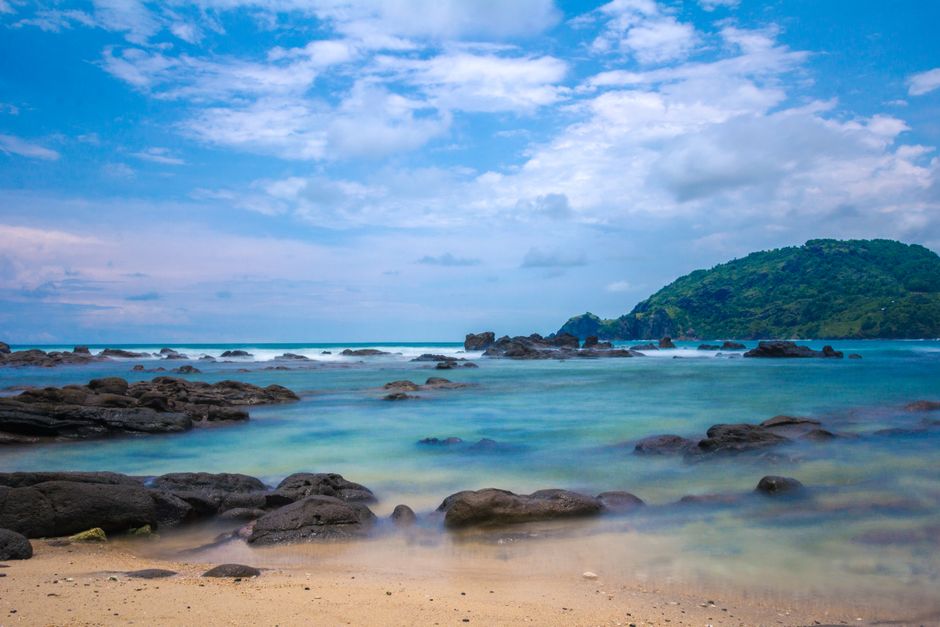
The umu (earth oven). Hot stones in a pit, food wrapped in banana or taro leaves, covered and left to steam. Used for Sundays, feasts, and anything worth doing properly. Takihi requires it.
Coconut cream cooking. Grated coconut pressed into cream, then used to cook fish, root crops, and greens. The default method for everyday food.
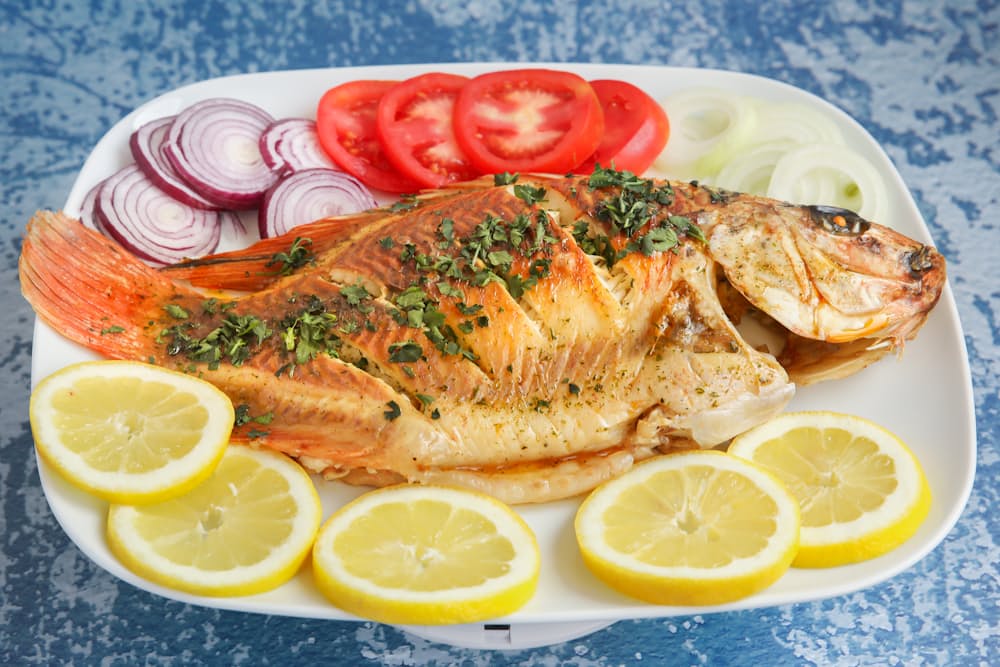
Open-fire grilling. Whole fish over coals, the simplest and most common approach.
Salting and preserving. With irregular shipping and no reliable cold chain historically, salting fish and meat was standard practice.
What do Niueans eat daily?
Everyday meals
- Breakfast: bread, tea, sometimes leftovers from the previous evening
- Lunch: rice or root crop with tinned fish or corned beef
- Dinner: the main meal, fish with taro, or a coconut cream dish
- Sunday: the umu comes out, and takihi appears
The New Zealand connection
Niue is in free association with New Zealand, and all Niueans are New Zealand citizens. Roughly 30,000 people of Niuean descent live in New Zealand, against a resident population of about 1,800 on the island.
That relationship shapes the food directly. Imported New Zealand goods fill the shops. Returning families bring back tastes and ingredients. And the export of Niuean taro flows in the opposite direction, to Niuean communities in Auckland who want the real thing.
The cuisine that lives somewhere else
Here is the fact that makes Niue’s food story unlike any other in the Pacific.
There are roughly sixteen Niueans abroad for every one at home. But the more revealing figure is this: close to 90% of Niueans in New Zealand were born in New Zealand.
So the large majority of the world’s Niueans have never lived on Niue. Niuean food culture is now, in practical terms, maintained mostly in Auckland. By people who learned it from parents and grandparents rather than from the island.
That has concrete effects:
- Recipes and technique pass down in New Zealand kitchens as much as in Niuean ones
- Taro and uga are shipped south for family events and church gatherings
- Ingredients and knowledge travel back and forth with visiting relatives
- Major cultural events on the island draw the diaspora home, and food is a large part of why people come
There’s a real question of continuity underneath this. A cuisine whose practitioners are overwhelmingly second- and third-generation migrants sits in an unusual position. It can drift, it can simplify, or it can be preserved more deliberately abroad than at home, because diaspora communities tend to hold on consciously. Niue runs heritage and language programmes, and food sits at the center of them.
For visitors, this is also why the island itself is quiet: restaurants are few, and the best eating happens at village events and Sunday gatherings rather than commercially.
Why is food expensive in Niue?
Because almost everything imported arrives by ship, and the ship does not come often.
Niue has no harbour. Cargo is transferred from vessels anchored offshore to small barges and craned up the cliff at Alofi. Shipping is roughly monthly and weather-dependent. Air freight exists but is limited and costly.
The practical result is that imported food costs substantially more than in New Zealand, fresh imported produce is unreliable, and shops sell out between ships. Understanding this explains why locally grown taro and locally caught fish still matter so much, and why shelf-stable imports like corned beef are so entrenched.
How travelers can experience Niuean food
Sunday and church feasts
Niue is strongly Christian, and Sunday is genuinely observed. Most businesses close, and family umu meals happen. This is when takihi is made properly. An invitation is the best food experience available on the island.
Show days and village events
Each village holds an annual show day with food displays, competitions, and communal meals. These are the largest and most traditional food occasions of the year, and visitors are welcome.
Restaurants and cafés in Alofi
Alofi has a small number of cafés and restaurants, several of which serve uga when available and local fish regularly. Opening hours are limited and Sunday closure is near-universal, plan around it.
Etiquette worth knowing
- Sunday is respected; avoid noisy activity and expect closures
- Accept food when offered
- Ask before photographing people or church gatherings
- If offered uga, it’s a genuine gesture, it’s expensive and hard-won
- Bring something when invited to a home
Frequently asked questions: what do people eat in Niue?
What is the national dish of Niue?
Takihi. Thin-sliced taro and papaya layered with coconut cream and baked in an earth oven. It’s served at every significant gathering on the island.
What is uga?
Uga is the coconut crab, Niue’s most famous food. It’s the world’s largest land arthropod, hunted at night, and eaten grilled or cooked in coconut cream. Harvesting is regulated because populations are vulnerable.
Where is Niuean food actually cooked today?
Mostly in New Zealand. Around 30,000 Niueans live there against roughly 1,800 on the island, and close to 90% of them were born in New Zealand. So most people who cook Niuean food have never lived on Niue. Recipes, ingredients and technique move between Auckland and Alofi with visiting family.
Is Niuean food spicy?
No. Niuean cooking is mild, built on coconut cream, taro, and the smoky character of the earth oven rather than chilli or strong spice.
Can you grow food on Niue?
Yes, though with difficulty. Niue is a raised coral island with minimal topsoil, and crops are planted in pockets of earth among limestone. Despite that, Niue grows enough taro to export it to New Zealand.
Why is food expensive in Niue?
There is no harbour. Cargo is transferred offshore to barges and craned ashore, shipping is roughly monthly and weather-dependent, and almost all non-local food is imported.
What do people drink in Niue?
Coconut water, tea, imported soft drinks, and beer. Unlike much of the Pacific, kava is not a major part of Niuean daily life.
Conclusion: what do people eat in Niue? Coral, ocean, and a monthly ship
To understand what people eat in Niue is to understand three constraints at once. No soil worth the name, no harbour, and about 1,800 people to feed. What grew out of that is a food culture that gets remarkable results from taro planted in limestone cracks, fish pulled from water that drops away within meters of shore, and a crab that climbs trees.
Takihi is the dish that ties it together. Uga is the one that gets the attention. And the barrel of salted corned beef in the corner of the shop is the part nobody photographs but everybody eats.
For a comparison with another small Pacific nation working within similar limits, see our guide to what people eat in Kiribati, or explore more Oceania travel guides.