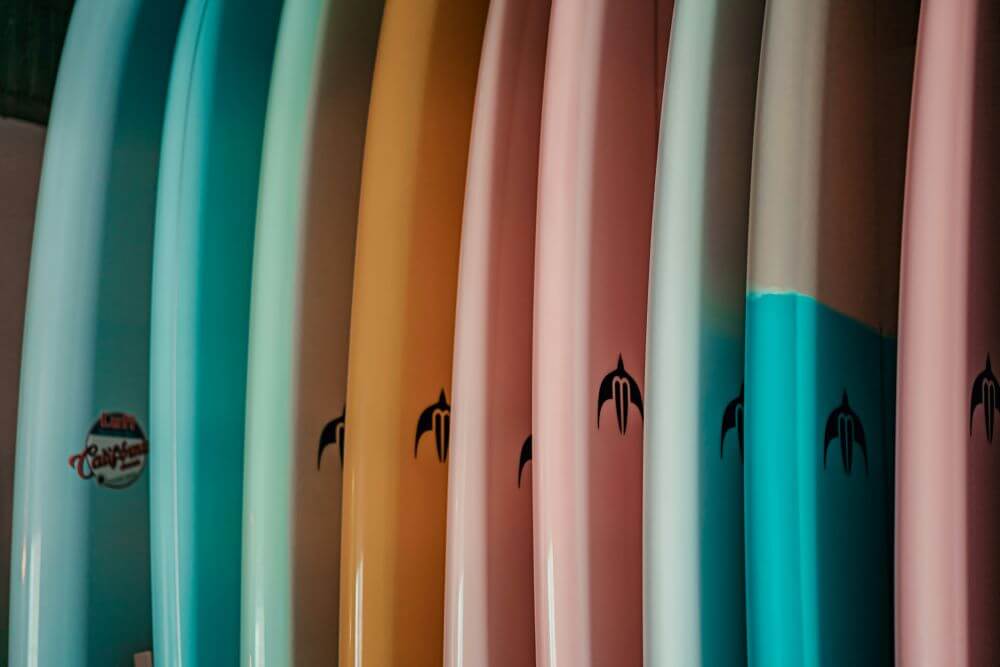
Here’s a clear, practical guide to the 7 main types of surfboards — and how to pick your perfect match.
1. SOFT TOP: THE SAFEST START — ONE OF THE MAIN TYPES OF SURFBOARDS (ESPECIALLY FOR KIDS, SENIORS & BEGINNERS)
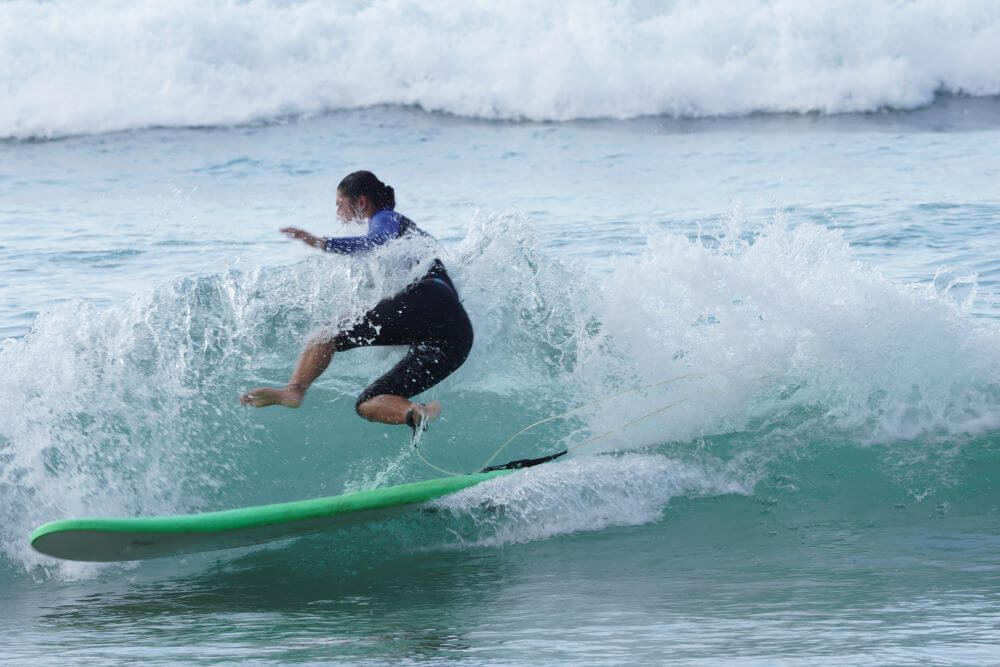
Best for: Absolute beginners, children, seniors (50+), or anyone returning after a long break.
Why it works: The soft, rubbery top prevents injuries during falls. High volume = easy paddling and wave-catching, even in small surf.
Body fit: Great for all weights and heights. Ideal if you’re under 70 kg (155 lbs) or have limited upper-body strength.
Fitness note: Requires minimal core strength. Perfect if you’re just starting your fitness journey.
My tip: Go for 7–8 ft. Yes, it’s “basic” — but it’s the fastest way to stand up and catch your first wave.
2. LONGBOARD (8+ FT): SURFING AS MEDITATION — A CLASSIC TYPE OF SURFBOARD
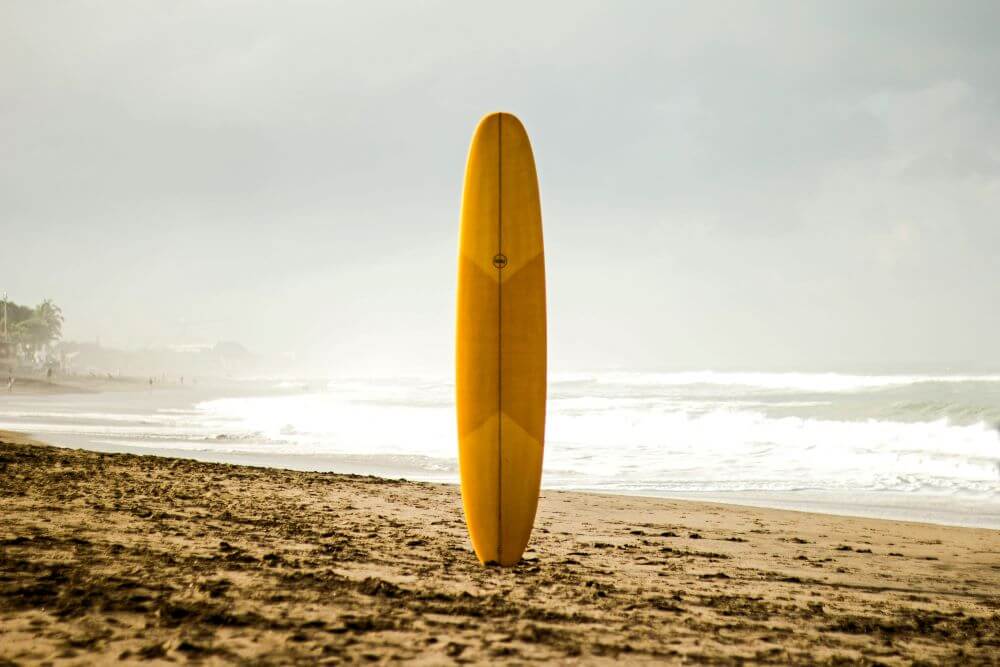
Best for: Relaxed riders, yoga lovers, intermediate surfers who value flow over tricks — and taller/heavier surfers (175 cm+, 75 kg+).
Why it works: Extremely stable, buoyant, and wave-friendly. Catches even the tiniest “mush.” Lets you walk the board or do nose rides.
Body fit: Excellent for taller or heavier riders — the extra length compensates for weight. Also great for those with joint issues (less jumping needed).
Age note: Popular among 40+ surfers who prefer style over speed.
Downside: Heavy (hard to carry) and not for steep waves.
3. FUNBOARD / MINI-MALIBU (6.5–8 FT): THE BALANCED CHOICE — ONE OF THE MOST VERSATILE TYPES OF SURFBOARDS
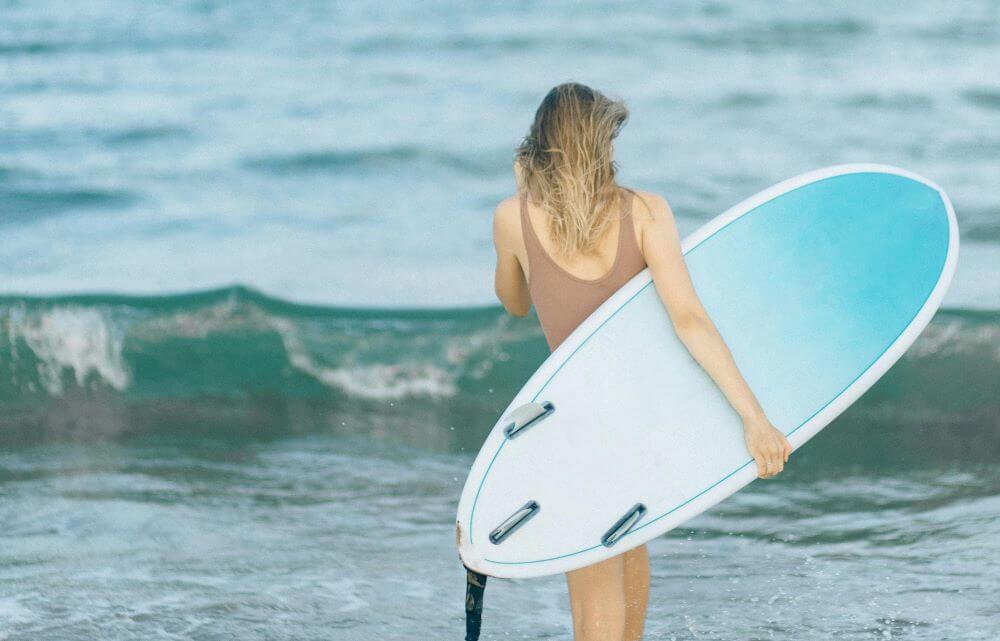
Best for: Progressing beginners, weekend warriors, families, or those with average fitness.
Why it works: Shorter and lighter than a longboard, but wider and more buoyant than a shortboard. Catches small waves AND allows light turns.
Body fit: Ideal for 60–85 kg (130–190 lbs), average height (165–180 cm).
Fitness note: Requires moderate paddling strength — but not elite athleticism.
My tip: Many surfers never leave funboards. They’re joyful, forgiving, and work in 80% of conditions.
4. SHORTBOARD (5–7 FT): FOR SPEED & PERFORMANCE — THE MOST POPULAR TYPE OF SURFBOARD FOR PROS
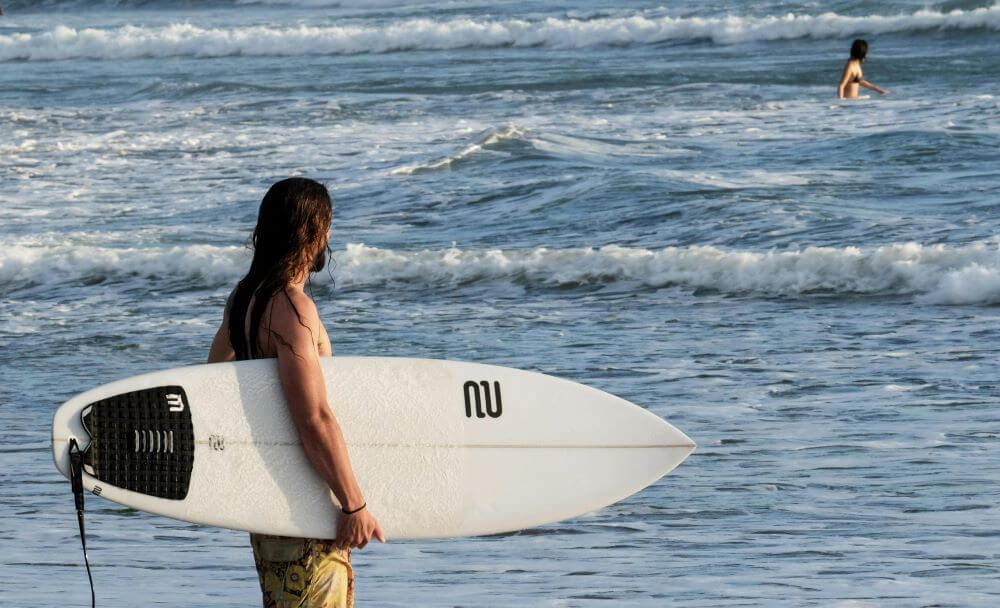
Best for: Fit, athletic surfers (teens to 40s) with solid experience and strong shoulders/core.
Why it works: Built for sharp turns, tubes, floaters, and aerials. Needs steep, powerful waves (4+ ft).
Body fit: Best for lighter, agile riders (under 80 kg / 175 lbs). Tall/heavy surfers may need a “step-up” shortboard.
Fitness note: Requires strong paddling endurance and quick reflexes. Not ideal if you have shoulder or back issues.
Warning: Don’t start here. You’ll drown in frustration.
5. FISH (5–6 FT): RETRO FUN FOR SMALL WAVES — A UNIQUE TYPE OF SURFBOARD
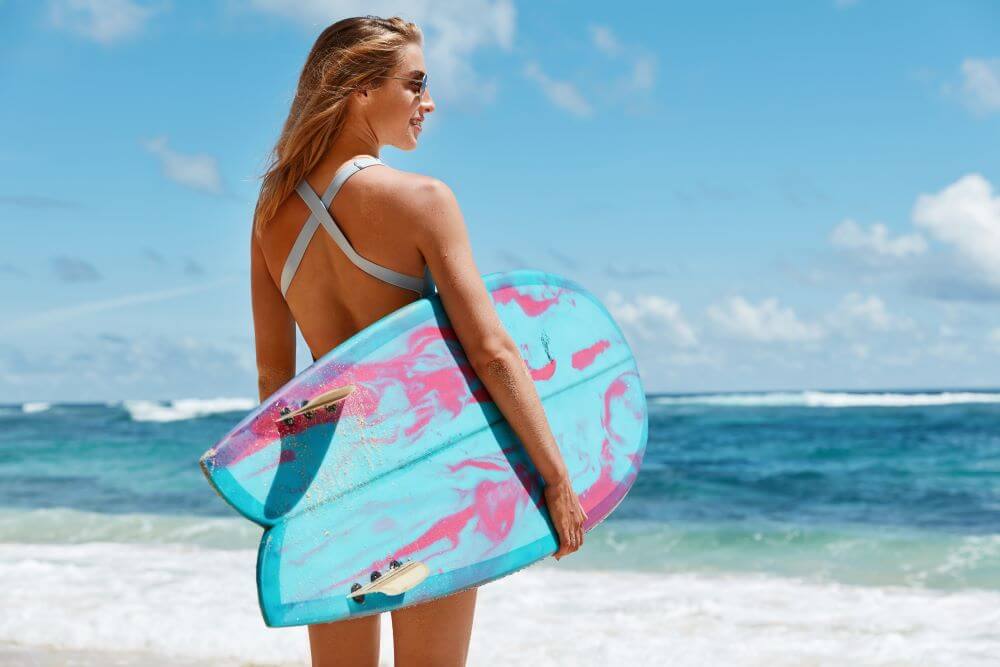
Best for: Small-wave lovers, creative riders, or anyone tired of flat days.
Why it works: Extra wide with a swallowtail — glides on weak waves where shortboards stall. Faster planing = more speed with less effort.
Body fit: Works well for lighter to medium builds (55–75 kg / 120–165 lbs). Wider shape helps lighter surfers stay afloat.
Age note: Loved by 30–50 year olds who surf regularly but chase fun, not fame.
My tip: Keep one in your quiver. It turns “bad” days into great ones.
6. GUN (6–10 FT): FOR GIANTS ONLY — A SPECIALIZED TYPE OF SURFBOARD
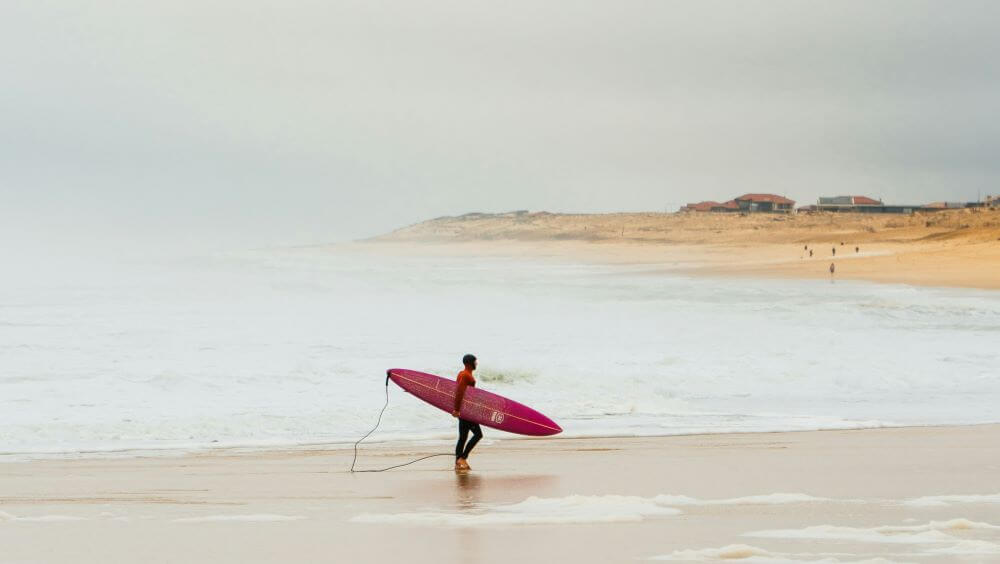
Best for: Expert big-wave riders (professionals or elite amateurs).
Why it works: Narrow, thick, and strong. Built to survive 20+ ft waves and high-speed drops.
Body fit: Typically used by strong, experienced surfers with excellent breath-hold and wave judgment.
Warning: If you’re not training for Jaws or Nazaré — skip it. Guns are dangerous in small surf.
7. HYBRID (6–7.5 FT): THE MODERN ALL-ROUNDER — A SMART CHOICE AMONG TYPES OF SURFBOARDS
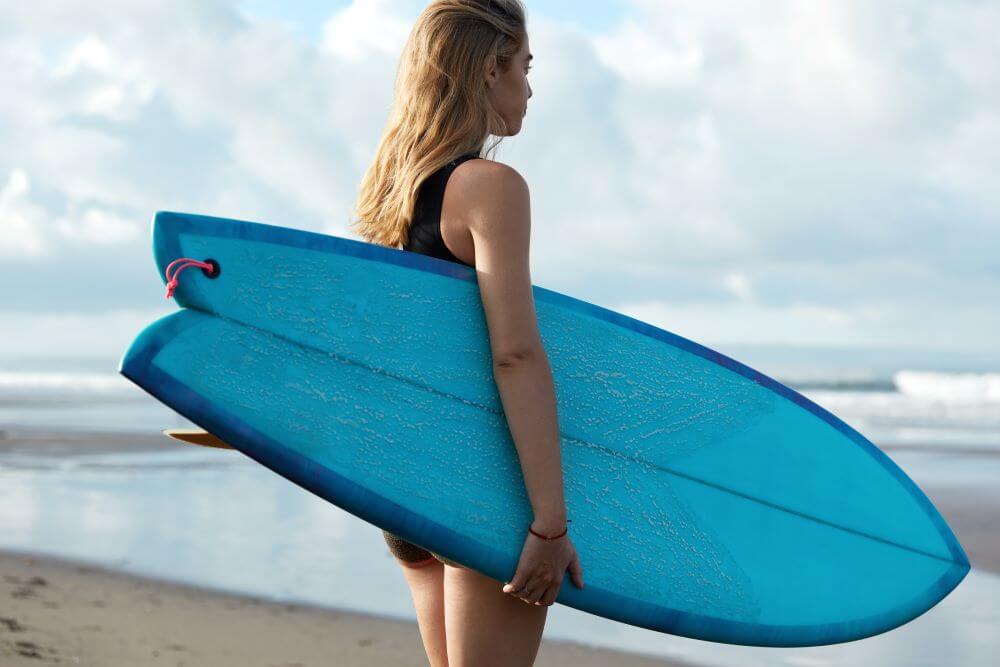
Best for: Surfers who want the best of both worlds — stability of a funboard and performance of a shortboard. Ideal for intermediate to advanced riders in inconsistent conditions or those transitioning from longboard/funboard to shortboard.
Why it works: A hybrid board blends design elements from different types — often a shortboard’s nose and tail with a fish’s width or a funboard’s volume. This creates a versatile board that catches waves easily and allows for turns and speed. Think of it as a “Swiss Army knife” of surfboards.
Body fit: Perfect for average builds (65–80 kg / 145–175 lbs), height 165–180 cm. Great for those with moderate fitness who want to progress without jumping straight to a shortboard.
Fitness note: Requires more paddling than a longboard but less than a shortboard. Good for surfers building core strength.
Age note: Popular among 25–45 year olds who surf regularly but don’t chase pro-level tricks.
My tip: If you’re unsure between a funboard and a shortboard — start with a hybrid. It’s forgiving in small waves and still lets you carve in medium ones.
>>Tip: Look for hybrids with 3 fins (thruster) for control, or 5 fins for extra stability. Many brands now offer “performance hybrids” — check out models like the “Hybrid Fish” or “Mini Mal Hybrid.”
HOW TO CHOOSE SURFBOARDFOR YOU MATCH BY SKILL, WEIGHT, HEIGHT
| Your profile | Best types of surfboards |
|---|---|
| Teen / 20s, fit, athletic | Soft Top → Funboard → Hybrid → Shortboard |
| 30–50, moderate fitness, weekend surfer | Funboard or Hybrid |
| 50+, returning to sport, or joint issues | Soft Top or Longboard |
| Under 60 kg (130 lbs), light build | Fish or Hybrid (with volume) |
| Over 85 kg (190 lbs), tall | Longboard or High-Volume Funboard |
| Low upper-body strength | Soft Top or Longboard |
| Intermediate, progressing, wants versatility | Hybrid |
Now that you know your path, explore each of the 7 main types of surfboards in detail above — and find the one that truly fits you.
HOW TO CHOOSE YOUR SURFBOARD: A 3-STEP DECISION TREE
Still unsure? Among all the types of surfboards, the right one isn’t the trendiest — it’s the one that matches your reality. Answer 3 questions — get your perfect match.
STEP 1: WHAT’S YOUR EXPERIENCE LEVEL?
• 🟥 New to surfing?
• 🟨 Can stand up and ride a wave?
• 🟩 Surf regularly (1+ year)?
Waves, wind & your board: Match the conditions to your type of surfboard
Choosing the right board isn’t just about your body — it’s about the ocean. A shortboard in mushy waves? Frustration. A longboard in a tube? Missed opportunity. Here’s how to match your board to the wave — and why it matters.
1. Types of waves (and which board fits each)
Spilling waves
What: Wave breaks slowly, spills over the surface. Common on sandy beaches.
Best for: Soft Top, Longboard, Fish — they catch these waves easily and offer stability. Hybrid is also great if you want some speed.
Avoid: Shortboard and Gun — they’ll sink or stall.
Tip: If you’re a beginner — start here. This is your training ground.
Plunging waves
What: Wave crashes sharply, often forming a barrel. Needs deep water and power.
Best for: Shortboard — perfect for turns inside the tube. Gun — for waves over 6 ft (pros only).
Avoid: Soft Top and Longboard — too slow to enter the barrel.
Tip: Don’t attempt tubes on a soft top — it’s dangerous and pointless.
Peeling waves
What: Wave breaks evenly along its length. Ideal for long rides.
Best for: Longboard — for classic nose riding. Funboard / Hybrid — for balance and turns. Shortboard — for carves and floaters.
Tip: Peeling waves are the sweet spot. Almost any board works here.
2. Wind & tide: The secret sauce of good surfing
Offshore wind
Effect: Keeps the wave clean and steep. Best for performance.
Best for: Shortboard, Fish, Hybrid — they benefit from clean faces.
Avoid: Soft Top — may be too slow.
Tip: Offshore = best day for shortboards. Remember this.
Onshore wind
Effect: Makes waves messy and choppy. Harder to ride.
Best for: Soft Top, Longboard, Fish — easier to catch broken waves.
Avoid: Shortboard — will slide but not catch.
Tip: On onshore — choose a board with more volume. It’ll save you from stress.
Tide
Low tide: Waves break faster, closer to shore. Best for Shortboard, Gun.
High tide: Waves softer, break farther out. Ideal for Soft Top, Longboard, Funboard.
Mid-tide: Goldilocks zone — works for everyone.
Tip: Download a tide chart app — it’ll tell you when to hit the water.
3. Quick guide: match the right type of surfboard to wave & wind conditions
| Condition | Best types of surfboards | Why |
|---|---|---|
| Spilling wave + onshore wind | Soft Top, Longboard, Fish | Easy to catch, forgiving |
| Plunging wave + offshore wind | Shortboard, Gun | Needs speed and control |
| Peeling wave + mid-tide | Longboard, Hybrid, Funboard | Perfect for long rides and turns |
| Small wave + any wind | Fish, Hybrid | Glides easily, even in weak conditions |
YOUR BOARD SHOULD SERVE YOU — NOT THE OTHER WAY AROUND
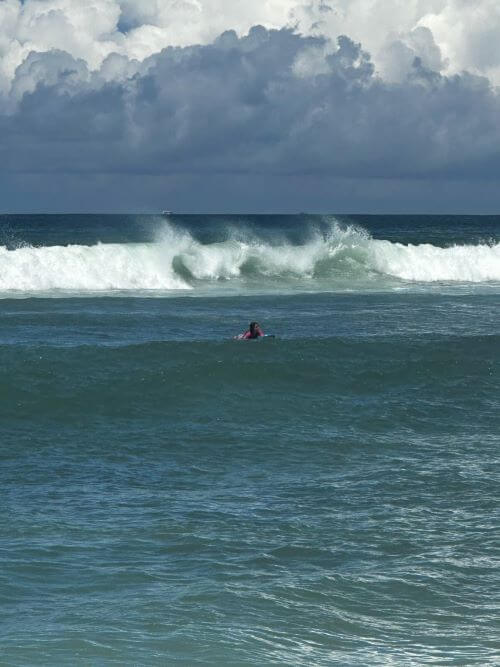
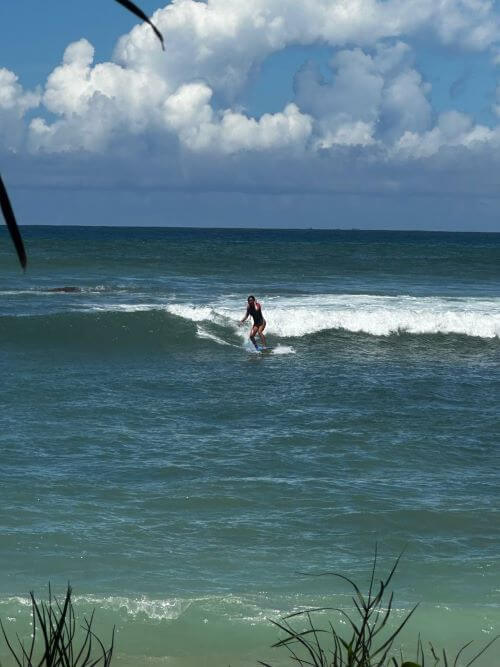
Don’t chase what’s “cool.” The best surfboard is the one that helps you catch waves, feel confident, and smile — whether it’s a soft top, longboard, fish, or hybrid. Among all the types of surfboards, the right one isn’t the trendiest — it’s the one that fits you: your body, your waves, and your joy. Surfing isn’t about the gear. It’s about your connection to the ocean. And your board? It’s just the bridge to that moment.