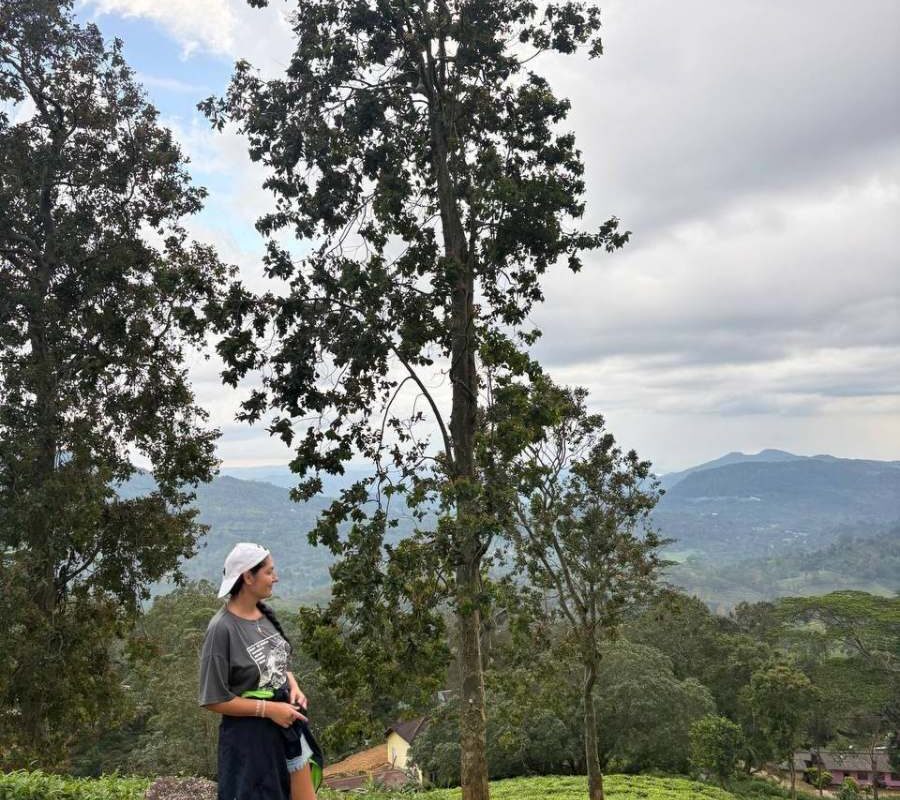
We visited in 2026. These are our real photos, real frustrations, and the things nobody tells you before you go.
- Why this forest hit different
- Why Deniyaya over the more famous entrances
- What you need to know before you go
- What the hike is actually like
- Where to sleep in Deniyaya
- When to go
- Why it stays with you
Okay, real talk — I almost skipped this entirely. The logistics seemed annoying, the leech warnings had me spiraling, and I wasn’t sure I wanted to hike through a humid jungle at 6 AM when there were perfectly fine beaches two hours south. Then we went. And honestly, I haven’t stopped thinking about it since.
The Sinharaja rainforest Deniyaya is the kind of place that doesn’t announce itself. No big sign, no gift shop, no Instagram selfie spot. Just a trailhead, mist, the sound of water somewhere deeper in, and our guide already scanning the canopy before we’d finished tying our shoes. That was the moment I knew this would be different from every other “nature experience” we’d done in Sri Lanka.
Why this forest hit different
I’ve been to plenty of forests. Planted ones, national parks that feel more like parking lots with trees, “eco” reserves that turn out to be slightly green hotels. Sinharaja Rainforest Deniyaya is none of those. It’s an 11,187-hectare old-growth lowland rainforest that has genuinely never been commercially logged. The dipterocarp trees here are 200+ years old. You can feel the age in the air, heavier, richer, like the forest breathes in a different rhythm than the rest of the world.
Part of the Western Ghats and Sri Lanka biodiversity hotspot, one of just 36 on the whole planet, this place holds more endemic species per square kilometer than almost anywhere on Earth. On the ground, that means you’re walking through a forest where the birds exist nowhere else, the frogs nowhere else, the trees nowhere else. It’s not a museum. It’s just alive. Completely, extravagantly alive.
Sinharaja Rainforest Deniyaya was Sri Lanka’s first UNESCO World Heritage Site, inscribed back in 1988. The country put this forest on the world stage before almost anywhere else. That’s not a brochure fact. You feel that weight the second you’re under the canopy.
Does every hike guarantee a rare bird sighting or a leopard? No. You might walk three hours and see only a giant squirrel, some extraordinary trees, and a spider web catching light between two mossy rocks. Which, honestly? That was enough. More than enough.
Why Deniyaya over the more famous entrances
Most people base themselves in Kitulgala or come through the Kudawa entrance in the north. Both are fine. But the southern trails from Deniyaya are quieter, less developed and, in my experience, more honest. You’re not sharing the path with tour groups. The guesthouses here are tiny, community-run places where your money actually stays in the village.
Deniyaya itself is just a small town, maybe 15,000 people. There’s a main road, a few shops, roosters at 5 AM, and rice paddies visible from the guesthouse window. No souvenir stalls pushing plastic elephants, no neon signs. It doesn’t perform for tourists because it’s not built for them. That’s exactly why it works.
If you’re weighing entrances, here’s the honest version: Sinharaja Rainforest Deniyaya via the south takes more effort to reach, but it’s the side of this forest most visitors never see.
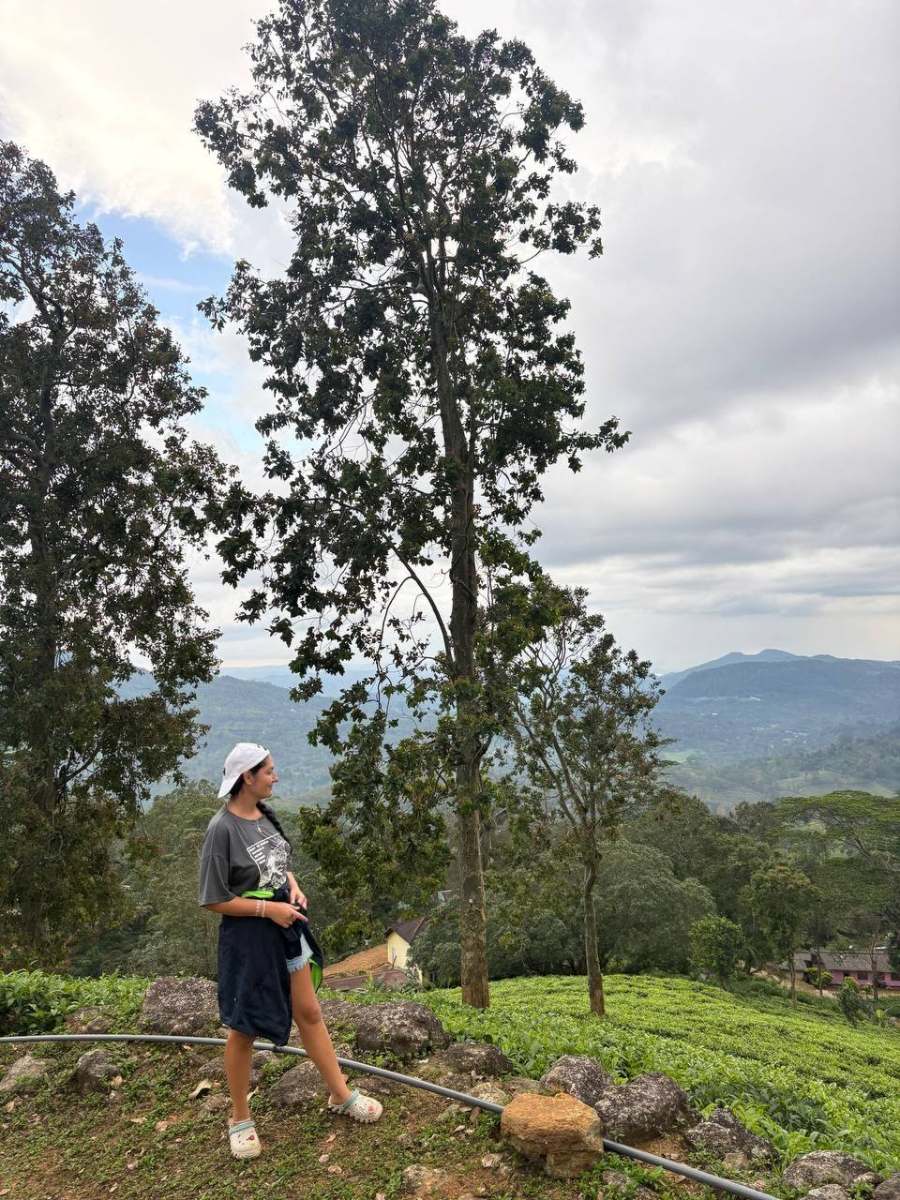
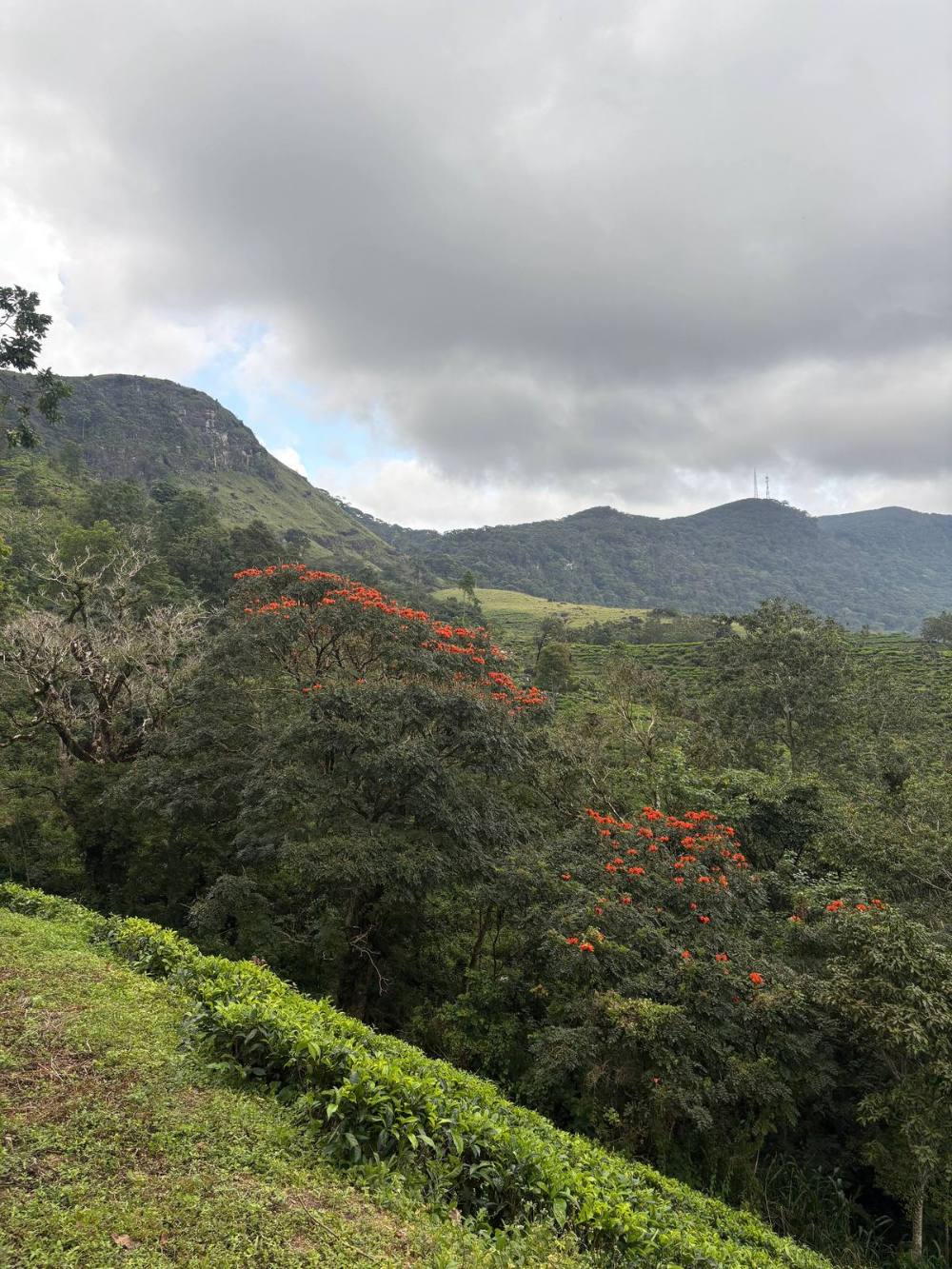
What you actually need to know before you go to Sinharaja Rainforest Deniyaya
This is the part I wish someone had told me properly. Not vague “respect nature” advice: the actual practical things that would have saved me mild embarrassment and wet socks.
Getting there
The Deniyaya entrance sits at Sinharaja Access Road, Mederipitiya, Deniyaya (roughly 6.42°N, 80.50°E). From Galle or Matara it’s about a 2-2.5 hour drive inland, here’s the pin on Google Maps. There’s no train to Deniyaya, so a hired car, tuk-tuk transfer, or private driver is the realistic way in.
Wear closed clothes. All of them.
I know it’s hot. Long pants in tropical humidity sounds like punishment. But the leeches here are real, they are plentiful, and they will find whatever gap you leave them. Long pants, long socks, closed shoes. Tuck your pants into your socks. Check your legs every 20–30 minutes. If one attaches, a pinch of salt or a quick flick removes it, no venom, no drama, just mildly undignified.
One of us wore shorts on the first morning. She spent forty minutes picking leeches off her ankles at the stream rest stop. She wore long pants every day after that.
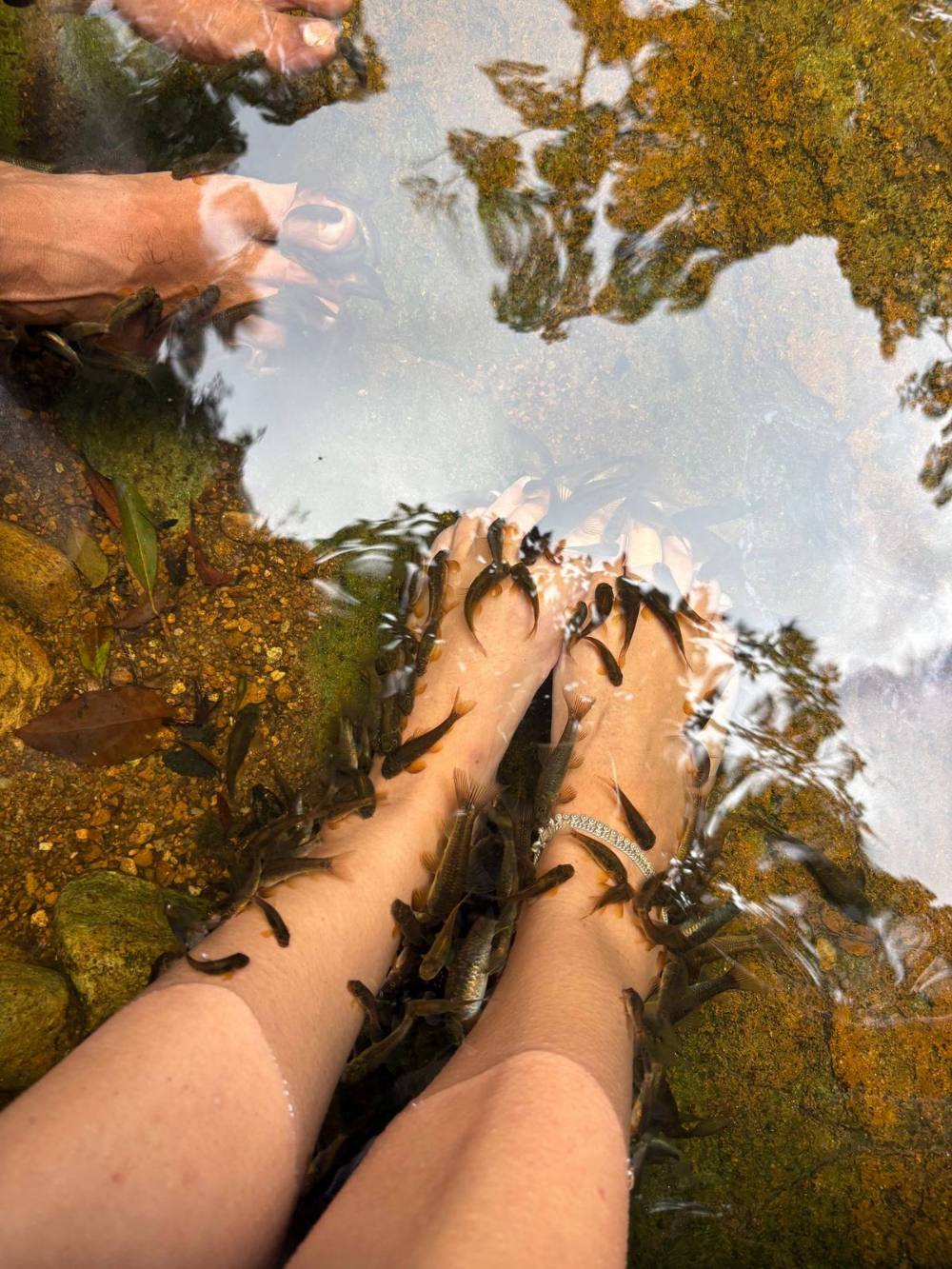
You need a licensed guide, and you actually want one
It’s legally required to enter with a licensed guide. In Deniyaya, book through the Sinharaja Community-Based Tourism Network. I know that sounds like a bureaucratic formality, but our guide knew the forest the way I know my own apartment: which plants had edible leaves, which bird call meant rain, where the leeches cluster worst and how to route around that section entirely. He spotted a purple-faced langur twenty meters up in a tree I would have walked straight past. His fee isn’t a tourist tax. It’s the price of understanding what you’re actually looking at.
Sort the permit before you start
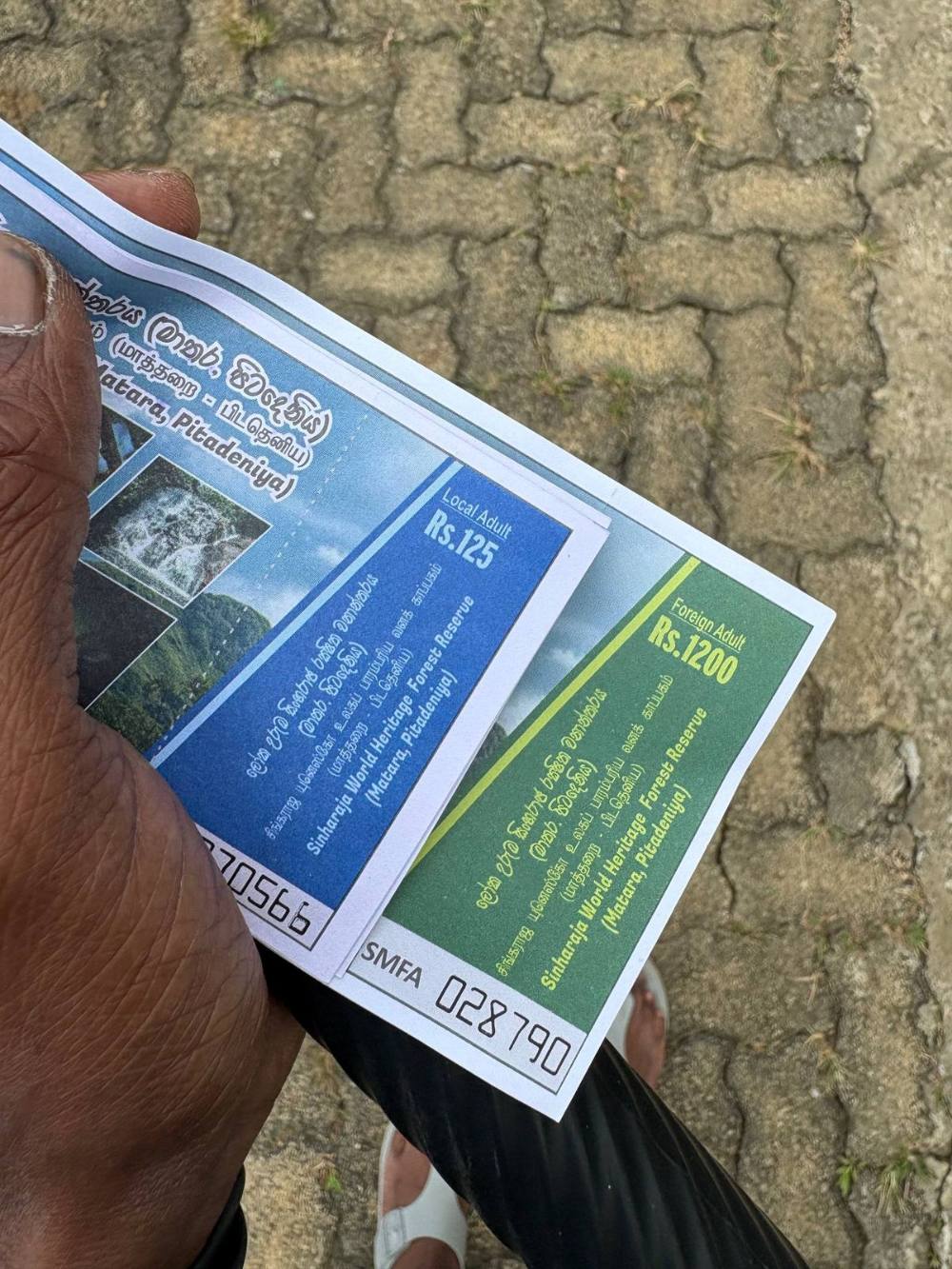
Book through your guide or at the Forest Department office in Deniyaya. About $10-20 total (it depends on the jeep, the tour, and the tips for guide). Cash only. There are no ATMs near the forest entrance, so get your cash sorted in town first. The forest entrance ticket itself is separate and cheap: Rs. 125 (about $0.40) for local adults, Rs. 1,200 (about $4) for foreign adults. It’s the guide fee and jeep hire that make up the rest of that $10-20.
What the hike is actually like
A morning hike runs roughly 6 to 10 AM, early start for birds and before the humidity turns aggressive. The Morningside Trail from Deniyaya is the classic southern route: misty, dense, with stretches where the canopy closes completely over you and you’re walking through a tunnel of ferns and old roots.
About ninety minutes in we stopped at a waterfall and just sat. No checking phones, no signal anyway. No deciding what to do next. Just the sound of water and birds, and our guide explaining quietly why the forest floor stays cool even at noon. It’s the canopy: layers and layers of it, filtering everything.
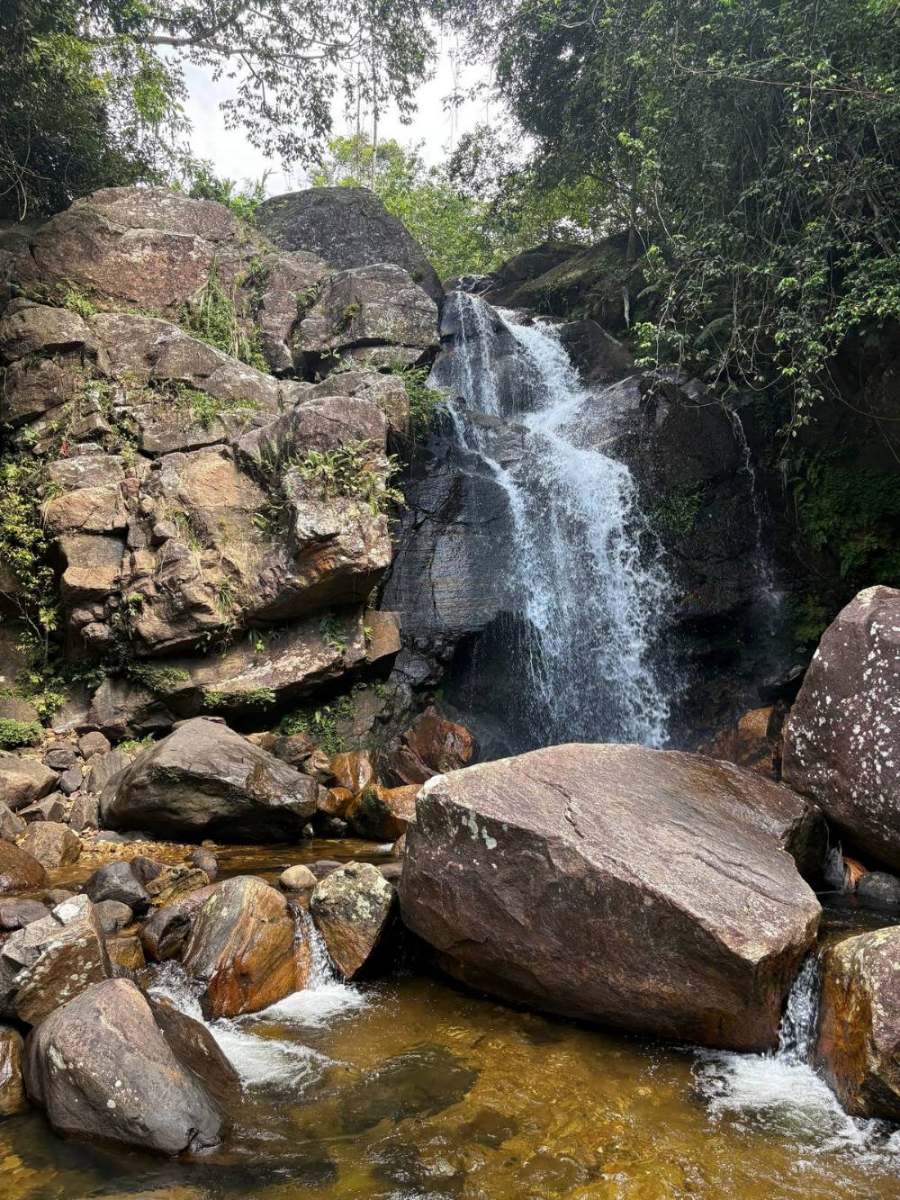
The Galapitamada Trail goes further up to a sacred rock with views that stretch on forever: rolling hills, tea fields, mountains fading into cloud. One of us checked their Apple Watch at the top: 974 meters elevation, 3:32 PM. We’d been going for hours without really noticing.
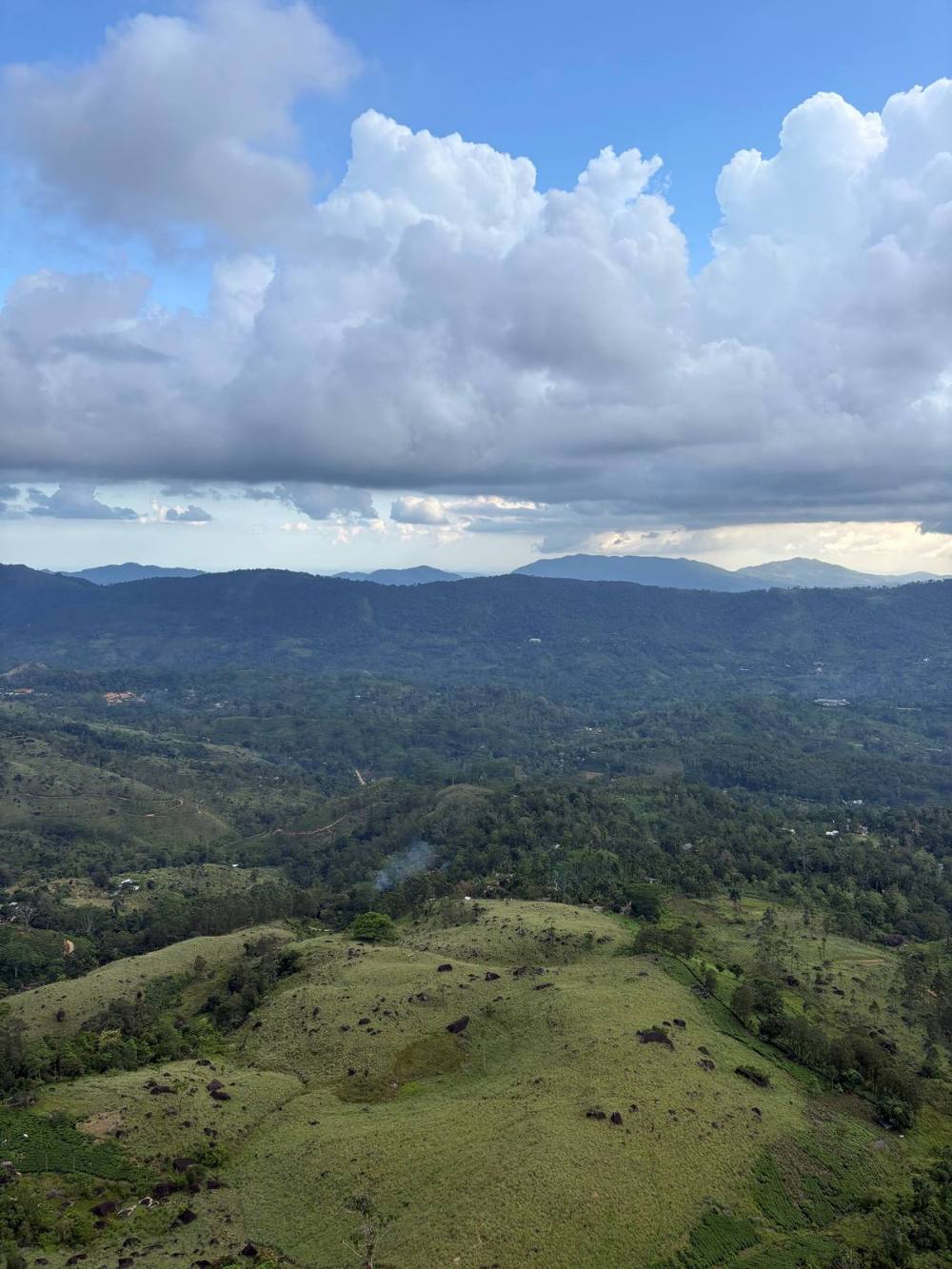
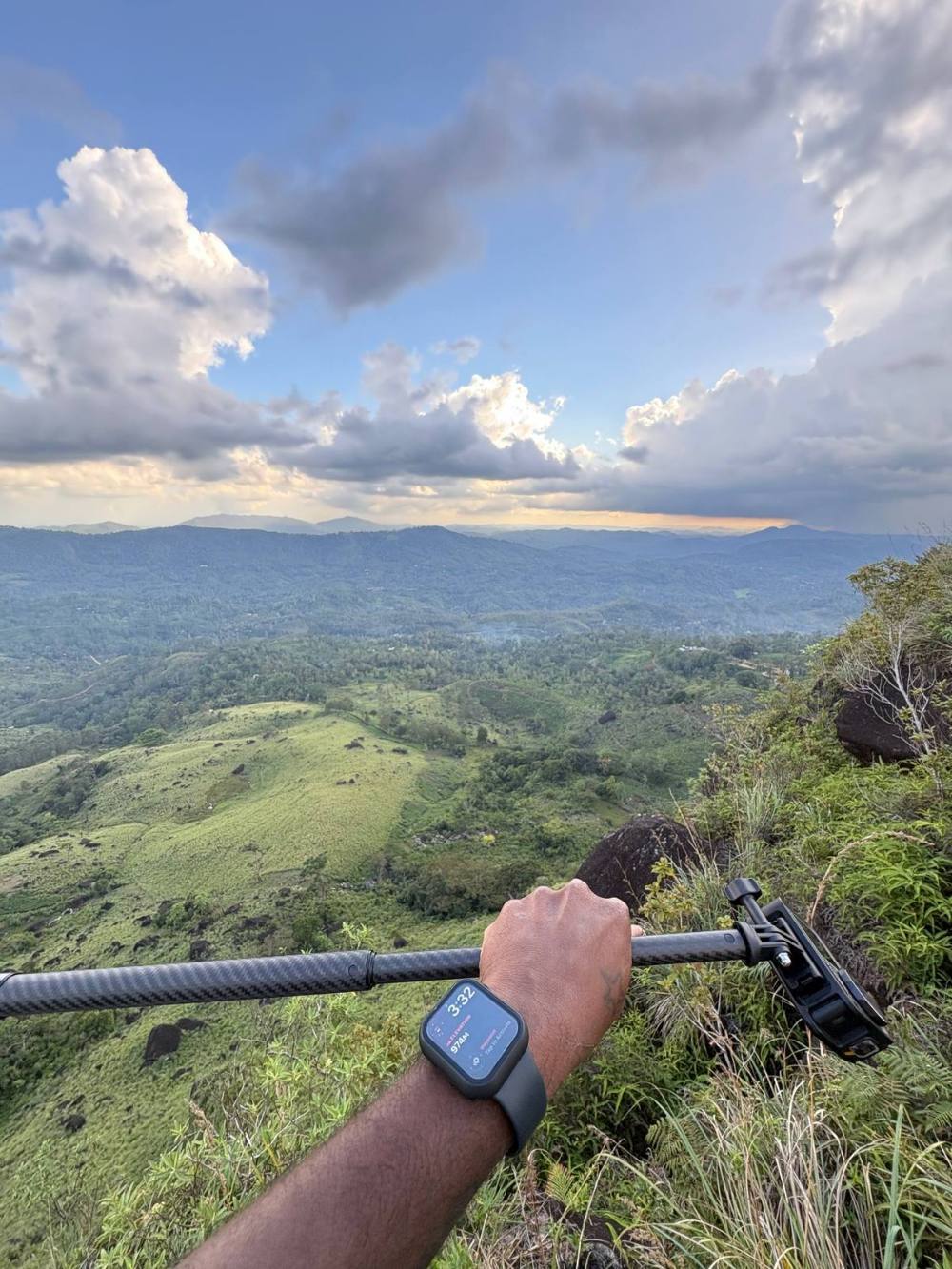
At one point I tried to cover more ground faster. Walked straight past a chameleon changing color on a branch. Missed a spider web catching the afternoon light. My guide didn’t say anything — he just waited until I slowed down, then pointed. The forest doesn’t punish you for rushing. It just stops revealing itself.
Where to sleep in Deniyaya
Forget hotels. Deniyaya runs on homestays and small guesthouses, all community-operated, all between $15–40 per night. We stayed at a place run by a retired forest officer: simple rooms, a fan, a mosquito net, rice paddies out the window. Breakfast was hoppers and coconut sambol cooked by his wife, eaten on a banana leaf while geckos clicked softly from the ceiling beams. That breakfast was better than anything we ate at larger hotels the entire trip.
If you want a bit more infrastructure without going corporate, Sinharaja Nature Lodge is solar-powered, has an organic garden, and runs guided night walks, around $35/night. Community homestays at $20–30 are the most immersive: you sleep in a local home, share meals, and sometimes end up learning about cinnamon farming over dinner completely by accident.
When to go to Sinharaja Rainforest Deniyaya
December through March is dry season, best for birdwatching and clear trails. April–May and September–November are inter-monsoon: lush, green, almost no crowds, occasional rain. June–August brings heavy monsoon, slippery trails, peak leech activity, some paths close. We visited in 2026 during the drier window. It rained once, briefly, and the forest turned into something out of a slow-motion nature documentary. Still worth it. Whichever month you land, Sinharaja Rainforest Deniyaya doesn’t really have a bad season, just a wetter, leechier one.
Why it stays with you
I’ve tried explaining Sinharaja Rainforest Deniyaya to people who haven’t been there and I keep running out of the right words. It’s not dramatic the way a big waterfall is dramatic. It’s not photogenic the way a sunset beach is photogenic. It asks something from you: attention, quiet, the willingness to walk slowly and not know what you’re looking at and be okay with that.
Our guide said something on the last morning, watching mist lift off the canopy. He wasn’t being poetic — just stating fact: “We don’t own the forest. We belong to it.” Then he pointed out a blue magpie I would never have spotted on my own.
That’s what Sinharaja rainforest Deniyaya actually is. You go thinking you’re a visitor. You leave understanding you were just passing through something much older than yourself. And somehow that’s enough. More than enough.
Pair the rainforest with the coast and you get the full Sri Lanka picture: our guide to family-friendly beaches in Sri Lanka covers where to unwind afterward, and how to cook on coconut shells is a fun detour if you want to bring a bit of Sinharaja back to your own kitchen.
If this resonated, you’ll find more honest travel in our family travel collection, places chosen with curiosity and, where relevant, leech socks.