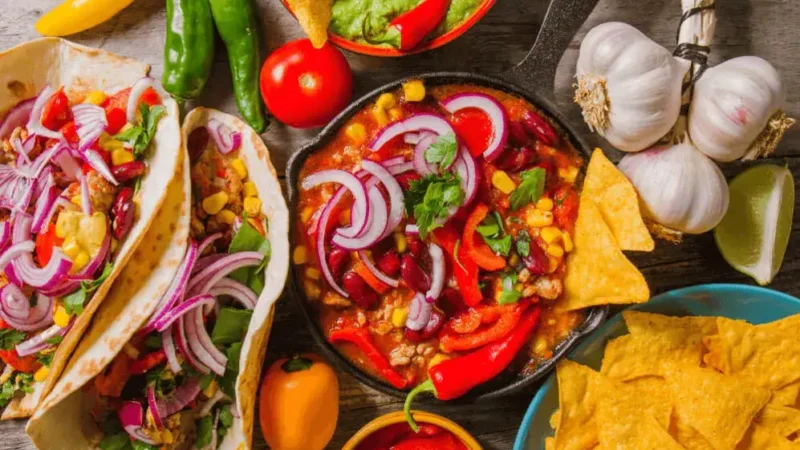
The United States does not have one national cuisine, and that is exactly what makes eating here so interesting. In a single city you might have Korean-Mexican tacos from a food truck for lunch and Southern fried chicken for dinner. Dining in the USA can also be confusing for visitors: tips are expected, taxes are added at the register, portions are huge and the server asks how you want your eggs cooked. Three things will make every meal easier: understanding tipping, knowing the main types of restaurants, and knowing which regional dishes to look for.
This guide explains how American restaurants work, what to order and how to avoid common surprises.
Why dining in the USA is so varied
American food is a story of immigration. Generations of newcomers brought their recipes and adapted them to local ingredients, which is why big cities offer food from almost every country in the world. You can find hand-pulled noodles in Queens, birria tacos in Los Angeles, Ethiopian injera in Washington, D.C., and Vietnamese pho in Houston, often made by families who have cooked these dishes for generations.
At the same time, every region has its own classics, from New England clam chowder to Texas brisket and Louisiana gumbo.
Restaurant types in the USA
| Type | What to expect | Typical price per person |
|---|---|---|
| Fast food | Counter service, no tipping | Roughly $10–15 |
| Food trucks and food halls | Creative, quick meals; small tip optional | Roughly $10–20 |
| Diners | Classic American breakfast all day, coffee refills | Roughly $15–25 |
| Casual sit-down restaurants | Full table service, tip expected | Roughly $20–40 |
| Steakhouses | Large cuts of beef, sides ordered separately | Roughly $60–150 |
| Fine dining | Tasting menus, reservations needed | $150+ |
Prices vary greatly between cities and small towns; New York, San Francisco and other big cities are the most expensive.
Classic diners
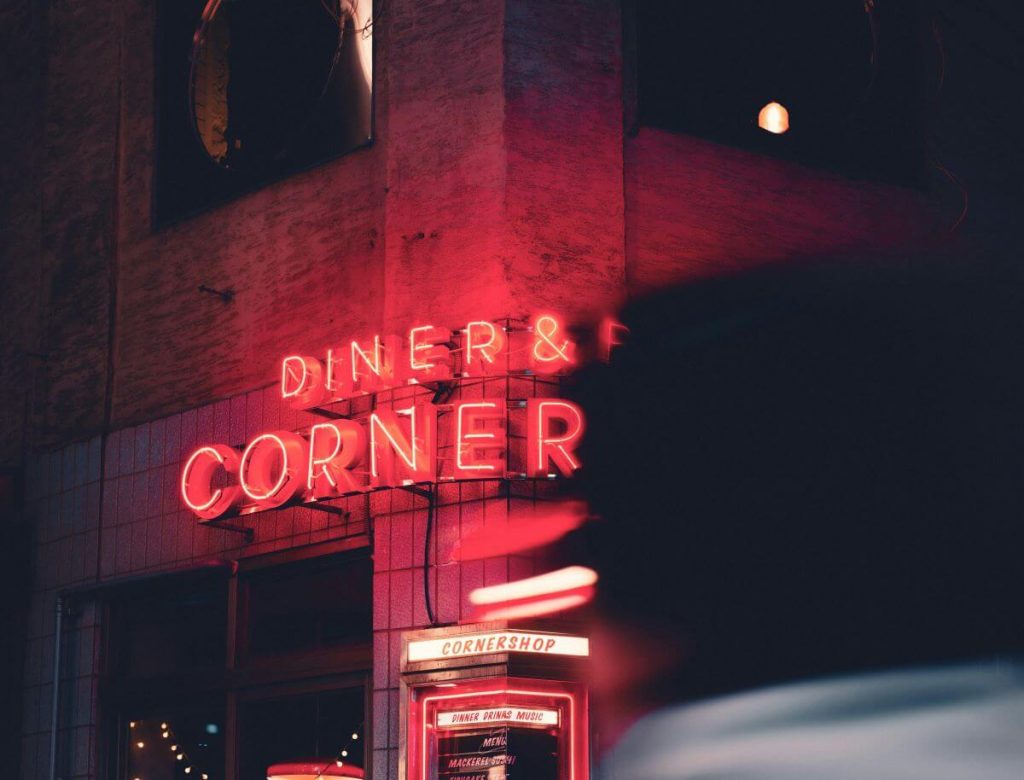
Diners are an American institution: booths, counters, coffee refills and breakfast served all day. Order pancakes, eggs, hash browns, a patty melt or a milkshake. Some are open 24 hours.
Steakhouses
Steakhouses serve large cuts of beef, often dry-aged, with sides like baked potatoes, creamed spinach and mac and cheese ordered separately and meant for sharing.
Food trucks and food halls
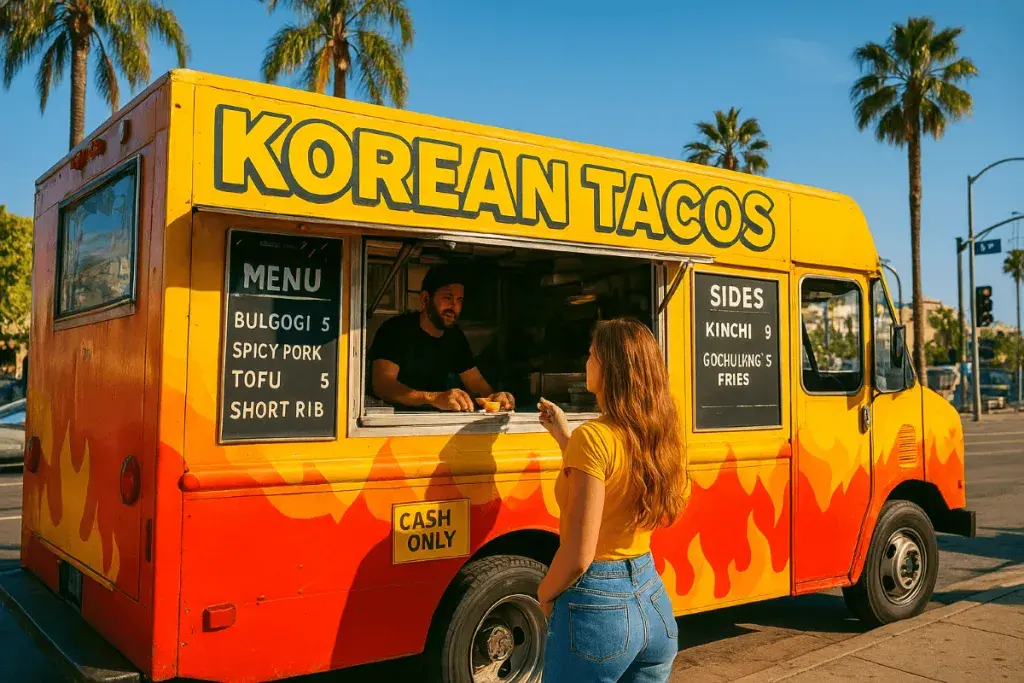
Food trucks park in business districts, at events and in dedicated “food truck parks”. Food halls group many small vendors under one roof, which is ideal for families or groups who want different things.
Farm-to-table and fine dining
Many restaurants focus on local, seasonal ingredients. At the top end, tasting menus at award-winning restaurants often need reservations weeks or months in advance.
Tipping: the most important rule
In the United States, servers rely on tips for a large part of their income, so tipping at sit-down restaurants is expected, not optional.
| Situation | Typical tip |
|---|---|
| Table service restaurant | 18–20% of the bill before tax (15% for basic service) |
| Bar drinks | About $1–2 per drink, or 15–20% of the tab |
| Food delivery | Roughly 15–20%, with a minimum of a few dollars |
| Counter service, coffee shops, food trucks | Optional, often 10% or a small amount |
| Fast food | No tip expected |
Check the bill. Some restaurants add an automatic “service charge” or “gratuity”, especially for large groups. If it is already included, you do not need to tip again.
Tablet screens. Many counters now show a tip screen with suggested percentages. At counter service, you can choose a lower amount or “no tip”.
Sales tax is not included
Menu prices usually do not include sales tax, which varies by state and city and is added to the bill at the end. Combined with a 20% tip, your final bill can be noticeably higher than the menu prices suggest.
How to order like a local
Steak doneness. Rare, medium-rare, medium, medium-well or well-done. Medium-rare is the most common choice.
Eggs. Scrambled, over easy (flipped with a runny yolk), over hard, sunny side up or poached.
Sides. Many main dishes come with one or two sides, such as fries, salad, coleslaw or mashed potatoes. You can usually swap them.
Dressings. Salads come with a choice of dressing, often ranch, Italian, blue cheese or vinaigrette.
Water and refills. Tap water is free and safe to drink. Soft drinks and coffee often come with free refills.
Allergies. Tell your server about allergies; most restaurants take them seriously, and menus often mark vegetarian, vegan and gluten-free options.
Portion sizes
American portions are famously large. Many travelers share a main course or a few appetizers. Asking for a “to-go box” for leftovers is completely normal, even in nice restaurants.
Must-try American dishes by region
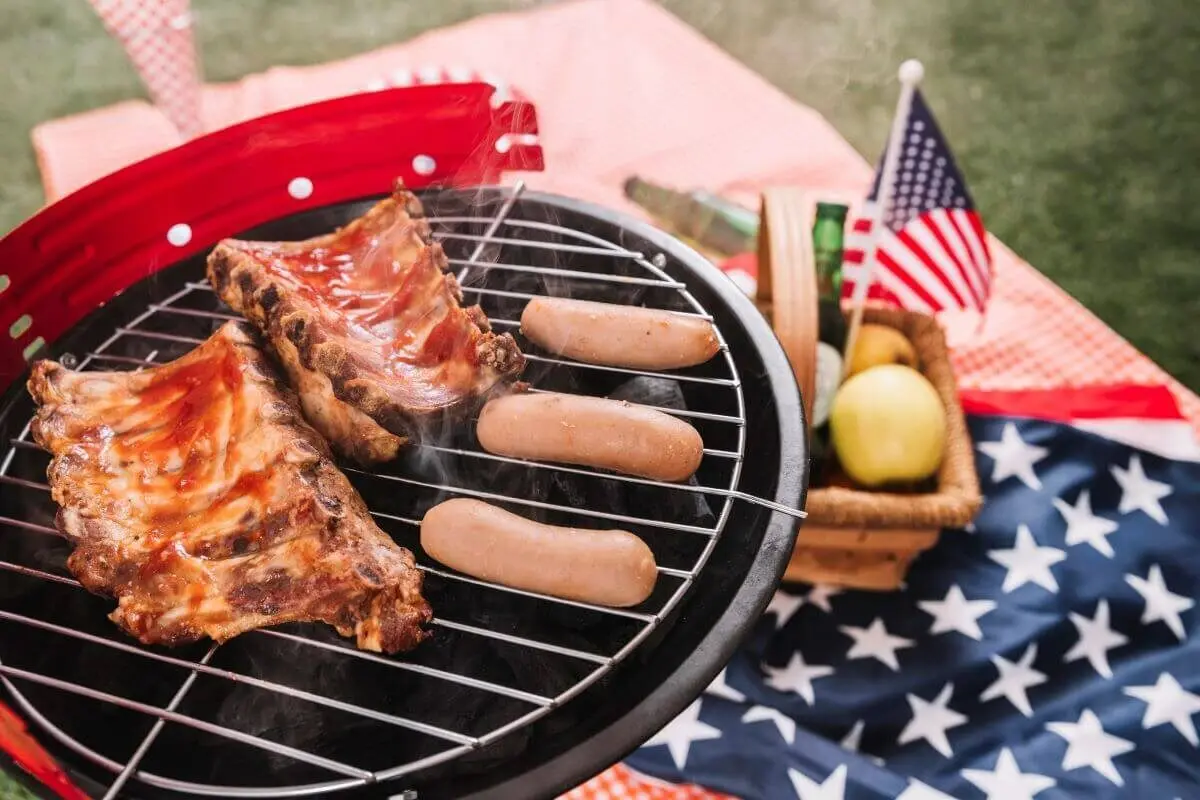
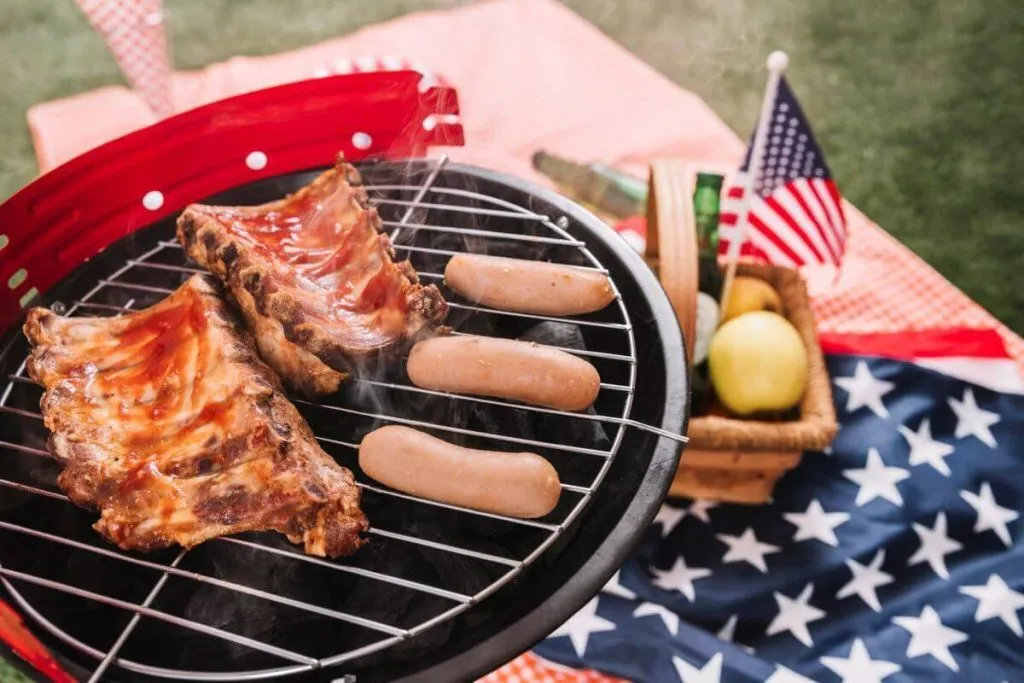
Barbecue. Regional styles are a matter of pride: beef brisket in Texas, pulled pork with vinegar sauce in the Carolinas, ribs and burnt ends in Kansas City, and dry-rub ribs in Memphis.
Pizza. New York’s thin, foldable slices versus Chicago’s deep-dish pie.
Southern food. Fried chicken, biscuits and gravy, collard greens, cornbread, shrimp and grits.
Louisiana. Gumbo, jambalaya, crawfish étouffée, po’boy sandwiches and beignets in New Orleans.
New England. Clam chowder, lobster rolls and fried clams.
The Southwest. Tex-Mex fajitas, queso and breakfast tacos; in New Mexico, dishes with red or green chile.
The Pacific Northwest. Salmon, oysters and a strong coffee culture.
Hawaii. Poke, plate lunches and shave ice.
Breakfast and brunch culture
Breakfast is a big deal in the US. Diners serve pancakes, waffles, eggs, bacon, hash browns and biscuits from early morning. On weekends, brunch, a late-morning meal mixing breakfast and lunch, is a social event, often with long lines at popular spots.
Restaurant etiquette for visitors
Wait to be seated. In most sit-down restaurants, a host will seat you. Look for a “please seat yourself” sign before choosing a table.
Service is quick. Servers check on tables often and bring the bill without being asked when you seem finished. This is meant as good service, not rushing.
Splitting the bill. Many restaurants can split bills; ask before ordering in large groups.
Paying. Cards are accepted almost everywhere. In some restaurants, the server takes your card to the register and brings back a receipt where you write the tip and total.
Dress code. Most places are casual. Fine dining restaurants may expect smart casual clothing.
Dining in the USA with kids
American restaurants are generally very family-friendly. Many casual restaurants offer kids’ menus with smaller portions and lower prices, high chairs and booster seats are standard, and crayons or coloring sheets often arrive with the menu. Early dinners, around 5 or 6 p.m., are common and make it easier to find a table. Diners, pizza places and food halls are especially relaxed with children.
Great food cities to plan a trip around
New York City: bagels, pizza by the slice, delis and food from almost every country.
New Orleans: Creole and Cajun cooking, beignets, po’boys and live music in restaurants.
Chicago: deep-dish pizza, Chicago-style hot dogs and a big fine dining scene.
Austin and Houston: Texas barbecue, Tex-Mex and one of the most diverse food scenes in the country.
San Francisco and the Bay Area: sourdough, Mission-style burritos and farm-to-table cooking.
Charleston and Savannah: Lowcountry cooking such as shrimp and grits.
Each city has its own food tours, markets and signature dishes, so a little research before you go makes a big difference.
Saving money on food in the USA
Lunch specials, happy hours with discounted food and drinks, food halls, supermarkets with prepared food counters and farmers’ markets all help keep costs down. For more ideas, see our ultimate guide to budget travel.
Frequently asked questions
How much should I tip in a restaurant in the USA?
Around 18–20% of the bill before tax at sit-down restaurants, and 15% for basic service. Check whether a service charge has already been added.
Is tax included in menu prices in the USA?
Usually not. Sales tax varies by state and city and is added to the bill.
Is tap water free in American restaurants?
Yes. Tap water is free and safe to drink, and many restaurants serve it automatically.
Why are portions so big in the USA?
Large portions are part of American food culture. Sharing dishes or taking leftovers home in a to-go box is common and accepted.
What food is the USA famous for?
Regional barbecue, burgers, pizza, fried chicken, clam chowder, Tex-Mex, Southern food and a huge range of immigrant cuisines.
A table for every taste
Dining in the USA is easiest when you know the unwritten rules: tip around 20%, expect tax on top, share big portions and ask about local specialties. Follow those simple habits, and every region, from New England to the Gulf Coast, becomes a chance to taste a different side of the country.