Most people picture the same thing at midnight on December 31: a crowded square, a countdown and fireworks. But some of the most memorable New Year’s Eve destinations celebrate in ways that feel completely different, with temple bells instead of DJs, a whole bay lit up at once, or a family feast that happens twice. This guide picks three of them and matches each one to a travel budget: Japan for a luxury trip, the Portuguese island of Madeira for a mid-range one, and Georgia for travelers watching every dollar.
Each section covers why the celebration is special, what to do on the night, what drives the cost and how to plan. Prices change every season, so instead of exact numbers you will find where the money goes and how to keep it under control.
Three New Year’s Eve destinations at a glance
| Japan | Madeira, Portugal | Georgia | |
|---|---|---|---|
| Budget level | Luxury | Mid-range | Budget |
| The mood | Quiet, spiritual, traditional | Big fireworks, festive streets | Family feasts, homemade fireworks |
| Highlight | 108 temple bells at midnight | A record-breaking fireworks show over Funchal bay | Two New Years: January 1 and January 14 |
| Weather | Cold, often clear | Mild, around the mid-60s °F (about 18 °C) by day | Cold in Tbilisi, snowy in the mountains |
| Book ahead | Several months | Several months | A few weeks is often enough |
Luxury: a traditional New Year in Japan
Why Japan is different
In Japan, New Year, called Shōgatsu, is the most important holiday of the year, and it is closer to a quiet family Christmas than to a party. Offices close, people travel home, houses are cleaned from top to bottom, and the first days of January are spent eating special food and visiting shrines. For a traveler, this makes Japan one of the most unusual New Year’s Eve destinations: instead of noise at midnight, you hear the slow, deep sound of temple bells.
The three moments that define the night
1. Toshikoshi soba before midnight. On December 31, families eat buckwheat noodles, toshikoshi soba, which means “year-crossing noodles.” The long noodles stand for a long life, and the tradition is to finish them before the year ends.
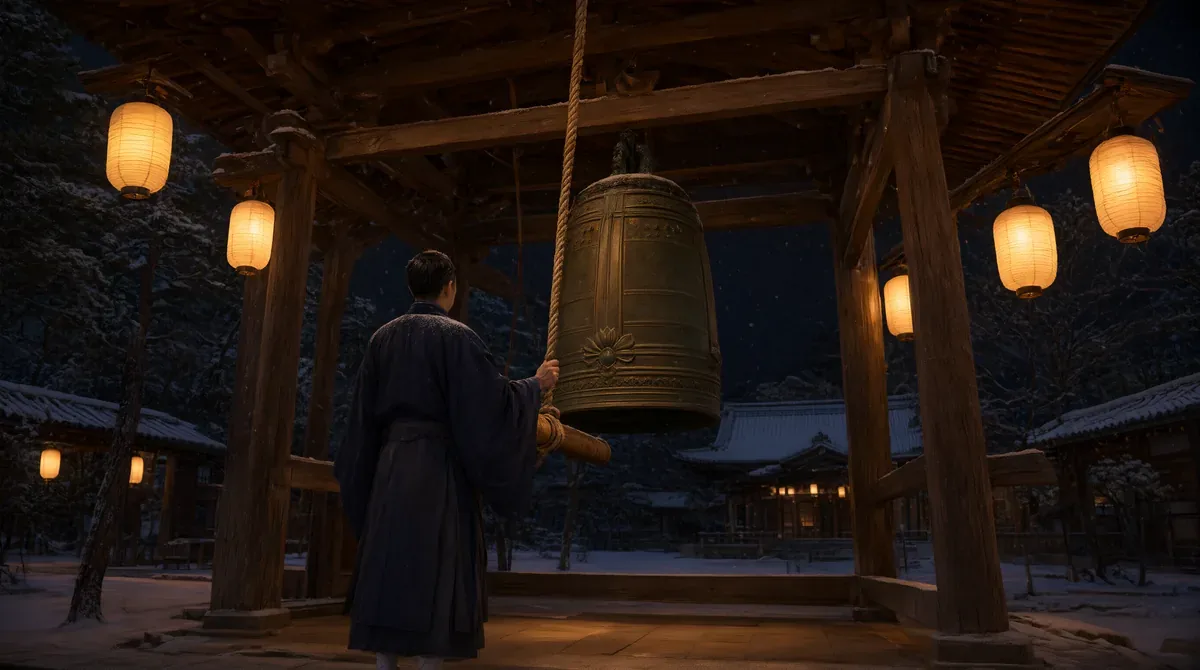
2. Joya no kane, the 108 bells. Around midnight, Buddhist temples ring their great bells 108 times, one strike for each of the 108 earthly desires in Buddhist teaching. The ringing is slow and takes more than an hour. Some temples let visitors strike the bell themselves, while at famous temples the monks do it and crowds gather to listen.
3. The first sunrise and the first shrine visit. On January 1, many people watch hatsuhinode, the first sunrise of the year, from a beach, a mountain or a rooftop. Then comes hatsumōde, the first shrine or temple visit, with food stalls, lucky charms and omikuji, paper fortunes. The most famous shrines welcome millions of visitors in the first three days of January, so expect long but cheerful lines.
Where the luxury comes in: a ryokan New Year
The best way to experience Shōgatsu is in a ryokan, a traditional inn with tatami rooms, hot spring baths (onsen) and multi-course dinners. Many ryokans prepare special New Year menus, and on January 1 guests may be served osechi ryōri: beautiful lacquered boxes (jūbako) filled with small dishes, each with a meaning. Black soybeans wish for health, herring roe for many descendants, and sweet chestnuts for wealth.
Hot spring towns in the mountains, the historic streets of Kyoto and the snowy countryside of the Japanese Alps are all wonderful places to spend these days. Soaking in an outdoor bath while snow falls around you is a New Year memory that is hard to beat.
What drives the cost
| Cost | Why it is high | How to manage it |
|---|---|---|
| Ryokan | Holiday rates, limited rooms, meals included | Book several months ahead; stay one or two special nights, then switch to a city hotel |
| Flights | Peak season for travel to Asia | Fly in a few days before December 31 |
| Trains | Shinkansen trains are very busy around the holidays | Reserve seats in advance |
| Food | Many restaurants close for several days | Choose a hotel or ryokan with meals included |
Practical tips for New Year in Japan
- Many shops, museums and restaurants close from about December 31 to January 3. Convenience stores, department stores and big hotels stay open.
- January 1 and 2 are the days of fukubukuro, “lucky bags” sold by stores with mystery contents worth more than their price. Lines start early.
- Dress warmly: midnight at a temple can be very cold.
- Be quiet and respectful at temples and shrines, and follow what locals do at the purification fountain.
Mid-range: Madeira’s famous fireworks
Why Madeira is different
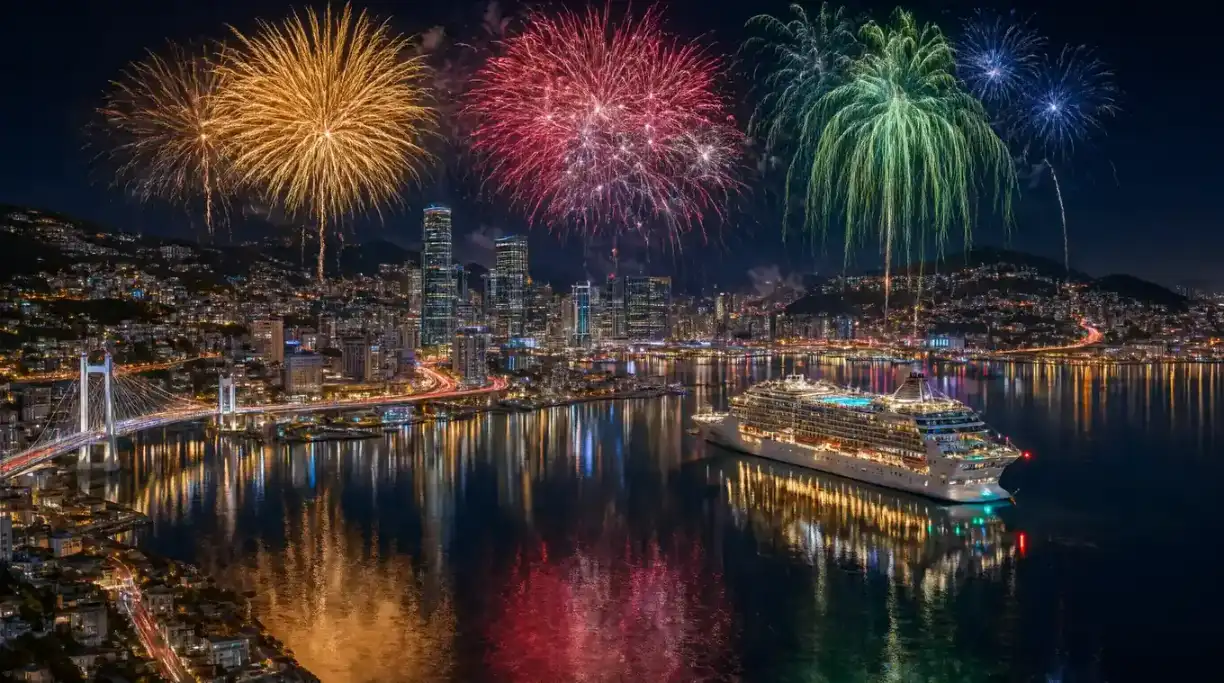
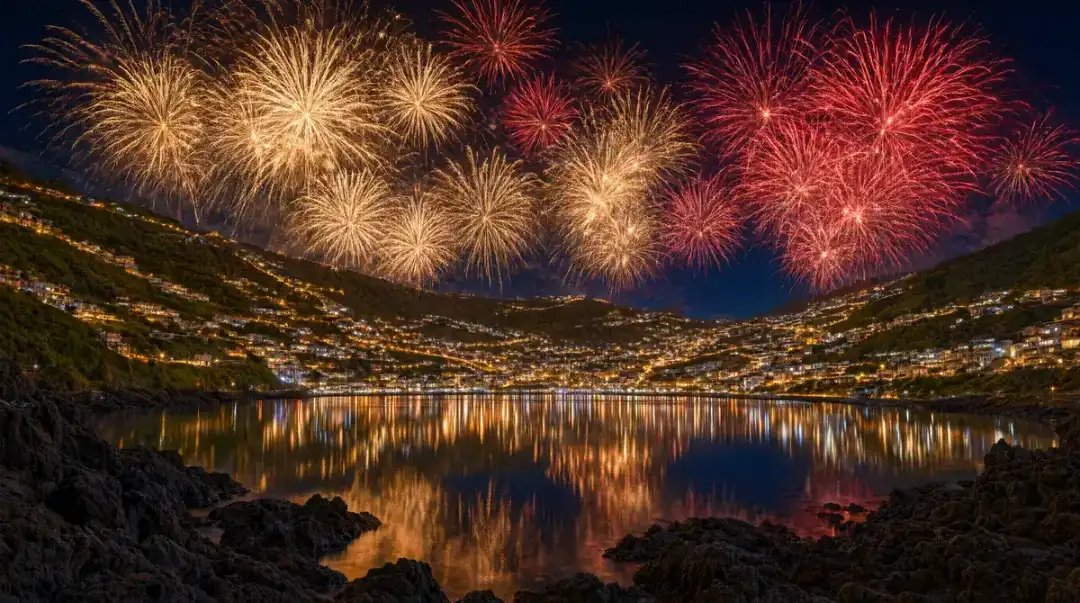
Madeira, a Portuguese island in the Atlantic off the coast of Africa, is known for its flowers, cliffs and mild weather. On New Year’s Eve, it becomes one of the best New Year’s Eve destinations in Europe for one simple reason: the fireworks. The capital, Funchal, sits in a natural amphitheater of green hills around a bay. At midnight, fireworks are launched from many points across the city and the harbor at the same time, so the whole bay lights up around you instead of in one spot.
The show entered the Guinness World Records as the largest fireworks display in the world on the night of 2006 to 2007, when about 37 firing stations were set up across Funchal. The record has since been beaten elsewhere, but the scale and the setting still make it one of the most spectacular midnights anywhere.
The three pillars of a Madeira New Year
1. The fireworks. Watching them is free. Popular spots include the waterfront promenade, the hillside viewpoints above the city and the balconies of hotels facing the bay. Cruise ships anchor in the harbor especially for the night, and boat trips are another option.
2. A long festive season. From early December to the Day of Kings on January 6, Funchal is decorated with Christmas lights, and the old town hosts concerts and street food stalls. Locals call the season simply a Festa, “the party.”
3. Mild winter weather. Days are usually in the mid-60s °F (around 18 °C), warm enough to walk the levada trails, swim in sheltered pools or sit outside with a glass of Madeira wine.
What drives the cost
| Cost | Notes | How to save |
|---|---|---|
| Flights | Often via Lisbon or other European cities | Compare routes and dates; arrive a few days before the 31st |
| Hotels | Rooms with a bay view sell out early and cost more on the night | Book months ahead, or stay outside the center and watch from a public viewpoint |
| New Year’s Eve dinner | Restaurants offer set menus at holiday prices | Have an early dinner and join the crowds on the waterfront |
| Car rental | Useful for exploring the island | Rent for a few days only; roads are steep and winding |
Madeira sits in the middle of the budget range: a European trip with fair prices for food and transport, where the main event costs nothing. Most of the money goes on getting there and staying close to the bay.
Practical tips for Madeira
- Arrive at your viewing spot early; roads close and the waterfront fills up well before midnight.
- Bring a light jacket for the evening breeze.
- Try bolo do caco, a round garlic flatbread, and espetada, beef skewers grilled over wood.
- US travelers can usually visit Portugal without a visa for short stays, but always check the current entry rules for the Schengen area before booking.
Budget: two New Years in Georgia
Why Georgia is different
I have traveled around Georgia, and what stays with you is the hospitality: in Georgia, a guest is treated as a gift. New Year is the holiday where this shows most. It is celebrated mainly at home, around a table that never seems to empty, and the season is unusually long: New Year on January 1, Orthodox Christmas on January 7, and then the Old New Year on the night of January 13 to 14, which follows the old Julian calendar. Few New Year’s Eve destinations give you two midnights to celebrate.
The three traditions to know
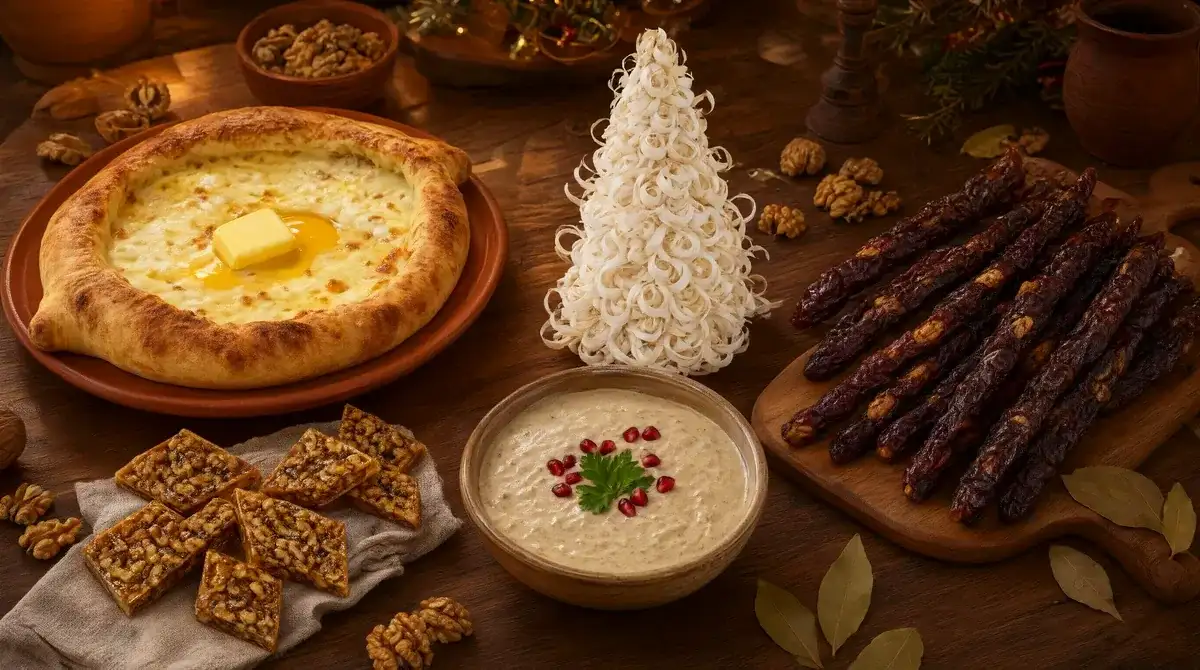
1. Chichilaki, the Georgian Christmas tree. Instead of (or next to) a fir tree, many homes put up a chichilaki: a small white “tree” made from a hazelnut or walnut branch, shaved into long curly strips that look like a beard. It stands for renewal, and after the holidays it is traditionally burned to leave the troubles of the old year behind. You will see them sold at markets in late December, and they make an original souvenir.
2. Mekvle, the first guest. The first person to step into a home after midnight is the mekvle, and Georgians believe this guest brings the household’s luck for the whole year. Families often invite someone cheerful, kind and successful for the role, and the guest arrives with sweets and good wishes.
3. The feast, or supra. The New Year table is huge. Look for satsivi, chicken or turkey in a walnut and garlic sauce made especially for the holidays, gozinaki, honey and walnut candies that stand for abundance, churchkhela, nuts strung on a thread and dipped in thickened grape juice, and of course khachapuri. A tamada, the toastmaster, leads long and heartfelt toasts.
What New Year’s Eve looks like in Tbilisi
At midnight, Tbilisi does not wait for an official show. Families launch their own fireworks from balconies, yards and streets all across the hilly city, so the sky crackles in every direction for a long time. Watching from a viewpoint such as Narikala Fortress or a rooftop gives a view over the whole city. After midnight, people visit friends and relatives, and the celebration often continues until morning.
If you prefer snow, the ski resort of Gudauri, a few hours’ drive from Tbilisi, is busy over the holidays and combines skiing with the same generous Georgian table.
Why Georgia works on a budget
| Cost | Notes |
|---|---|
| Accommodation | Guesthouses and apartments are good value, and holiday price rises are moderate |
| Food | Bakeries, markets and local restaurants are cheap; khachapuri alone is a full meal |
| Transport | City buses and the Tbilisi metro are inexpensive; shared minibuses (marshrutkas) go almost everywhere |
| The main event | Free: fireworks, street atmosphere and, if you are lucky, an invitation to a family table |
For more ways to stretch your money, see our ultimate guide to budget travel.
Practical tips for Georgia
- US citizens can visit Georgia without a visa for long stays, but check the current rules before travel.
- Many shops and restaurants close or shorten their hours on January 1 and 2, so stock up on snacks.
- On January 7, Christmas processions called Alilo walk through the streets of Tbilisi with songs and banners.
- If you are invited to a family supra, bring something sweet, accept the food with thanks and pace yourself: the meal is long.
- Fireworks are everywhere at midnight, so keep a safe distance and watch from a balcony or a viewpoint.
How to choose between these New Year’s Eve destinations
| If you want… | Choose |
|---|---|
| Peace, tradition and hot springs | Japan |
| The biggest fireworks show and warm weather | Madeira |
| Hospitality, food and the lowest cost | Georgia |
| Snow | Japan’s mountains or Gudauri in Georgia |
| To celebrate twice | Georgia, with New Year on January 1 and January 14 |
You can also combine ideas: spend New Year’s Eve in Madeira and fly to Georgia for the Old New Year on January 13, or plan a ryokan night in Japan and a big city countdown in Tokyo on the same trip.
Planning tips for any New Year trip
- Book early. New Year is one of the busiest travel weeks of the year. Flights and hotels near the main celebrations get more expensive as the date gets closer.
- Arrive before December 31. Delays happen, and arriving two or three days early lets you settle in and find your midnight spot.
- Expect closures on January 1. In all three countries, many places close or open late.
- Check the weather. Japan and Georgia can be cold at midnight; Madeira is mild but breezy.
- Respect local customs. In Japan, keep quiet at temples; in Georgia, accept hospitality gracefully; in Madeira, follow police directions around the bay.
- Get travel insurance. Holiday trips are expensive to rebook if something goes wrong.
Frequently asked questions
What are the most unique New Year’s Eve destinations?
Japan, with its 108 temple bells and quiet traditions, Madeira, with fireworks across the whole bay of Funchal, and Georgia, which celebrates both January 1 and the Old New Year on January 14, are three of the most unusual places to welcome the New Year.
Where can I spend New Year’s Eve on a budget?
Georgia is one of the best value options in Europe. Accommodation, food and transport are inexpensive, and the main celebrations, including fireworks across Tbilisi, are free.
How do people celebrate New Year in Japan?
They eat toshikoshi soba noodles on New Year’s Eve, listen to temple bells ring 108 times around midnight, watch the first sunrise and visit a shrine in the first days of January. Families share osechi ryōri, special food in lacquered boxes.
Are the Madeira New Year fireworks free?
Yes. Anyone can watch them from the waterfront and the viewpoints above Funchal. You only pay if you choose a hotel room with a view, a restaurant dinner or a boat trip.
What is the Old New Year in Georgia?
It is a second New Year celebrated on the night of January 13 to 14, based on the old Julian calendar. Families gather again for a festive meal.
Three midnights, three budgets
The best New Year’s Eve destinations are not always the biggest cities. In Japan, the year ends with temple bells and a hot spring bath; in Madeira, with a whole bay lit up by fireworks; in Georgia, with a table full of walnut sweets and a second celebration two weeks later. Choose the one that fits your budget and your mood, book early, and start the year somewhere you will remember.