
When people ask what living abroad alone is really like, they usually want one of two answers: the postcard version, or the version where everything falls apart. Neither is true. The honest answer is that it is ordinary and hard at the same time — you handle visas, money, work, and loneliness with no one checking whether you’re okay, and most days nothing dramatic happens, which is exactly what makes it heavy. This is not a warning to stay home. It’s what I wish someone had told me before I started packing.
Written from years of moving between countries for work and travel — Georgia, Turkey, the Netherlands and other parts of Europe, Qatar, the Maldives, Kuala Lumpur, Thailand, Sri Lanka, Vietnam, and a good part of Asia besides. Not a checklist. A honest account — and, despite everything below, one I’d choose again.

The three things nobody explains before you leave
Every version of “living abroad” — student, remote worker, digital nomad, someone chasing a job — comes down to the same three pressures, whatever the brochure says.
1. Paperwork that doesn’t care how you feel
A visa office does not know you cried on the plane. It wants a form filled out correctly, a fee paid in the right currency, and a photo that meets a spec nobody explains clearly. Somewhere in your first year abroad you will stand in a queue, hand over a document you were sure was correct, and be told it is missing a stamp you’d never heard of. You will go back the next day, or the next week, and do it again. This is not a sign you’re doing something wrong. It is the actual texture of living somewhere on someone else’s terms — you are a guest with a file number, and the system has no obligation to be kind about it.
2. Work that can disappear without warning
At home, losing a job is a crisis. Abroad, it can be a crisis with a deadline attached, because in many countries your legal right to stay is tied to your employment. A company restructures, a visa sponsorship changes rules, a contract simply isn’t renewed — and suddenly you’re not just job-hunting, you’re job-hunting against a clock that also decides whether you get to stay in the apartment you just furnished. Freelancers and remote workers face a quieter version of the same thing: a client disappears, a platform changes its policy, a bank flags an international transfer for “review.” Financial stability abroad is rented, not owned, until you’ve built enough of a base that one setback doesn’t threaten the whole structure.
3. A safety net that is now a plane ticket away
At home, if something goes wrong, there is usually someone who can be at your door in twenty minutes. Abroad, your parents are a video call and a fourteen-hour flight away.
You learn to solve problems that would once have been a phone call to family — a fever alone in a rented room, a lease dispute in a language you’re still learning, a bank card that stops working on a Sunday. Nobody comes. You figure it out, and then you’re proud of yourself in a slightly hollow way, because pride and exhaustion arrive at the same time.
What the fear of living abroad alone actually feels like versus what people imagine
| What people imagine | What it’s actually like |
|---|---|
| Constant danger, crime, disaster | Mostly: bureaucracy, admin, waiting rooms, and your own brain at 2am |
| Adventure and freedom, every day | Freedom, yes — but freedom includes the freedom to feel completely unmoored |
| You’ll make friends immediately | You’ll be surrounded by people and still eat dinner alone most nights, for months |
| Homesickness is missing a place | It’s usually missing being known — not scenery, but people who don’t need context |
| It gets easier in a straight line | It gets easier in waves, with relapses triggered by things as small as a smell or a song |
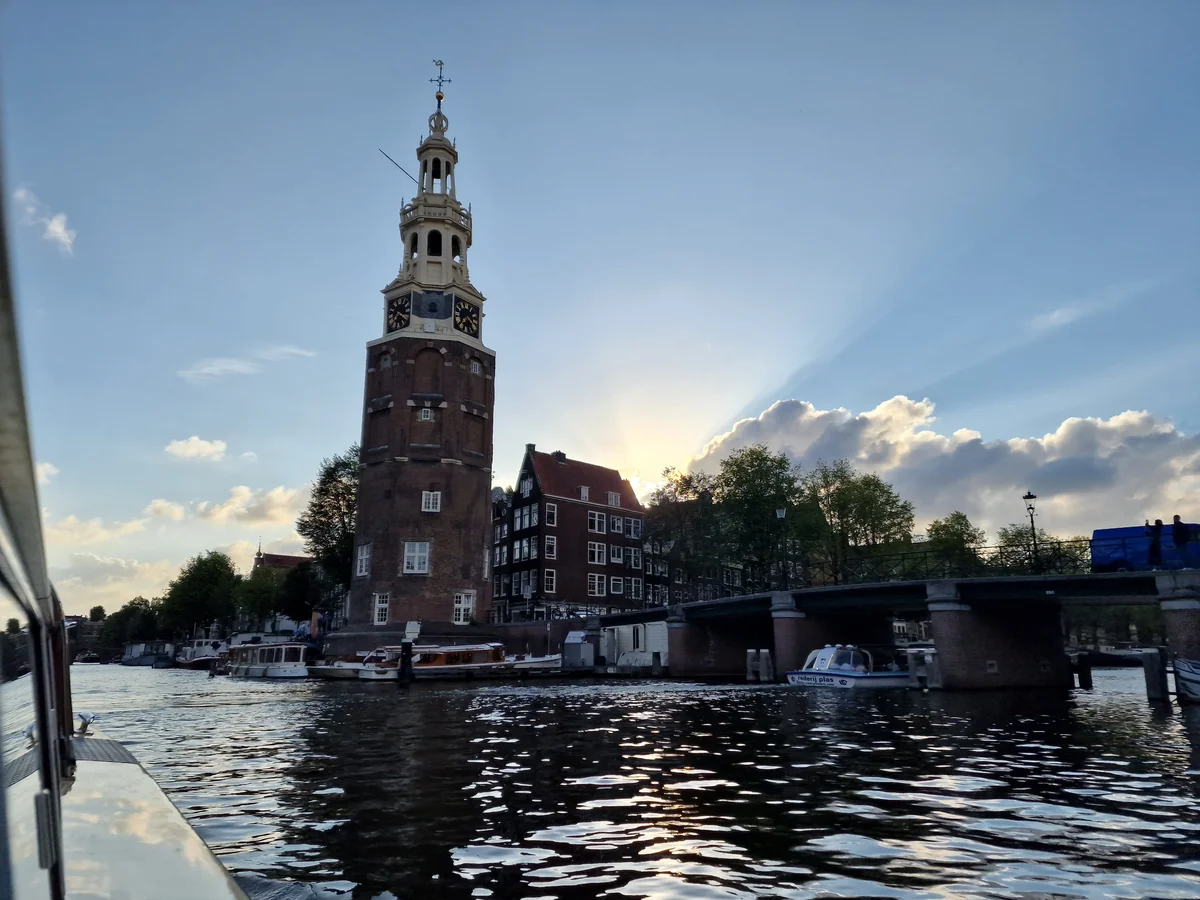
The loneliness of living abroad alone that doesn’t look like loneliness
Nobody prepares you for the specific shape of it. It isn’t dramatic — you’re not sobbing in an airport (though that happens too, once, maybe twice). It’s smaller and it repeats: ordering food for one in a restaurant that seats six, understanding a joke a beat too late because you’re translating in your head, realizing you haven’t said a full sentence out loud all day even though you left the apartment. It’s the particular ache of a good day — a beautiful sunset, a meal worth remembering — with no one beside you who already knows your context, so you photograph it instead of sharing it in real time.
This kind of loneliness is not solved by being social. You can go out every night and still feel it, because it isn’t about company, it’s about being known. It takes real time — usually longer than people admit publicly — to build even one relationship abroad that carries the weight a childhood friendship carries. Most people underestimate this by a factor of two or three, then feel like a failure when month three doesn’t feel like home. Month three rarely does. Month fourteen might — and the friendships that do form abroad tend to be sturdier than people expect, precisely because they were built without the comfort of shared history to lean on.

Money, visas and the administrative weight of living abroad alone
This is the part that eats time and energy disproportionate to how “small” it looks on paper. A short list of things that quietly take up mental bandwidth living abroad:
- Renewing a visa months before it expires, because processing times are never what the website claims
- Opening a local bank account as a foreigner, which in some countries requires paperwork you can only get after opening a bank account — a genuine catch-22
- Health insurance that either doesn’t cover you the way home insurance did, or costs far more than expected
- Tax obligations in two countries at once, with rules that change and rarely get explained in English
- A landlord who can end a lease with less notice than you’d get at home, because tenant protections vary wildly by country
None of this is insurmountable. All of it is real, and all of it adds a background hum of low-grade stress that living abroad alone brings — the kind people who haven’t lived it tend to wave away as “just paperwork.”
What actually helps — the part people skip
The advice about living abroad alone that circulates online tends to be either too vague (“just put yourself out there!”) or too cheerful to be useful. What actually helps with living abroad alone is less romantic:
Build one anchor before you need it. One person — a colleague, a neighbor, someone from an expat group — who would notice if you disappeared for a week. Not a best friend yet. Just one person who exists in your daily radius.
Keep a version of your old routine. The specific exercise you did at home, the specific tea you drank, the specific time you called your mother. Continuity, even in tiny rituals, does more for stability than any new adventure will.
Learn the bureaucracy of the country like a second job. Treat visa rules, banking, and healthcare access as a skill to actively study, not something to figure out by accident under pressure. The people who handle living abroad alone least dramatically are usually not the most resilient — they’re the ones who did the paperwork research early.
Let the sadness be boring. It doesn’t need to be a crisis every time it shows up. Some evenings you’ll just feel flat and far from home, and the healthiest response is often the least dramatic one: a video call, an early night, acknowledging it and moving on, rather than treating every low moment as proof you made the wrong choice.
Accept that “home” splits. Eventually you stop waiting to feel fully at home somewhere and start accepting that home becomes plural — pieces of it in your passport country, pieces of it wherever you’re standing. That shift, more than any single practical fix, is what makes the whole thing sustainable long-term.

The angle nobody puts in the brochures: you don’t fully belong anywhere again
This is the part almost no one says out loud, and it’s the most important one for anyone weighing this kind of life. Living abroad for long enough changes you in a way that makes going home strange too. You come back and find that friends have moved on in ways you weren’t there for, that your hometown’s rhythm feels slightly foreign, that you’ve absorbed habits and reference points nobody around you shares.
This isn’t a reason not to go. It’s a fact worth knowing in advance, because the goal was never to “return to normal” — normal moves while you’re away, for you and for the people you left.
And here’s the part that actually feels good once you get there: the people who do this well aren’t the ones who avoid that shift. They’re the ones who stop expecting to fully belong in one single place, and discover instead that belonging can travel with them — in habits, in a handful of people scattered across time zones who’d drop everything for a video call, in the quiet confidence that they’ve already survived starting over more than once, and can clearly do it again. That confidence, once it settles in, doesn’t go away. It becomes the thing you carry into every new place, every new problem, every new “no one warned me about this.”
What I’d tell myself before the first move
If I could send one message back to before my first move abroad, it wouldn’t be a warning. It would be permission — permission to find living abroad alone exhausting on ordinary Tuesdays, not just on the hard anniversary dates you brace for. Nobody tells you that the difficult moments usually aren’t the dramatic ones. It’s not the visa rejection or the lost job that wears you down most; it’s the fortieth evening in a row of cooking for one. And then, without you quite noticing when it happened, that stops being the hard part too — you start actually enjoying your own company, cooking exactly what you want, playing whatever music you like, answering to no one.
I’d also tell myself that competence and homesickness aren’t opposites — you can hold both at once and still be doing brilliantly. You can be the person who fixed the lease dispute, opened the impossible bank account, and figured out the healthcare system in a language you were still learning — and still get a little misty over a song that reminds you of home. Living abroad alone doesn’t cancel one feeling out with another. It layers them, and somehow that mix is richer than either feeling on its own. Real independence, the kind people romanticize, looks less like effortless confidence and more like doing the hard thing anyway — and then, over time, noticing you’ve genuinely gotten good at it.
The other thing worth saying plainly: ask for help earlier than feels necessary. Not because you can’t manage — you can, and you’ll prove that to yourself many times over — but because there’s no medal for doing it the hardest possible way. Every single person who’s built a life abroad has, at some point, simply asked. It gets easier every time you do.
FAQ
Is it normal to feel scared before moving abroad alone?
Yes — fear before a move like this is not a sign you’re making the wrong choice. Most people who go on to build a stable life abroad describe the weeks before leaving as some of the hardest, precisely because the unknowns are still unknown.
How long does the loneliness usually last?
There’s no fixed timeline for living abroad alone, but for most people the sharpest loneliness eases meaningfully somewhere between six months and a year — not because the feeling vanishes, but because a few real routines and relationships have had time to form.
What’s the biggest financial risk of living abroad?
Underestimating how tied your legal status can be to your income. Losing a job or a client abroad can threaten your ability to stay, not just your bank balance — build savings that cover a gap longer than you think you’ll need.
Should you move abroad even if it sounds this hard?
That’s a personal decision, not a universal one. What matters is going in with realistic expectations rather than either fear or a fantasy — the people who regret it most are usually the ones who expected constant adventure and got constant admin instead, not the ones who knew what they were signing up for.
Do parents and family relationships suffer when you live abroad?
They change shape rather than simply suffering. Distance removes the small daily contact, but many people report deeper, more intentional conversations with family precisely because contact requires more effort and less is taken for granted.
Does it ever start to feel easy?
Parts of it do — the bureaucracy becomes familiar, the loneliness gets shorter and less frequent, and confidence builds. But “easy” is the wrong goal. The more honest milestone is when the hard parts stop feeling like evidence you made a mistake.
The honest answer, again
What living abroad alone is really like is not a single feeling — it’s visa paperwork and quiet Tuesday evenings and pride and homesickness arriving in the same week, sometimes the same hour.
It asks for real resilience, not the postcard kind: budgeting for uncertainty, learning a bureaucracy from scratch, and sitting with loneliness without needing it to be dramatic. But it is also sunsets nobody back home will ever see the way you did, friendships that formed against real odds and mean more for it, and a version of yourself that turned out to be far more capable than you’d ever had reason to test. It’s not the frictionless freedom people sell online, and it’s not a mistake either — it’s simply one of the fullest ways to spend a few years of your life, and most people who’ve done it, myself included, would sign up again tomorrow.