When travelers ask about lotus flowers in Sri Lanka, they usually picture a single pink bloom floating in a temple pond. The reality is far richer than that. Lotus flowers and their close relatives, water lilies, are woven into nearly every layer of Sri Lankan life — from the carved stone petals on a 2,000-year-old stupa to the fresh bundles sold outside every Buddhist shrine, from the stir-fried root slices in a village kitchen to the blue bloom that serves as the country’s national flower. Three things make Sri Lanka one of the best places in the world to experience these flowers as a traveler: the sheer number of ancient temple ponds where they grow, the living Buddhist tradition that keeps them in daily use, and the variety of species you can see in a single afternoon.
1. Why lotus flowers matter in Buddhist Sri Lanka
The lotus holds a specific meaning in Buddhism that goes beyond decoration. It represents purity of body, speech, and mind — the idea that something beautiful can grow from muddy, murky water without being stained by it. This is why nearly every depiction of the Buddha in Sri Lanka shows him seated on a lotus throne, and why devotees carry fresh lotus flowers to shrines every single day.
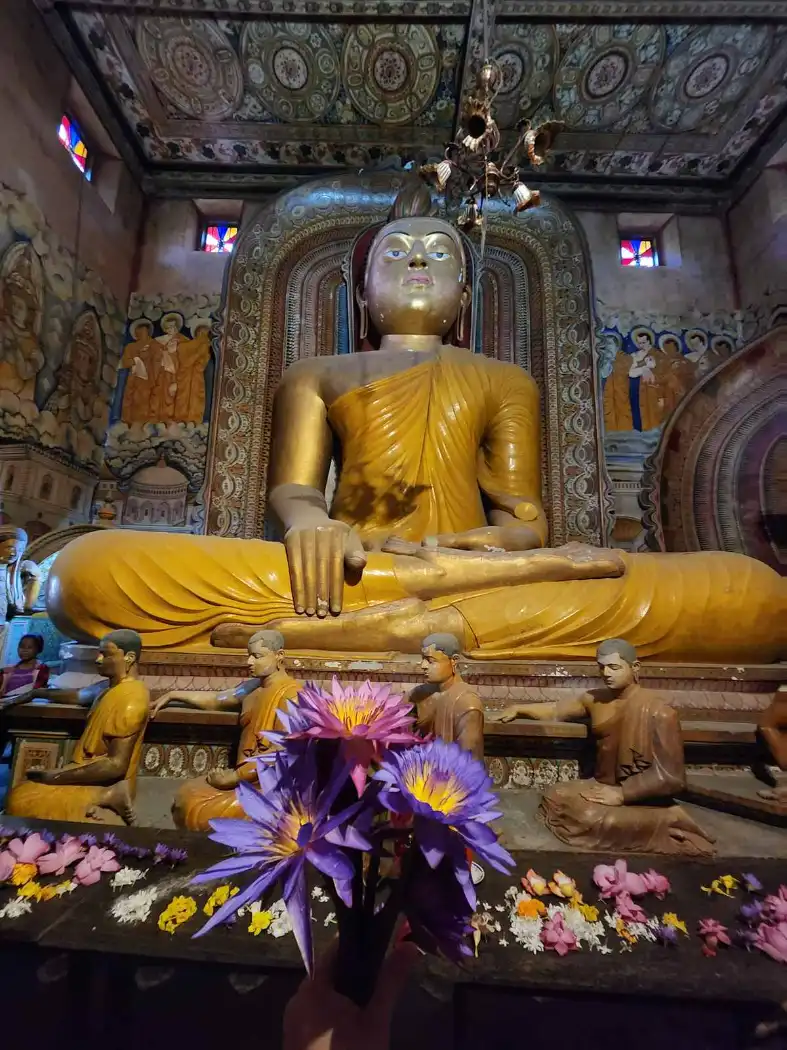
This is not a museum-piece tradition. Walk into any temple on any morning and you will see families arriving with armfuls of white and pink lotus flowers, arranging them carefully on offering tables, and placing individual blooms at the feet of Buddha statues. The flowers are sold at stalls outside every major temple, and the buying and offering of lotus flowers is as routine a part of Sri Lankan Buddhist life as lighting a candle in a church.
For travelers, understanding this single fact transforms a temple visit. Those ponds in front of ancient shrines are not decorative — they are living symbols of the same teaching the lotus represents.
2. Lotus flowers vs. water lilies — what you are actually seeing
Here is something most travelers get wrong, and it is worth knowing before you start photographing every bloom you see. True lotus flowers and water lilies are different plants, and Sri Lanka has both in abundance.
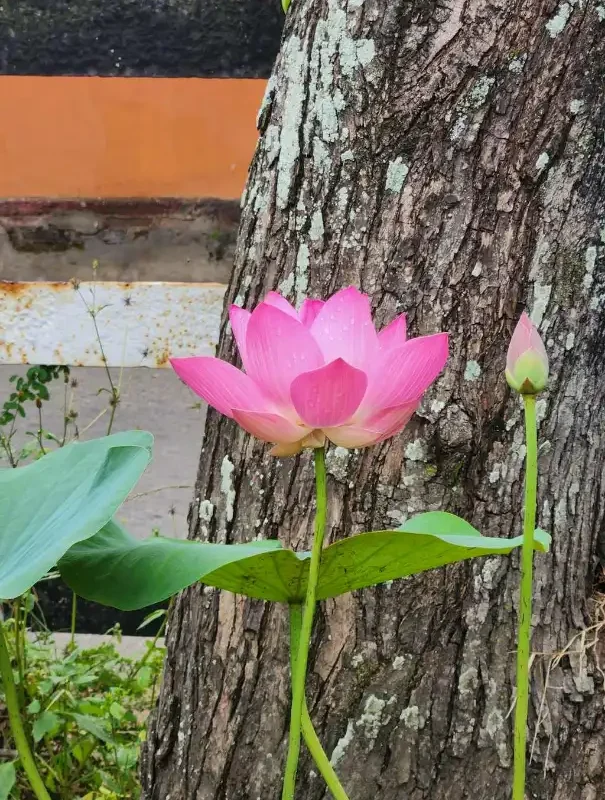
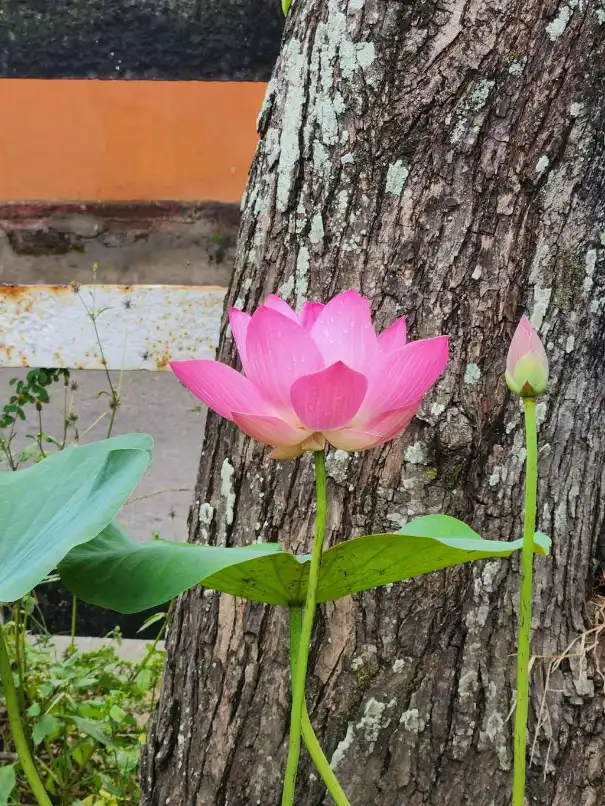
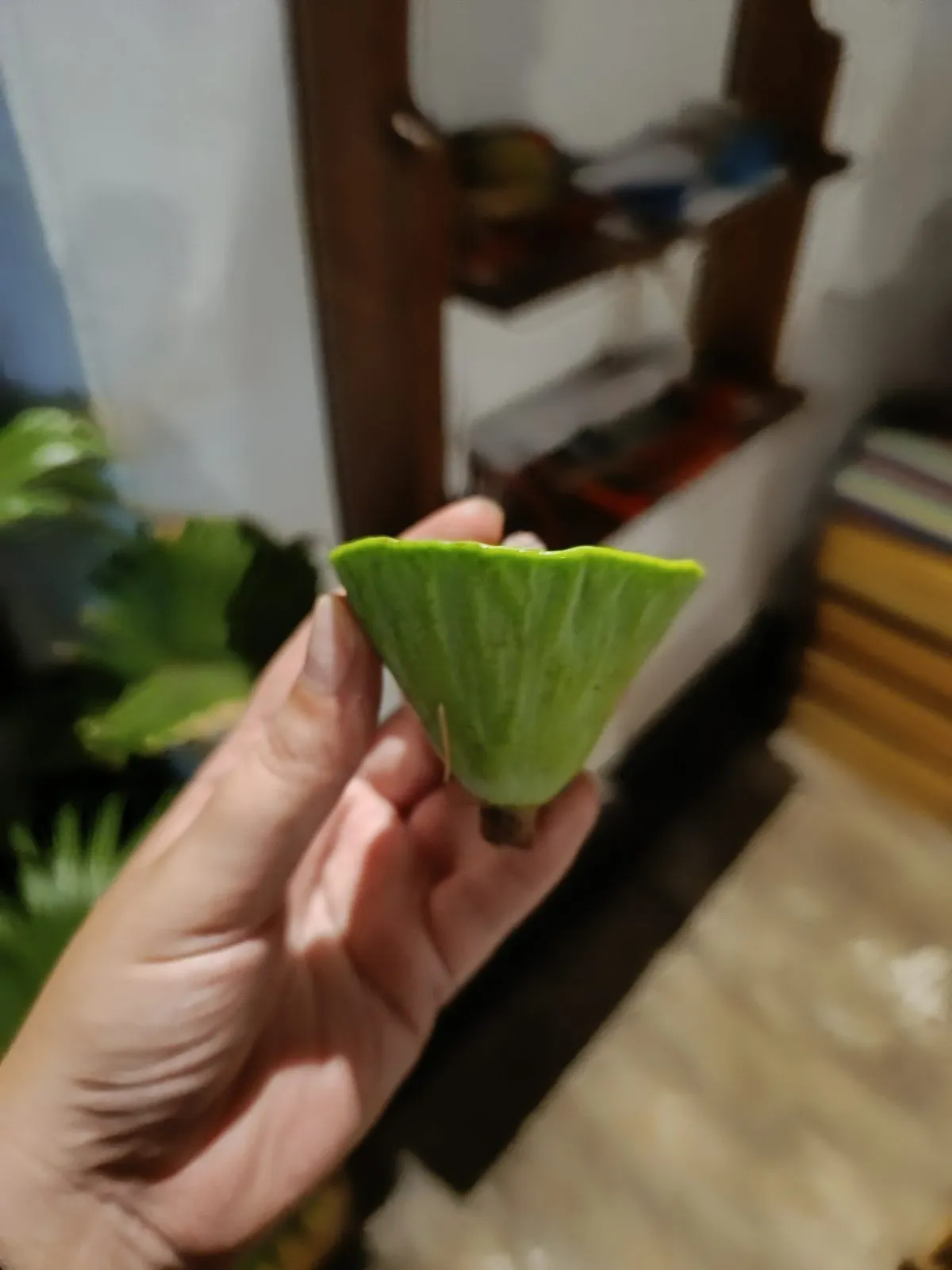
True lotus (Nelumbo nucifera), called nelum in Sinhala, is the sacred flower of Buddhism. Its leaves are enormous — easily two feet across — and they rise above the water on tall stalks rather than floating on the surface. The flowers themselves also stand above the water, and after the petals drop, the plant produces a distinctive flat-topped seed pod that looks like a shower head. This seed pod is one of the easiest ways to confirm you are looking at a true lotus.
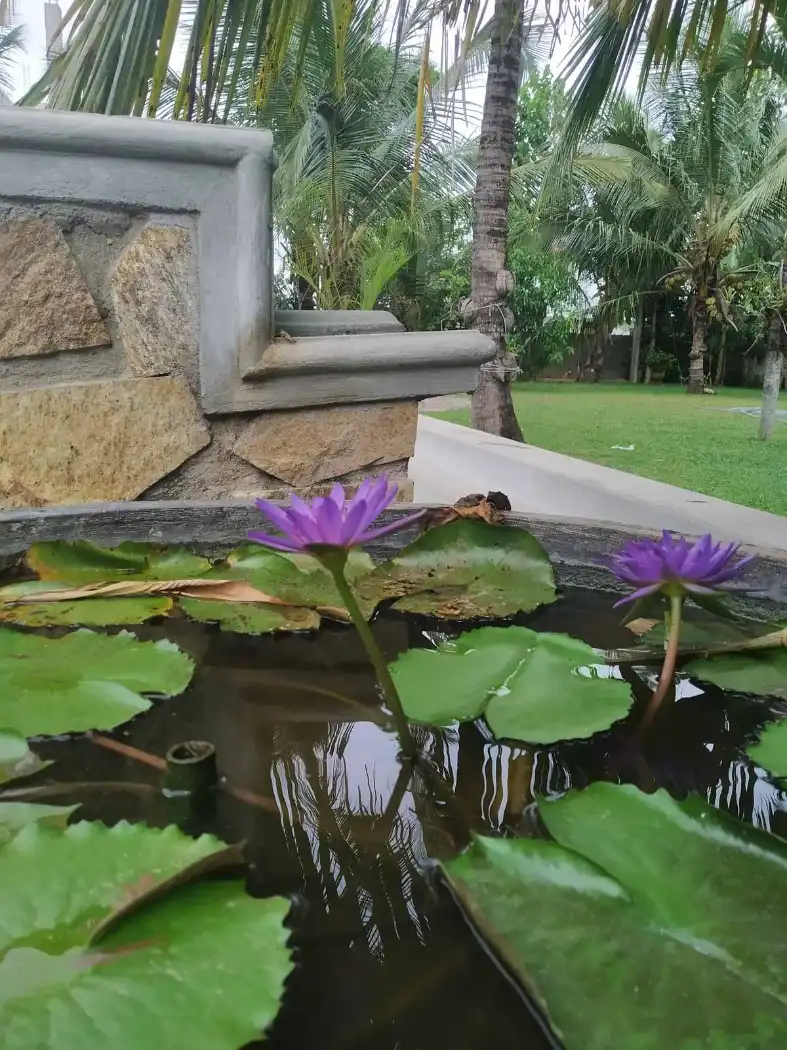
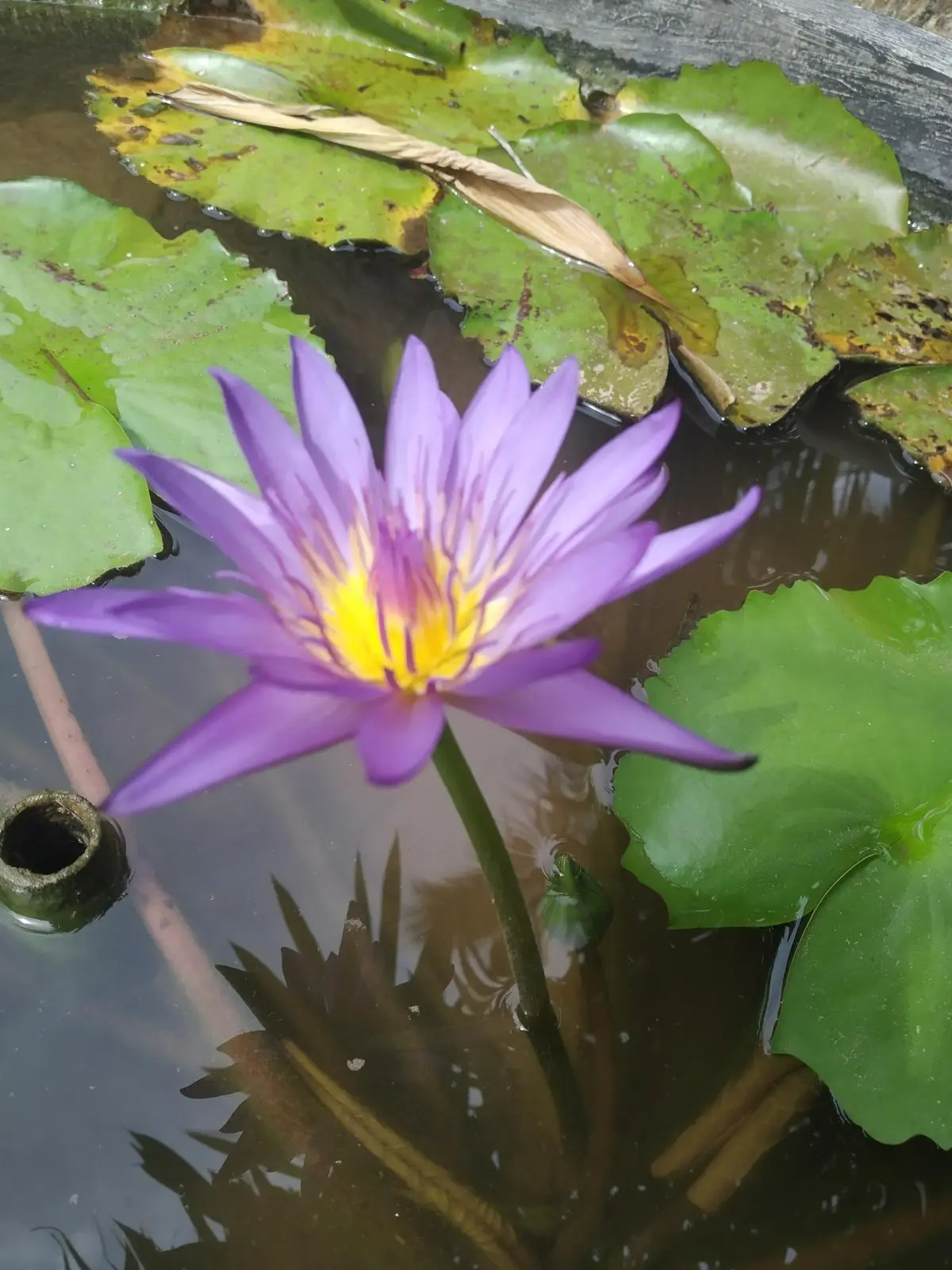
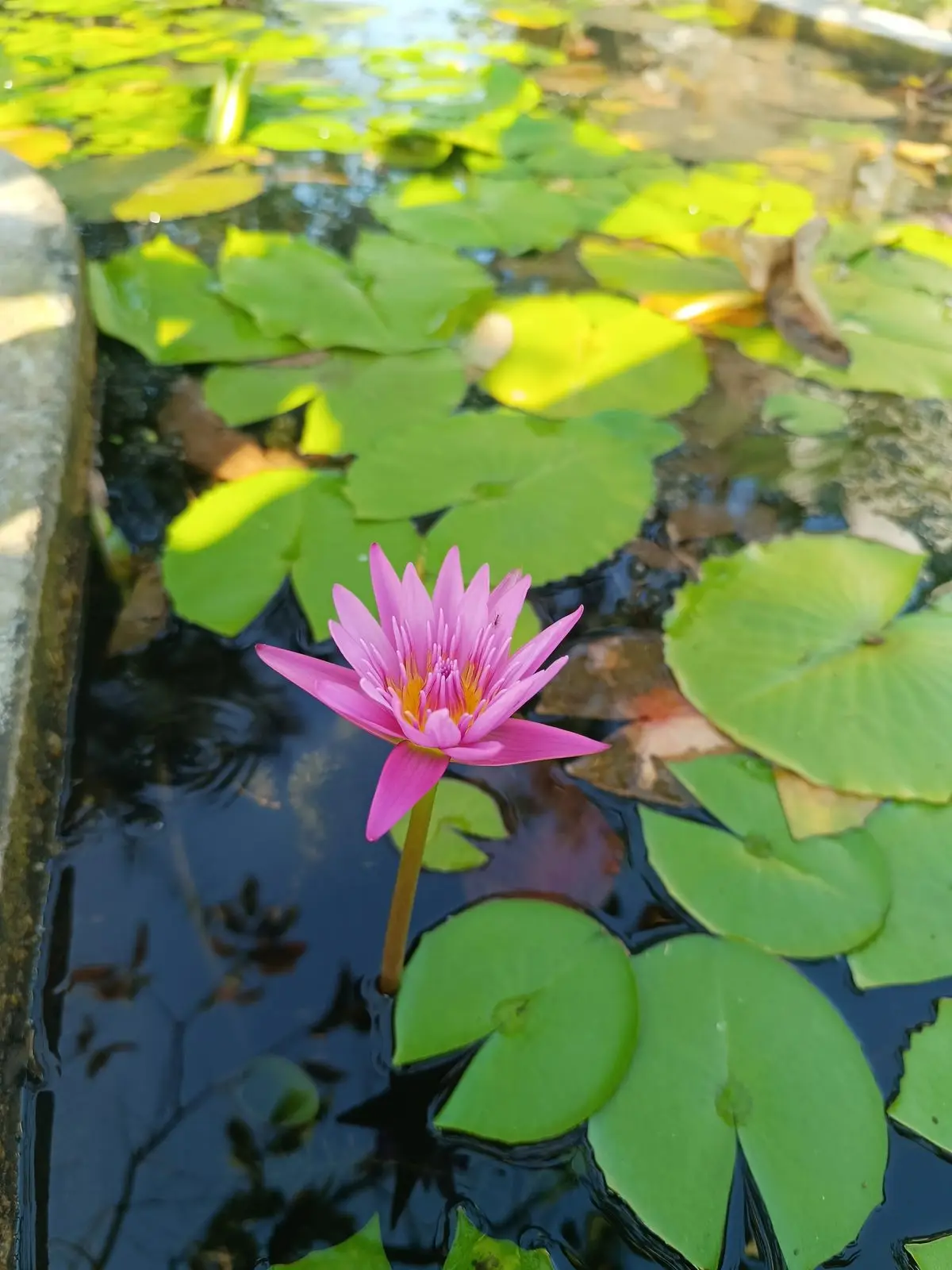
Water lilies (Nymphaea species), called olu in Sinhala, are the flowers you will see most often in ponds and paddy fields. Their leaves float flat on the water’s surface with a characteristic V-shaped notch, and the flowers sit right at the waterline. Sri Lanka has several species, but the most famous is the blue water lily (Nymphaea stellata), known as nil manel — and this, not the lotus, is actually Sri Lanka’s official national flower.
The quick rule: if the leaves and flowers rise above the water, it is a lotus. If they float on the surface, it is a water lily. Both are beautiful, both appear at temples, and both are worth photographing — but knowing the difference gives you a much richer understanding of what you are seeing.
3. Where to see lotus flowers across the island
Lotus flowers and water lilies grow throughout Sri Lanka, but some locations offer particularly memorable encounters.
Temple ponds at ancient cities. The ruins at Anuradhapura and Polonnaruwa — both UNESCO World Heritage Sites — feature stone-lined ponds where lotus flowers have been cultivated for over two millennia. The lotus ponds at Polonnaruwa are especially photogenic, with blooms framing crumbling brick stupas in the background. These sites are on most travelers’ itineraries already, so the lotus flowers come as a bonus.
Kandy and the Temple of the Tooth. Sri Lanka’s most sacred Buddhist site draws thousands of devotees daily, and the flower offerings here are extraordinary. Vendors outside the temple sell enormous bundles of lotus flowers and water lilies, and the ritual of purchasing and presenting them is one of the most vivid cultural experiences available to visitors.
Rural irrigation tanks. The dry zone of Sri Lanka is dotted with ancient irrigation reservoirs, called wewa, many of which are carpeted with lotus flowers and water lilies. These are not tourist sites — they are working agricultural infrastructure — but stopping at one during a drive through the interior reveals blooms that rival anything at a temple.
Paddy fields and village ponds. In the wet zone and along rural roads, water lilies bloom in drainage channels, paddy fields, and small village ponds. They are so common that locals barely notice them, but for a traveler with a camera, a roadside pond full of purple water lilies at golden hour is an unexpected gift.
4. The colors and what they mean
Not all lotus flowers look the same, and in Buddhist tradition, different colors carry different meanings.
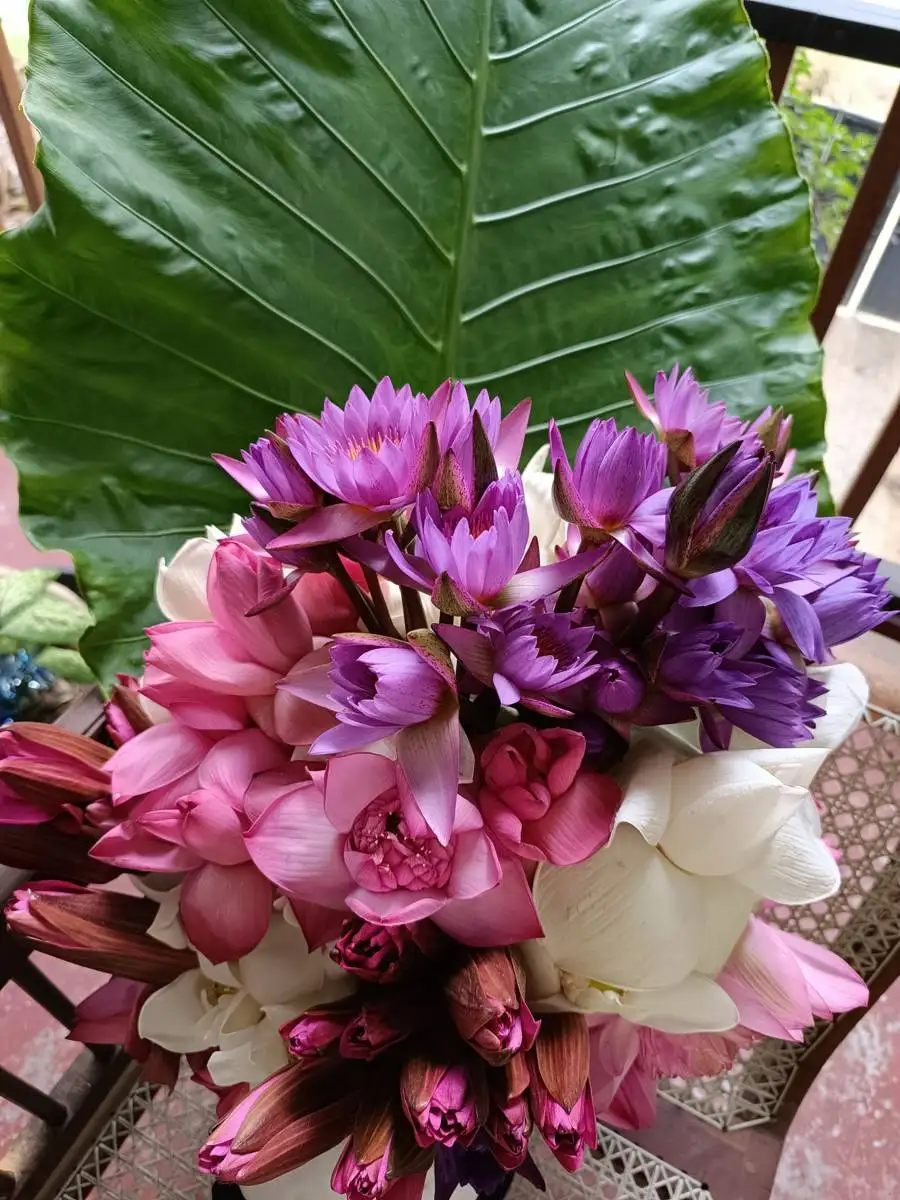
White lotus flowers symbolize mental purity and spiritual perfection. These are the most common offering at temples and the variety you will see most often in devotees’ hands. White represents the state of bodhi — awakening — and white lotus flowers are associated with the historical Buddha himself.
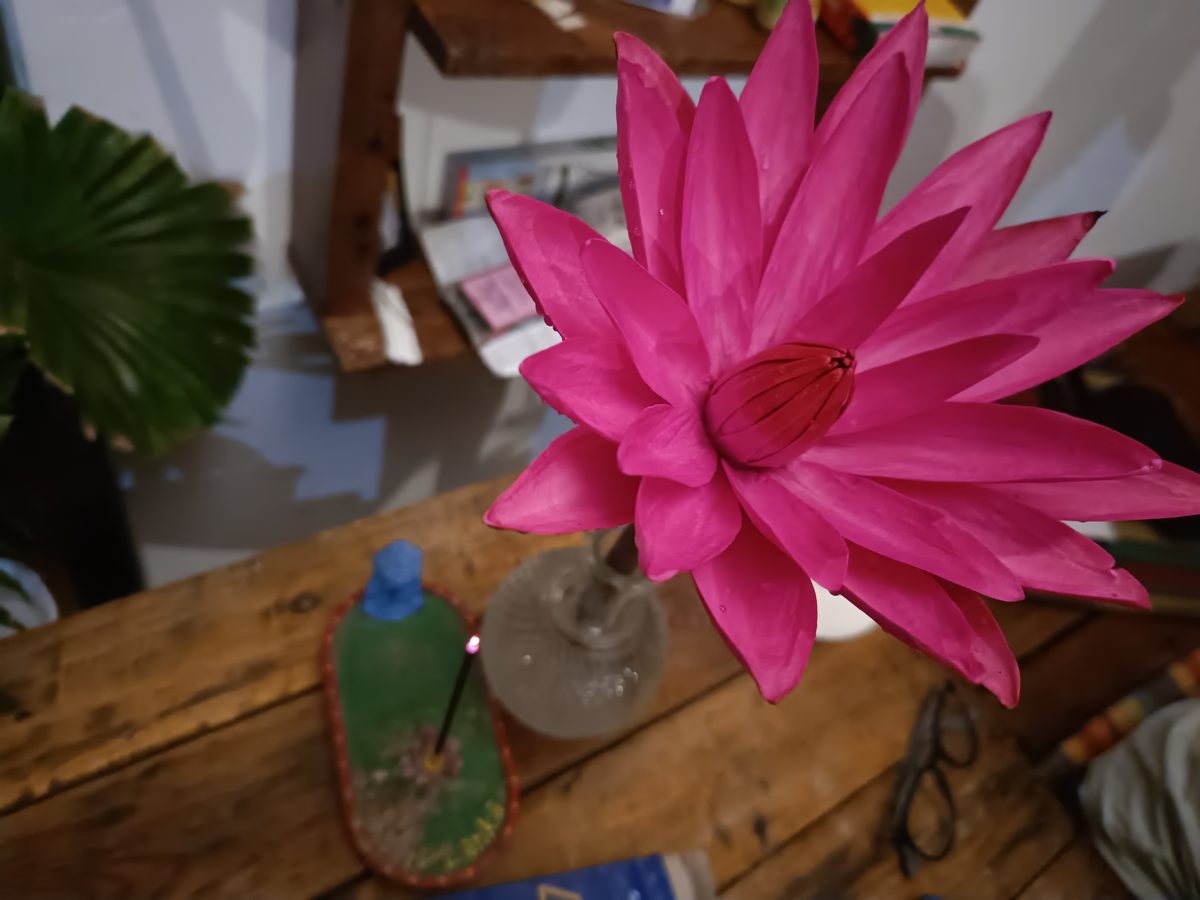
Pink lotus flowers are considered the supreme lotus in many Buddhist traditions. They represent the Buddha’s earthly presence and are often the variety depicted in temple paintings and carvings. The large pink blooms that grow in temple ponds are typically true lotus (Nelumbo nucifera).
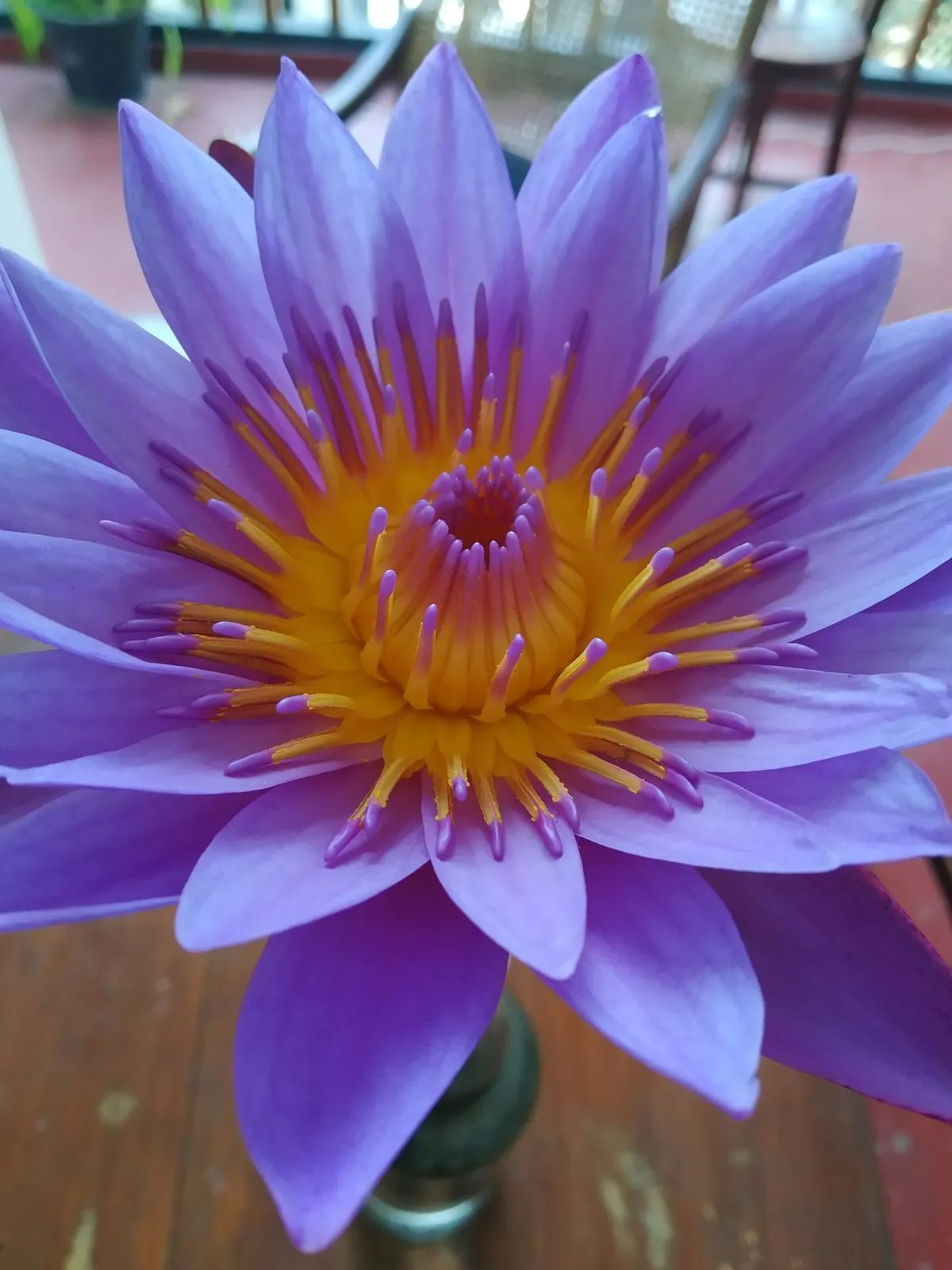
Blue water lilies (nil manel) hold a special place as Sri Lanka’s national flower. Their deep violet-blue petals open in the morning and close by mid-afternoon, which early Buddhist teachers used as a metaphor for the cycle of spiritual practice — opening to wisdom, then withdrawing to reflect.
Purple and red varieties appear throughout the island in both cultivated temple ponds and wild waterways. The range of colors you can see in a single day is remarkable, especially during the wetter months when blooms are at their peak.
5. Lotus flowers in Sri Lankan architecture
The lotus is not only a living plant in Sri Lanka — it is one of the most persistent motifs in the island’s architectural history. Once you learn to recognize it, you will see it everywhere.
Stupa bases. The great dagobas at Anuradhapura — Ruwanwelisaya, Jetavanaramaya, Abhayagiri — all feature carved lotus-petal rings at their bases. These stone petals are not decoration; they represent the lotus throne on which the entire sacred structure rests. Some are so large and detailed that individual petals are taller than a person.
Moonstones. The semicircular carved stones at the entrances to ancient Sri Lankan temples almost always include a band of lotus petals. These sandakada pahana are considered some of the finest examples of Sinhalese stone carving, and the lotus band represents the final stage of the spiritual journey — purity before entering the sacred space.
Sigiriya frescoes. The famous painted maidens on the rock fortress at Sigiriya hold lotus flowers in several of the surviving panels. These fifth-century paintings are among the oldest in Sri Lanka, and the presence of lotus flowers in them speaks to how deeply the symbol was embedded in courtly life, not only in religious practice.
Modern architecture. Colombo’s Lotus Tower, completed in the 2010s and now the tallest structure in South Asia, takes its form directly from a lotus bud. The building is visible from most of the city and is a striking example of how the flower continues to shape Sri Lankan identity in the present day.
6. You can eat it — lotus as food
This surprises most Western travelers, much like some of the surprising produce in our guide to fruits of Sri Lanka — lotus flowers are not only sacred — they are practical. Multiple parts of the plant are edible and appear in Sri Lankan and broader Asian cooking.
Lotus root (nelum ala) is the most widely eaten part — the same edible root we cover in our guide to unusual tropical fruits in Asia. The rhizome is sliced into rounds that reveal a distinctive pattern of holes, then stir-fried, braised in coconut milk, or pickled. The texture is crisp and slightly starchy, similar to a water chestnut. You will find it at local markets and in home-cooked meals far more often than at tourist restaurants.
Lotus seeds are eaten roasted as a snack or added to soups and desserts. The dried seed pod — that distinctive flat-topped structure — is what holds them. Vendors sometimes sell fresh seed pods at roadsides, and cracking one open to eat the green seeds inside is a small, memorable experience.
Lotus leaves serve as natural wrappers for steamed rice and other dishes in village cooking. The large, water-repellent surface keeps food moist during cooking and adds a subtle grassy flavor.
Traditional Sri Lankan medicine also uses various parts of the plant for treating fever, digestive issues, and skin conditions, though these remedies are less visible to travelers than the culinary uses.
7. How to photograph lotus flowers (practical tips)
Sri Lanka offers some of the best lotus flower photography opportunities in Asia, but timing and technique matter.
Go early. Lotus flowers open at sunrise and begin closing by early afternoon. The best light and the fullest blooms happen between 6:00 and 9:00 AM. Water lilies follow a similar schedule, though some species stay open slightly longer.
Get low. The most striking lotus photographs are taken at water level or just above it, looking across the surface toward the bloom. This angle shows the stem rising from the water and captures reflections. A temple pond wall or a flat stone at the edge of a wewa makes a natural shooting platform.
Watch for the “lotus effect.” The waxy surface of lotus leaves causes water to bead into perfect spheres that roll across the leaf. After a rain shower or in the morning dew, these droplets are extraordinarily photogenic and demonstrate the physical property that inspired the Buddhist metaphor of purity.
Include context. A lotus flower in isolation is beautiful but generic. A lotus flower framed against a crumbling brick stupa, or held in the hands of a devotee walking toward a shrine, tells a story about Sri Lanka specifically.
8. Temple etiquette around lotus flowers
If you visit a Buddhist temple in Sri Lanka — and you should — a few simple guidelines around lotus flowers and offerings will make the experience smoother.
You can buy and offer flowers yourself. This is welcomed, not restricted to Buddhists. Purchase a bundle from a vendor outside the temple, remove your shoes before entering the shrine area, and place the flowers on the offering table or at the base of a Buddha statue. No special prayer or ritual is required, though placing them with both hands is considered respectful.
Do not pick lotus flowers from temple ponds. The flowers growing in temple ponds are part of the sacred space, not a free supply. Purchase your offerings from the vendors outside instead.
Dress modestly. This applies to all temple visits in Sri Lanka, not only those involving lotus flowers. Cover your shoulders and knees, and remove your hat before entering a shrine room. White clothing is traditionally worn for temple visits by Sri Lankans, though tourists in modest, neutral clothing are perfectly welcome.
Ask before photographing devotees. The act of offering lotus flowers is deeply personal. Most people will smile and agree if you ask politely, but photographing someone in prayer without asking is considered intrusive.
A few Sinhala phrases go a long way: ayubowan (may you have a long life — the standard greeting), and istuti (thank you). These are not required, but they are appreciated far more than most travelers expect.
Frequently asked questions
What is the national flower of Sri Lanka?
The national flower of Sri Lanka is the blue water lily (Nymphaea stellata), known as nil manel in Sinhala — not the lotus, as many travelers assume. The blue water lily has deep violet-blue petals that open in the morning and close by mid-afternoon. The sacred lotus (Nelumbo nucifera), while deeply important in Buddhist culture, holds a different role as a religious and spiritual symbol rather than a national one.
Where can I see lotus flowers in Sri Lanka?
Lotus flowers grow throughout Sri Lanka, but the best places to see them include the ancient temple ponds at Anuradhapura and Polonnaruwa, the flower offerings at the Temple of the Tooth in Kandy, rural irrigation tanks in the dry zone, and village ponds along interior roads. They bloom year-round, though the wetter months produce the most abundant displays.
Can you eat lotus flowers?
Yes. Multiple parts of the lotus plant are edible and commonly eaten in Sri Lanka and across Asia. The root (rhizome) is sliced and stir-fried or braised, the seeds are roasted as snacks or used in soups, and the large leaves serve as natural wrappers for steamed rice. Lotus root has a crisp, slightly starchy texture similar to a water chestnut.
What is the difference between a lotus and a water lily?
The easiest way to tell them apart is leaf and flower position. Lotus leaves and flowers rise above the water on tall stalks, while water lily leaves float flat on the surface with a V-shaped notch and flowers sit at the waterline. Lotus plants also produce a distinctive flat-topped seed pod after blooming. Both grow in Sri Lankan temple ponds and waterways, and travelers often confuse them.
When is the best time to see lotus flowers in Sri Lanka?
Lotus flowers and water lilies bloom year-round in Sri Lanka thanks to the tropical climate, so there is no bad time to visit. Individual blooms open at sunrise and close by early afternoon, making morning temple visits and pond walks the best time for both seeing and photographing them. The wettest months tend to produce the densest carpets of blooms on irrigation tanks and paddy fields.
Every temple pond tells the same story
Lotus flowers in Sri Lanka are one of those travel details that seem small until they click into place. Once you know why devotees carry them to shrines each morning, once you can tell a true lotus from a water lily at a glance, once you have watched the sunrise light catch a bloom rising out of a two-thousand-year-old temple pond — the whole island reads differently. The lotus is not a postcard image here. It is a living thread that connects ancient stone carvings to this morning’s offerings, sacred architecture to village cooking, and a national symbol to the quiet moment when a single flower opens at dawn.