
When curious travelers ask, “what do people eat in Tuvalu?”, they are often met with silence.
Not out of secrecy — but because Tuvalu’s food culture is rarely documented.
Yet across its nine low-lying atolls in the heart of the Pacific, Tuvaluans have built a cuisine of remarkable simplicity and resilience.
There are no rivers. Soil is scarce. Rising seas threaten their very existence.
And still, food in Tuvalu is a powerful testament to human adaptation.
This guide explores the traditional dishes, core ingredients, daily meals, and cultural values that shape eating in one of the world’s smallest and most vulnerable nations.
Whether you’re planning a trip, researching for a project, or simply fascinated by island life — this article answers your question: what do people eat in Tuvalu?
And more importantly — why it matters.
Unlike tourist-heavy destinations where food is performed for visitors, Tuvaluan cuisine remains deeply private — shared within families, offered during church feasts, or prepared for rare guests as an act of profound respect. There are no restaurants serving “authentic Tuvaluan meals” on every corner; instead, food is woven into daily rhythm, seasonal rituals, and communal survival. To understand what people eat in Tuvalu is to understand how a culture nourishes itself when the land offers almost nothing — and how generosity becomes the ultimate ingredient.
The foundation of Tuvaluan cuisine: Ocean, coconut, and Pulaka
Tuvalu’s food system depends on three pillars — all shaped by the rhythm of tides and seasons. These are not just ingredients; they are the soul of survival, ceremony, and community. Understanding them is key to appreciating what do people eat in Tuvalu.
- Fresh fish and seafood – Caught daily with nets, lines, or traditional spears. Tuna, parrotfish, and octopus dominate. Fish isn’t just protein — it’s heritage. Many families still use ancestral fishing routes passed down for generations.
- Coconut (ni) – Used for milk, oil, sap (toddy), and as a cooking medium. Coconut flesh is eaten fresh or dried. The entire tree is utilized — leaves for weaving, husks for fuel, water for drinking. Coconut is the soul of what do people eat in Tuvalu.
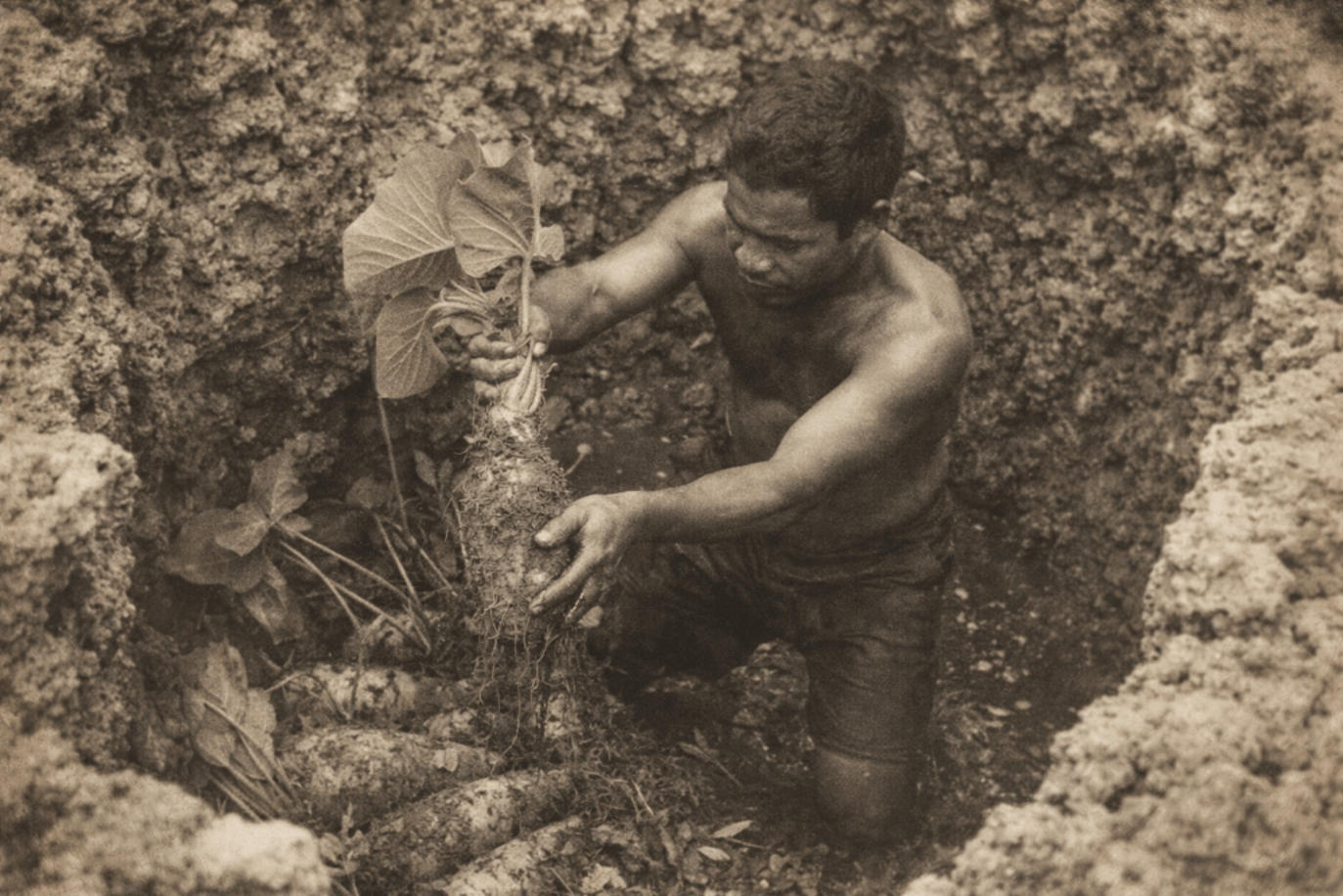
- Pulaka (swamp taro) – The cornerstone of Tuvaluan agriculture. Unlike common taro, pulaka is grown in deep, hand-excavated pits filled with composted leaves and freshwater. It takes 3–5 years to mature and is rich in calcium and complex carbohydrates. Pulaka is not just food — it’s patience, memory, and identity.
“Pulaka is our bank. When the sea takes everything, pulaka gives us strength.” — Community elder, Funafuti
Traditional dishes of Tuvalu
Boiled Pulaka with Coconut Cream
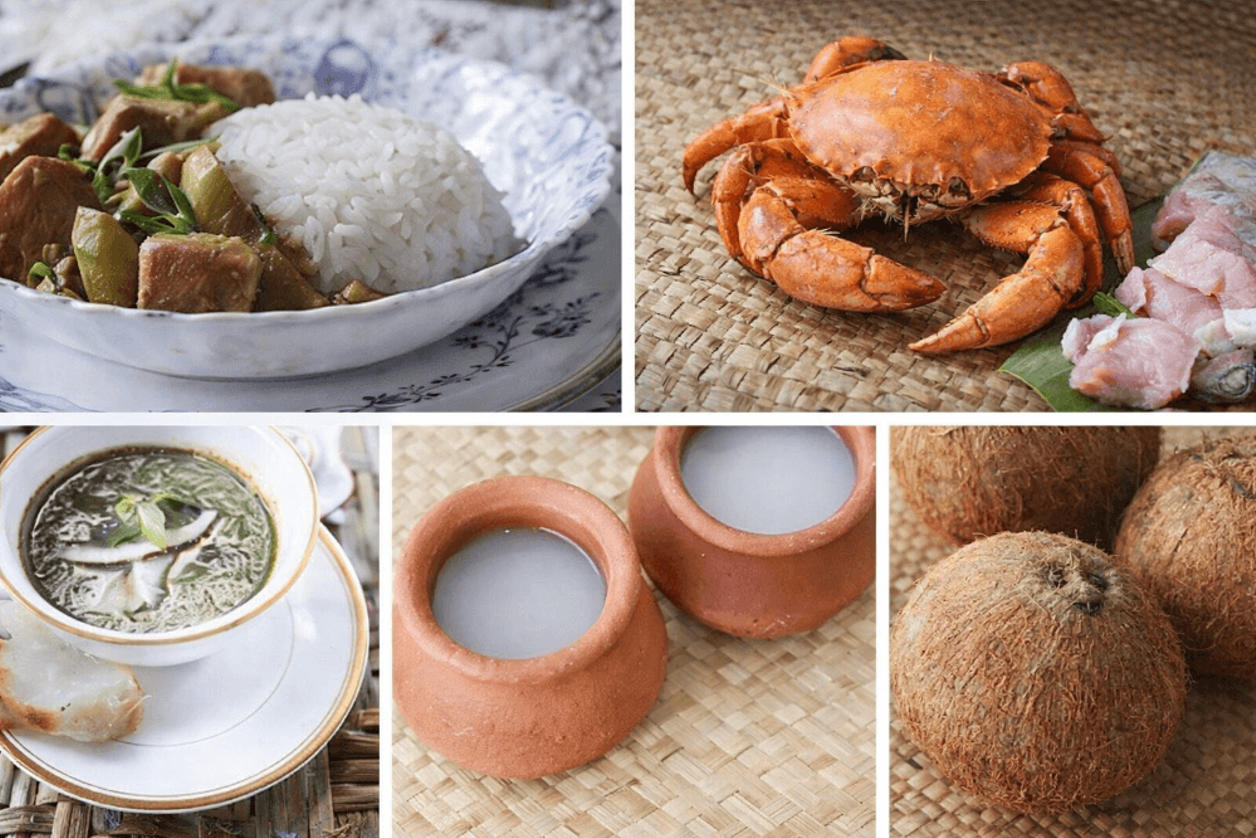
The most common traditional meal: pulaka corms boiled until soft, then served with fresh coconut cream (lolo). The texture is dense and slightly sweet, with an earthy aftertaste. It is never eaten alone — always shared. This dish embodies the essence of what do people eat in Tuvalu — minimalism, freshness, and harmony with nature.
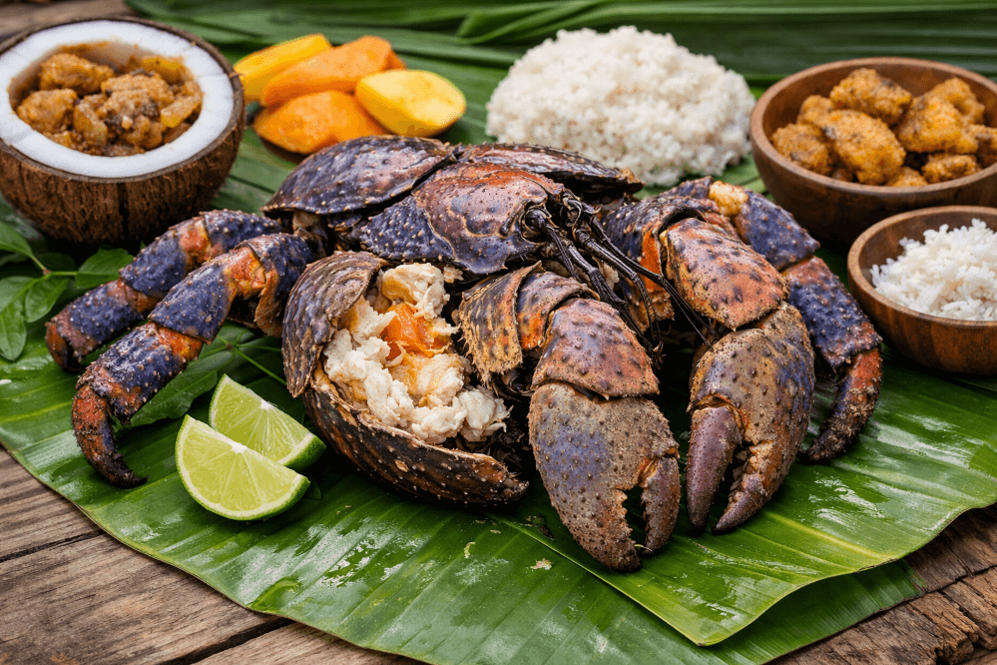
Coconut Crab (Pule)
Known locally as pule, the coconut crab is a rare delicacy reserved for weddings, chiefly visits, or national celebrations. Its meat is white, tender, and carries a faint coconut aroma. Due to its slow reproduction, harvesting is tightly regulated by local leaders (aliki). Pule is more than food — it’s a ritual, a gift, and a reminder of the island’s bounty. No exploration of what do people eat in Tuvalu is complete without mentioning this iconic crustacean.
Ika Faalifu: Fish in Coconut Milk
Raw or lightly grilled fish is marinated in fresh coconut milk, lime juice, and sometimes diced onion. Similar to ceviche, ika faalifu is a staple at family gatherings and showcases the ocean’s freshness. It’s a dish that connects modern Tuvaluans to their ancestors — a flavor that has survived centuries of change.
Breadfruit and Banana Dishes
When in season, breadfruit is roasted over open fire or boiled. Bananas are eaten raw, cooked in coconut milk, or dried for storage. Both are secondary staples when pulaka is scarce. Breadfruit, known locally as mā, was once planted as family heirlooms — each tree tied to lineage and land.

What is a typical daily meal in Tuvalu?
In rural outer islands, meals remain rooted in tradition: – “Breakfast”: Sweet coconut toddy (kaleve) or leftover pulaka – “Lunch”: Fresh fish + boiled pulaka + coconut – “Dinner”: Similar to lunch, sometimes with breadfruit or rice
However, in Funafuti (the capital atoll), imported foods have reshaped diets:
- White rice
- Canned corned beef
- Sweet biscuits and sugary drinks
- Instant noodles
This shift has contributed to high rates of diabetes and heart disease. Community initiatives now promote “back to pulaka” campaigns to revive traditional eating — a movement that celebrates what do people eat in Tuvalu as both culture and medicine.
Is Tuvaluan food vegan or vegetarian friendly?
Yes — with caveats. Traditional Tuvaluan cuisine includes many plant-based elements:
- Pulaka
- Coconut (milk, flesh, oil)
- Bananas and breadfruit
- Pandanus fruit (dried into sweet cakes)
However, most coconut-based dishes are prepared in kitchens where fish is also cooked, and “vegetarian” is not a common concept. True vegans should:
- Request plain boiled pulaka and fresh coconut
- Avoid dishes labeled “lolo” unless confirmed fish-free
- Bring plant-based snacks for outer island stays
Tip for travelers: If invited to a meal, say: *“Ko rabwa ina ao e bane ikoa”* (“I thank you, but I don’t eat meat”). This phrase shows respect and opens doors to plant-based options.
Climate Change and the Threat to Tuvaluan Food Security
Tuvalu is among the most climate-vulnerable nations on Earth. Saltwater intrusion is poisoning pulaka pits, king tides flood gardens, and ocean acidification affects fish stocks. In response, communities are:
- Elevating pulaka pits with sandbags
- Testing salt-resistant taro varieties from Fiji
- Building rainwater tanks to irrigate crops
- Reviving traditional fishing bans (tapu) to protect reefs
Food in Tuvalu is now inseparable from the fight for survival. But this struggle is not unique. Across the Pacific, low-lying island nations face similar threats — from Kiribati’s flooded babai pits to the breadfruit blight in the Marshall Islands. In fact, the challenges shaping what do people eat in Tuvalu mirror those in neighboring cultures, where ancestral foodways are being rewritten by rising seas. For a deeper look at how another atoll nation adapts, explore our guide to traditional food in Marshall Islands, where pandanus cakes and coconut crab tell a parallel story of resilience.
Yet, Tuvaluans respond with quiet innovation. On Funafuti, schoolchildren now tend hydroponic lettuce gardens in repurposed shipping containers — a small but symbolic step toward food sovereignty. Women’s groups ferment breadfruit into long-lasting mā paste, reviving techniques once used during droughts. And elders teach youth how to read tide patterns and lunar cycles to time fishing and planting — knowledge that satellites cannot replace.
Critically, food security here is not just about calories — it’s about identity. When a pulaka pit fails, it’s not merely a crop loss; it’s the erosion of intergenerational wisdom. When fish vanish from a reef, it’s not just protein scarcity — it’s the silencing of stories once shared on fishing canoes. That’s why community-led initiatives focus not only on alternative crops but on cultural preservation. Cooking workshops, oral history projects, and seasonal feasts all serve as acts of resistance against cultural erasure.
International aid often focuses on importing rice or building seawalls, but locals emphasize a different solution: supporting traditional knowledge. As one farmer on Nukufetau put it: “Don’t give us sacks of flour. Help us save our pits.” This mindset — practical, proud, and deeply rooted — may hold the key not just to feeding Tuvalu, but to keeping its soul alive.