When travelers ask how Georgians celebrate New Year, the answer surprises most of them: the Georgian New Year is celebrated twice, it has its own kind of Christmas tree made of curly wood shavings, and the luck of the whole year depends on the first person who walks through your door. Three things sit at the heart of the holiday: the chichilaki, the mekvle (the first guest), and the supra, a feast so generous that the table has to be richer than on any other night of the year.
I have traveled across Georgia, from Tbilisi to the mountains of Svaneti, and Georgian hospitality is the thing that stays with you longest. New Year is when that hospitality is at its strongest. This guide explains the traditions, the food, the two New Year’s Eves and how visitors can take part.
The Georgian New Year at a glance
| New Year’s Eve | December 31 |
| Orthodox Christmas | January 7 |
| Old New Year (Kalanda or Basiloba) | Night of January 13 to 14 |
| Symbol | Chichilaki, a tree made of shaved hazelnut or walnut wood |
| Key person | Mekvle, the first guest of the year |
| Signature dish | Satsivi, turkey or chicken in walnut sauce |
| Signature sweet | Gozinaki, walnuts in honey |
| Santa Claus | Tovlis Babua, “Snow Grandfather” |
The three pillars of the Georgian New Year
1. The chichilaki: a tree made of wood
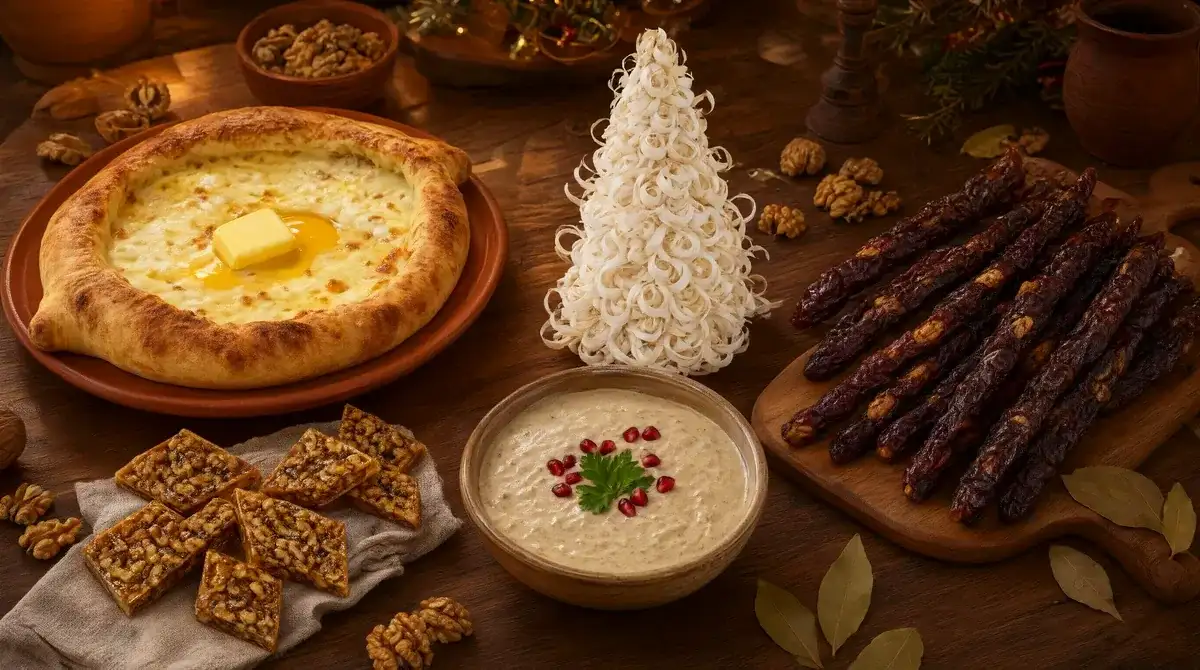
Long before fir trees became common in Georgian homes, families made a chichilaki. A straight branch of hazelnut or walnut is peeled, warmed to make it flexible and then shaved with a sharp knife into long, thin, curly strips that hang down like a white beard. That is why it was once called the “Beard of St. Basil.” The finished tree, usually small enough to stand on a table, is decorated with dried fruit, sweets and churchkhela.
The chichilaki represents renewal and the hope for a good harvest. At the end of the holiday season it is burned, and the troubles of the old year are said to go up in smoke with it. Today many homes have both a fir tree and a chichilaki, and in late December you will see them sold at markets and on street corners, especially in western Georgia, where the tradition is strongest.
2. The mekvle: the first guest of the year
In Georgia, the first person to enter a home in the new year is called the mekvle (in Samegrelo kuchkha, in Adjara mperkhavi). Georgians believe the family’s luck for the whole year depends on this guest’s character and intentions, so the role is both an honor and a responsibility. Families often invite someone in advance: a cheerful relative, a successful neighbor, a person known for a “light foot.”
The mekvle arrives with sweets and good wishes and is welcomed with food and drink. In some regions the visit happens just after midnight; in others it is linked to Bedoba, January 2, a “day of fate,” when how you spend the day is believed to set the tone for the rest of the year.
3. The supra: a feast richer than any other
A Georgian feast, the supra, is always generous, but the New Year supra is meant to be the richest of the year, because an abundant table promises an abundant year. A tamada, the toastmaster, leads the evening with long and heartfelt toasts: to the past year, to family, to those who are gone, to Georgia, to peace and to the future.
Traditional Georgian New Year food
| Dish | What it is | Why it matters |
|---|---|---|
| Satsivi | Turkey or chicken in a cold sauce of walnuts, garlic and spices | The centerpiece of the New Year table |
| Gozinaki | Walnuts cooked in honey, cut into diamonds | The symbolic sweet of the Georgian New Year; honey for sweetness, walnuts for abundance |
| Churchkhela | Walnuts on a string, dipped in thickened grape juice | Hangs on the chichilaki and is offered to guests |
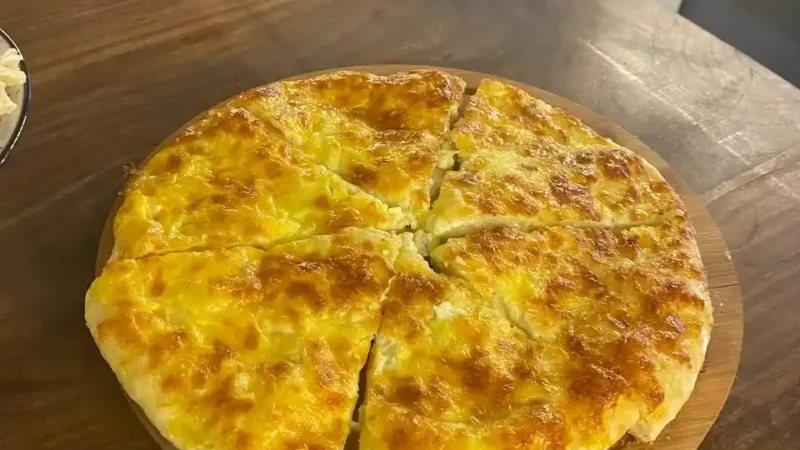
| Khachapuri | Cheese-filled bread; Megrelian khachapuri has cheese on top too | Every region has its own |
| Mchadi | Simple corn bread | Common in western Georgia |
| Basila | Festive bread baked for St. Basil’s Day | Linked to the Old New Year |
| Gurian pies | Crescent-shaped pies with cheese and boiled egg | Baked in Guria for the Old New Year |
| Pkhali | Vegetable and walnut pâtés, often with pomegranate seeds | A colorful part of the spread |
Satsivi
Satsivi means “cold” in Georgian, and the dish is served chilled. Turkey, or sometimes chicken, is cooked and then covered in a thick, creamy sauce of ground walnuts, garlic, onion, vinegar and spices such as fenugreek and marigold. Every family has its own version, and in Samegrelo the sauce is spicier.
Gozinaki
Gozinaki is the taste of the Georgian New Year. Walnuts are toasted, mixed with boiling honey, spread on a wet board, cut into diamond shapes and left to set. It is traditionally the last thing eaten as the old year ends, so that the new one starts sweetly. Many families make it at home; in markets you can buy it ready-made.
Two New Years: December 31 and the Old New Year
Georgia celebrates the New Year on December 31, like most of the world. But the Georgian Orthodox Church still uses the old Julian calendar, which runs 13 days behind. That is why Christmas falls on January 7, and why the night of January 13 to 14 brings a second celebration: the Old New Year, called Kalanda or Basiloba, the day of St. Basil.
The Old New Year is quieter and more traditional. Families gather again for a feast, the mekvle may visit again, and in some homes a sweet cake called basilopita is baked with a coin hidden inside: whoever finds the coin is blessed for the coming year.
Between the two New Years comes Christmas, Shoba. On January 7, the Alilo processions fill the streets of Tbilisi and other towns: people walk with banners, icons and church choirs, singing and collecting gifts for those in need. For visitors, it is one of the most moving sights of the Georgian winter.
Regional New Year traditions
Georgia is small, but each region has its own customs:
- Guria: on the Old New Year, the men of the family go down to the cellar with a festive pie, a chichilaki and an empty clay qvevri. The head of the family prays to St. Basil, and the mekvle cracks a walnut: a full nut is a good sign for the year.
- Adjara: before midnight, a ram decorated with ribbons may be brought into the house as a symbol of abundance, and the lady of the house scatters rice and sugar through the rooms for a sweet and plentiful year.
- Racha: cheese pastries called bachuli are baked, one for the new year and one for the old.
- Tusheti and Khevsureti: mountain villages bake special pastries such as kotori and brew their own beer for the holidays.
- Kartli: families bake a small “fate cake” for each member of the household.
You do not have to travel to the villages to feel this. Even in Tbilisi, many families keep at least one regional custom from their grandparents.
New Year’s Eve in Tbilisi
At midnight on December 31, Tbilisi does not wait for one official show. Families launch fireworks from balconies, courtyards and streets all over the hilly city, and the sky crackles in every direction for a long time. The best views are from high points such as Narikala Fortress, Mtatsminda or any rooftop. After midnight, people go out to visit friends and relatives, and the visiting can continue until morning.
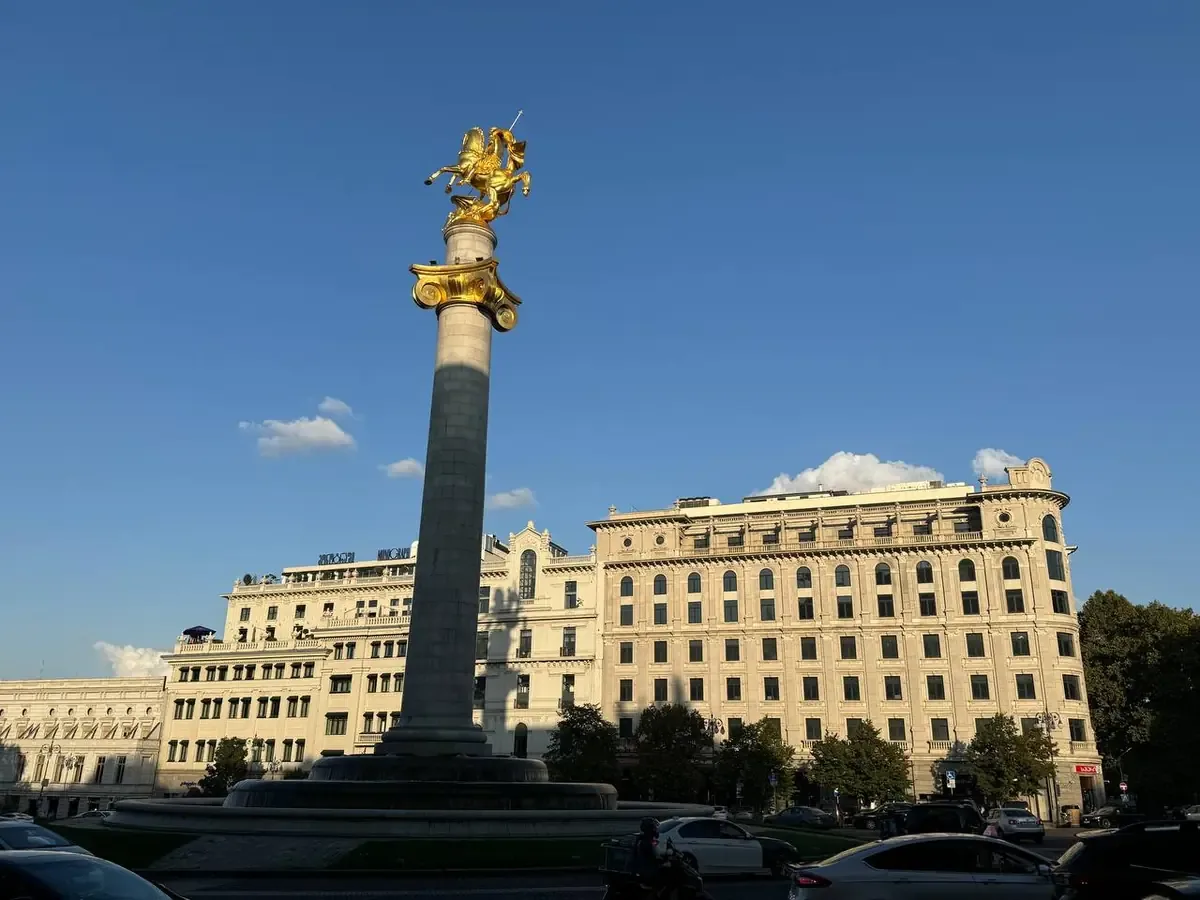
In the days before, the city is decorated with lights, and Christmas markets appear in the center. It is a good time to try mulled wine, buy a chichilaki and watch the city prepare. For more on the capital, see our Georgia travel guide.
How travelers can experience the Georgian New Year
Stay in a guesthouse. Family-run guesthouses are the easiest way to see real traditions. Hosts often invite guests to share the holiday table.
Visit a market in late December. Look for chichilakis, churchkhela, gozinaki and the walnuts and honey families buy in huge amounts.
Stay for the Old New Year. If you can, plan your trip from late December to mid-January to see both New Years and Christmas.
Head to the mountains. Ski resorts such as Gudauri and Bakuriani are busy over the holidays and combine snow with Georgian feasts. Western Georgia, around Kutaisi, is mild and where the chichilaki tradition is strongest.
Plan for closures. Many shops and restaurants close or shorten their hours on January 1 and 2, and again around January 7.
For a comparison with other countries’ celebrations, see our guide to unique New Year’s Eve destinations, where Georgia is the budget pick.
Etiquette if you are invited to a Georgian home
- Bring something sweet, such as chocolates, a cake or a bottle of wine. If you are invited as the mekvle, sweets are a must.
- Greet with Gilotsavt akhal tsels! (“Happy New Year!”).
- Let the tamada lead. Do not drink between toasts; wait for the toastmaster and raise your glass with everyone.
- Pace yourself. Food keeps coming, and refusing a dish entirely can seem impolite. Taking a little of everything is the best strategy.
- Expect to be fed again and again. In Georgia, a guest leaving hungry is almost an insult to the host.
- Accept the role of mekvle with good humor if you are asked. It is a sign of trust.
Frequently asked questions
How do Georgians celebrate New Year?
With a family feast called a supra, fireworks at midnight, a chichilaki tree made of wood shavings, a carefully chosen first guest called the mekvle, and sweets like gozinaki. Many families celebrate again on the Old New Year, January 14.
What is a chichilaki?
A small white “Christmas tree” made from a hazelnut or walnut branch shaved into curly strips. It symbolizes renewal and is burned after the holidays to leave the old year’s troubles behind.
What is the Old New Year in Georgia?
A second New Year celebrated on the night of January 13 to 14, following the Julian calendar used by the Georgian Orthodox Church. It is also called Kalanda or Basiloba, the day of St. Basil.
What do Georgians eat on New Year?
Satsivi (turkey in walnut sauce), gozinaki (walnuts in honey), churchkhela, khachapuri, pkhali and regional pies and breads.
How do you say Happy New Year in Georgian?
Gilotsavt akhal tsels!
Is Georgia a good place to visit for New Year?
Yes. It is affordable, the hospitality is legendary, fireworks fill the sky over Tbilisi, and you can celebrate twice.
A New Year worth celebrating twice
The Georgian New Year is not about one countdown. It is about walnuts and honey, a tree made of wood shavings, a guest chosen for their good luck, and a table so full that it promises a full year ahead. Come in late December, stay until the Old New Year, and you will understand why Georgians are in no hurry to let the holidays end.