Thousands of travelers land in Kutaisi every week, take the first bus to Tbilisi or Batumi, and never look back. Kutaisi, Georgia is the country’s third-largest city and one of its oldest, and it is very much worth a stay of two or three days. Three things make it special: a compact old city with a cathedral on the hill and a chapel hidden inside a 400-year-old oak, the canyons, caves and monasteries less than an hour away, and prices and crowds far gentler than in the capital.
When people ask me whether Kutaisi is worth visiting, my answer is yes, as long as you treat it as a base rather than a transit point. I spent several days around Kutaisi, and every photo in this guide is my own.
Why Kutaisi, Georgia is suddenly on the map
For years, Kutaisi was a quiet provincial city, known mostly to Georgians as the old capital of the ancient kingdom of Colchis, the land of the Golden Fleece in Greek myth. Then low-cost airlines discovered its airport. Today Kutaisi International Airport is the main gateway for budget flights from across Europe, and many travelers find that a round-trip to Kutaisi costs a fraction of a flight to Tbilisi.
Most visitors still rush through. That is their loss, and your opportunity: a city with real history, a green, slow rhythm, and some of the most photogenic nature in western Georgia on its doorstep. If you are planning a wider trip, my Georgia travel guide covers the whole country. This article focuses only on Kutaisi and the day trips around it. For official visitor information, see the Georgian National Tourism Administration.
Getting from Kutaisi airport to the city
For most visitors, the first taste of Kutaisi, Georgia is its airport. Kutaisi International Airport (KUT) sits roughly 14 miles (about 23 km) west of the city center. The simplest options are:
Airport bus or shuttle. Buses meet most flights and run to the city center, usually taking 30 to 40 minutes. Many also continue directly to Tbilisi and Batumi, which is why so many travelers skip Kutaisi entirely.
Taxi. Taxis wait outside arrivals. Agree on the price before you get in, or use a ride-hailing app, which most travelers find easier. The ride takes about 25 to 30 minutes.
Rental car. Several rental desks operate at the airport. A car makes the day trips in this guide much easier, though Georgian driving takes some getting used to.
If your flight lands late at night, book a guesthouse in Kutaisi for the first night instead of starting a long transfer. It is the easiest way to give the city a chance.
Things to do in Kutaisi
Bagrati Cathedral
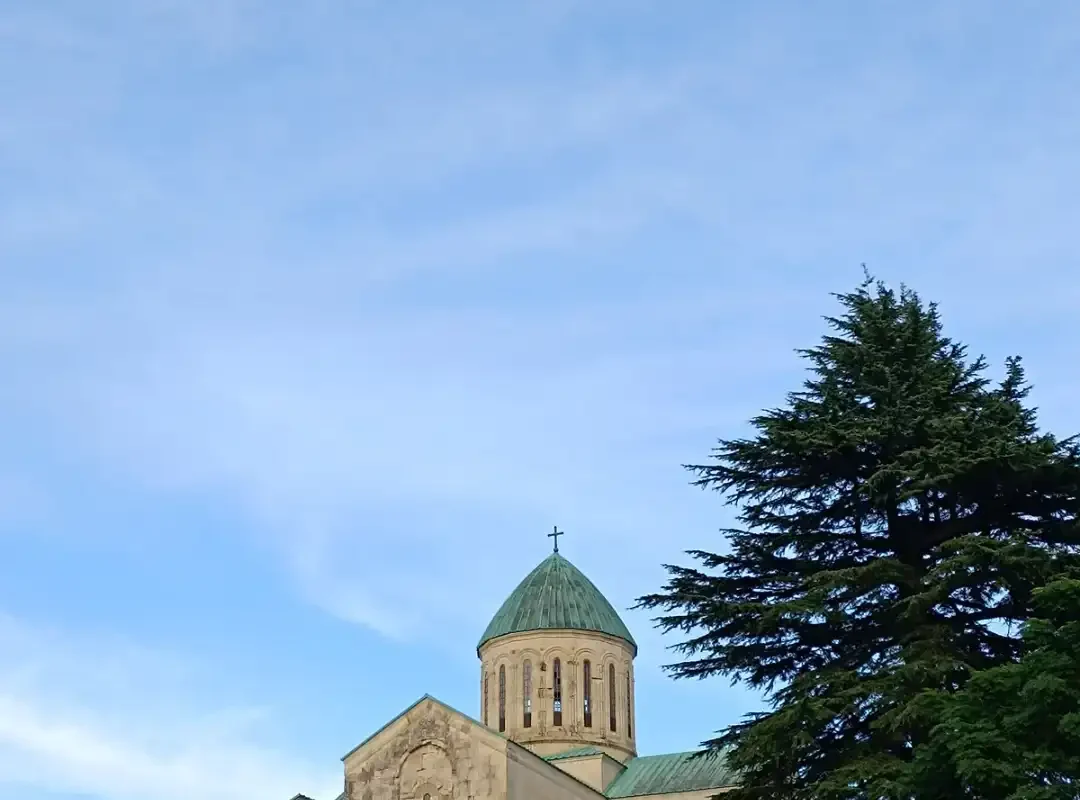
The symbol of the city stands on Ukimerioni Hill, overlooking the river and the rooftops. Bagrati Cathedral was built at the turn of the 11th century, when Kutaisi was the capital of the united Georgian kingdom. It was badly damaged by invaders in later centuries and has been restored, and it remains an active church, so dress modestly: shoulders and knees covered, and a scarf for women is appreciated.
Come in the late afternoon, when the stone turns warm and gold and the cedar trees cast long shadows across the lawn. The walk up from the center takes about 20 minutes.
The chapel inside a 400-year-old oak
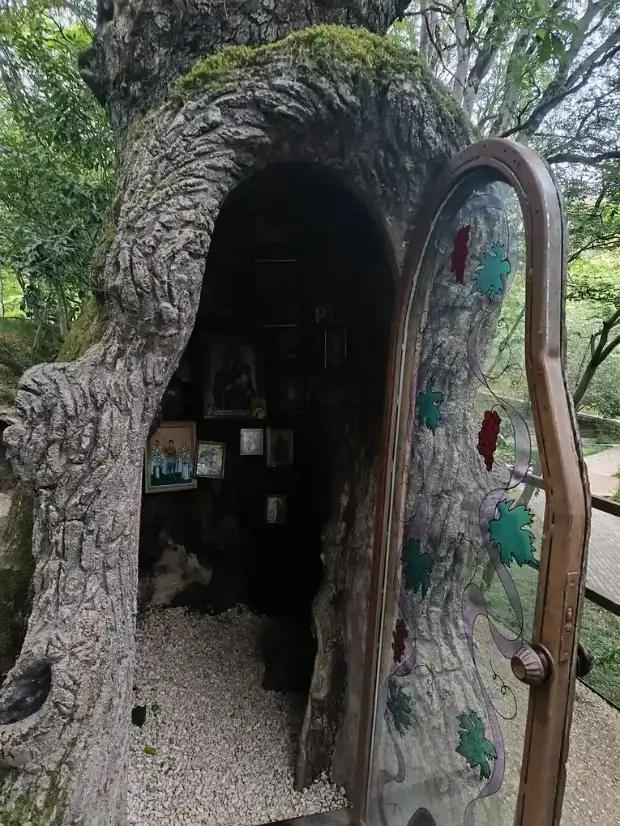
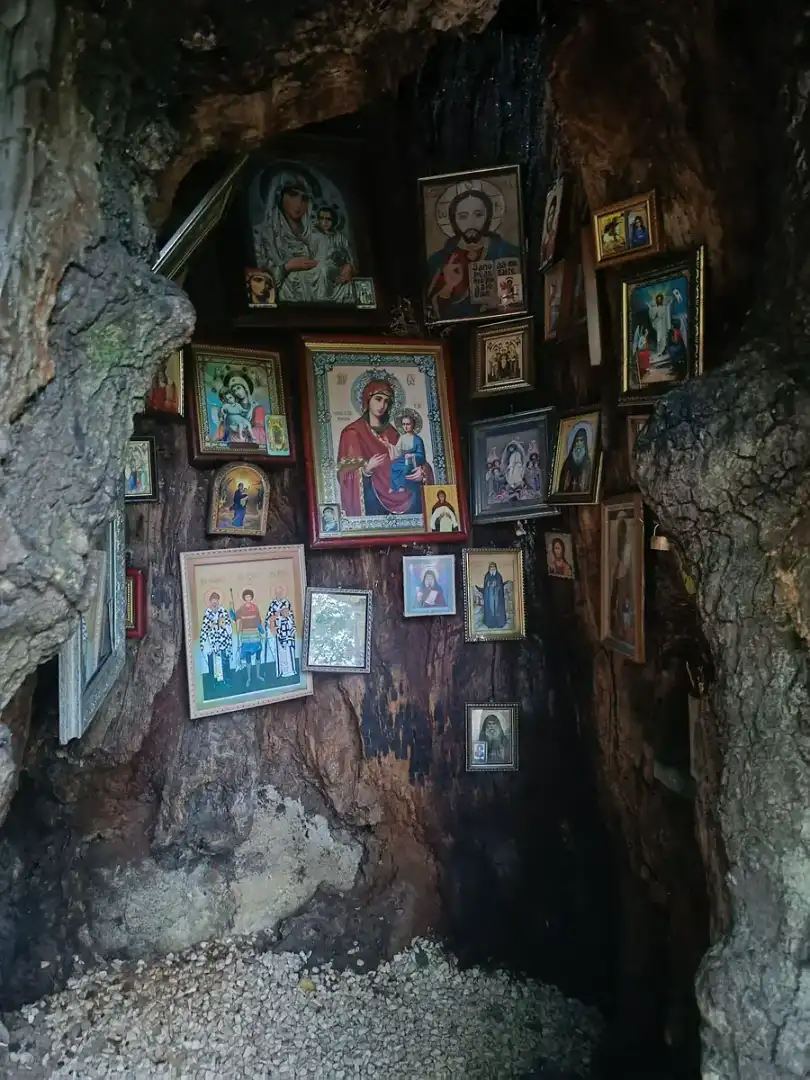
This is the place that surprised me most in Kutaisi. In the city’s botanical garden, among tall, shady trees, a living oak estimated to be around 400 years old has a small chapel built inside its hollow trunk. It is dedicated to the Virgin Mary and is often described as one of the smallest churches in the world. Inside, there is room for only a handful of people, and the walls of the trunk are lined with icons.
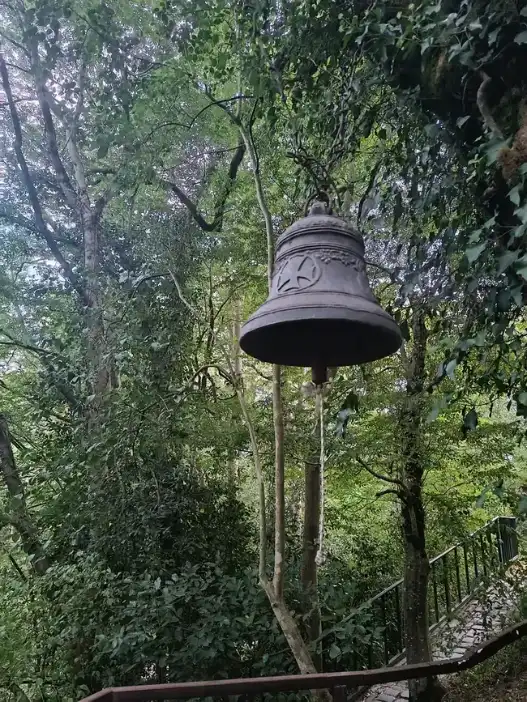
A bronze bell hangs from a nearby tree, and the whole garden feels hushed and green, a world away from the traffic outside. Treat it as a place of prayer: speak quietly, do not touch the icons, and ask before taking photos if someone is praying inside.
The central market
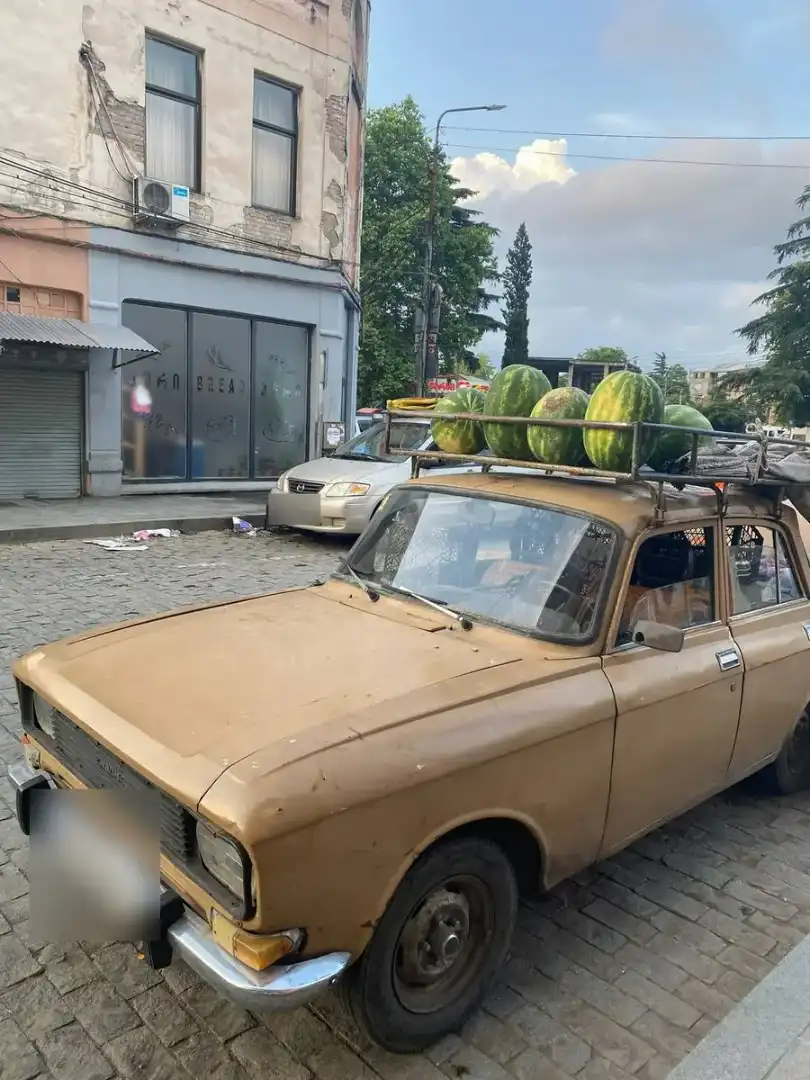
The Green Bazaar in the city center is the best place to understand everyday life here. Expect piles of seasonal fruit, churchkhela (walnuts threaded on a string and dipped in thickened grape juice), cheeses, spices and fresh herbs. In summer, the streets around it fill with watermelons, sometimes sold straight off the roof of an old Soviet car. To know what to buy and eat, see my guide to Georgian food.
The old town and the riverside
The center is small enough to explore on foot. Walk along the Rioni River, cross the White Bridge, where a small bronze statue of a boy with a hat sits on the railing above the river, and wander the streets of older houses with carved wooden balconies. The Colchis Fountain on the main square, decorated with copies of ancient gold figures, is a reminder of the city’s mythical past. There is no single “must-see” here: the pleasure is in slowing down, stopping for coffee and khachapuri, and watching the city go by.
The best Kutaisi day trips
The real strength of Kutaisi is its location. Within an hour’s drive are canyons, caves, waterfalls and monasteries that make the city one of the best bases in Georgia. You can go by marshrutka (shared minibus), by taxi for the day, or on one of the many small-group tours sold in the city.
Kutaisi day trips at a glance
| Place | Distance from Kutaisi | Drive time | What it is | Best for |
|---|---|---|---|---|
| Prometheus Cave | about 12 miles (20 km) | about 30 min | Large cave with lit halls | Rainy days, kids |
| Motsameta Monastery | about 4 miles (6 km) | about 15 min | Monastery above a river gorge | Short half-day trip |
| Tskaltubo | about 7 miles (11 km) | about 20 min | Abandoned Soviet spa town | Photographers |
| Okatse Canyon | about 30 miles (50 km) | about 1 hour | Walkway hanging over a canyon | Views, adventure |
| Martvili Canyon | about 30 miles (50 km) | about 1 hour | Turquoise river between white rocks | Boat ride, photos |
Each site charges a separate entry fee, with boat rides and transfers extra, and combined tickets for several sites can save money. Check current prices on the official tourism website before you go.
Martvili Canyon
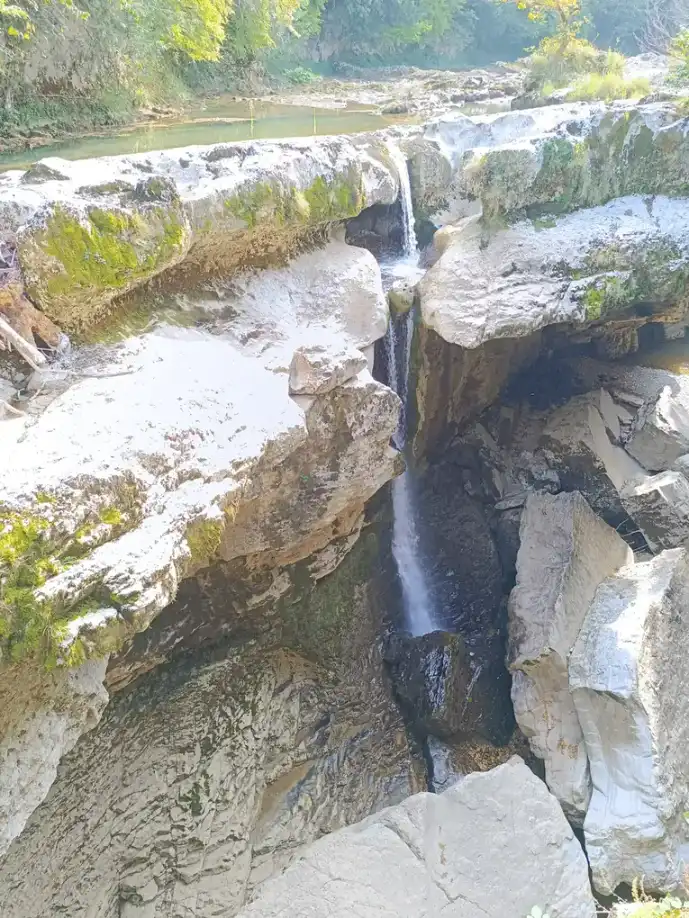
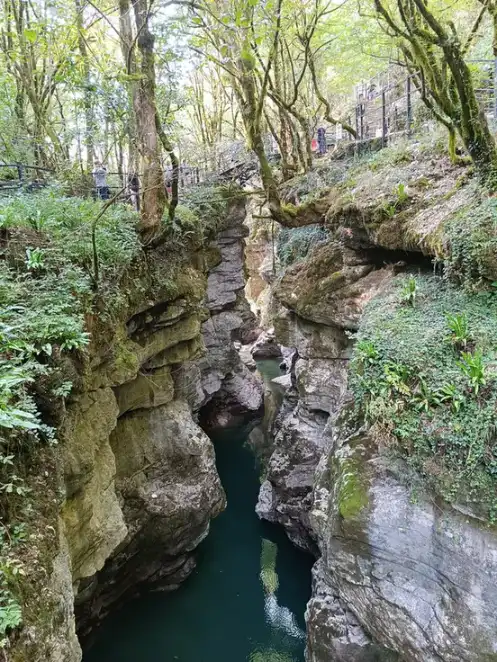
If you only have time for one day trip from Kutaisi, Georgia, make it Martvili. The Abasha River has carved a narrow gorge through pale limestone, and the water is an almost unreal shade of turquoise. A path runs along the top of the canyon past small waterfalls, and short boat rides take you deeper into the gorge when the water level allows.
Come early. By late morning in summer, the paths are busy with tour groups.
Martvili Monastery
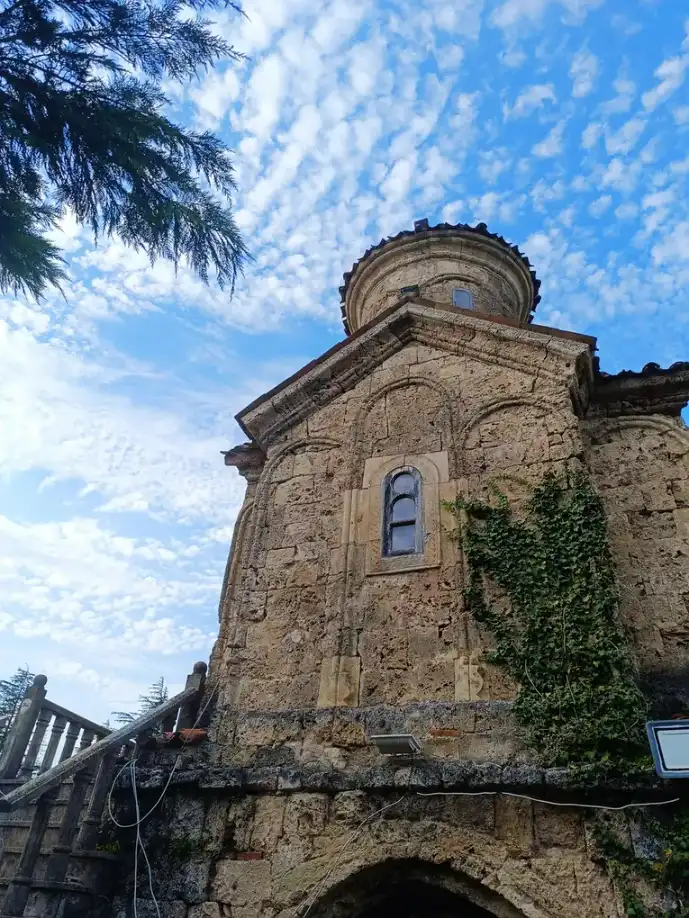
On a hill above the town of Martvili stands Martvili (Chkondidi) Monastery, one of the most important religious sites of western Georgia. The church is built of warm, honey-colored stone, and the view from the hilltop stretches across the green Colchis lowlands. It pairs perfectly with the canyon on the same day.
Okatse Canyon
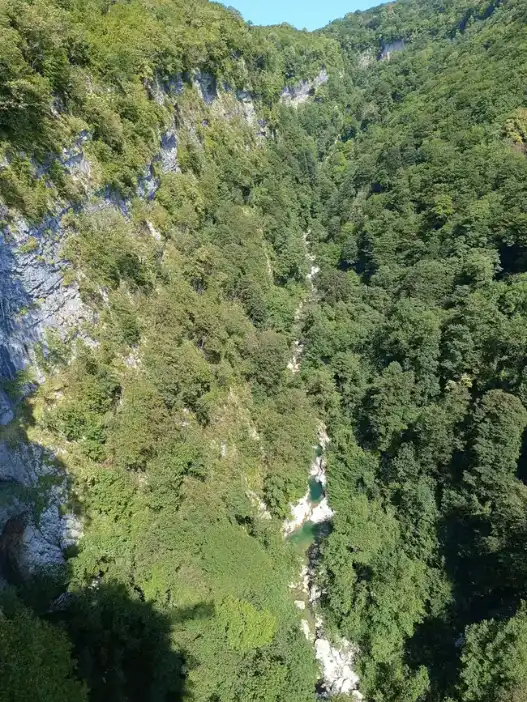
Okatse is the opposite of Martvili. Instead of looking up from the river, you look down. A metal walkway, about 1.2 miles (2 km) long including the forest approach, clings to the side of the canyon, ending in a viewing platform that juts out over a drop of more than 300 feet. It is not for anyone afraid of heights, but the view of the green gorge below is unforgettable.
Okatse can close in winter and after heavy rain, so check before you go.
Gelati Monastery
About 6 miles (10 km) from the city, on a wooded hillside, Gelati Monastery is the most important historic site in the Kutaisi region and a UNESCO World Heritage Site. It was founded in 1106 by King David IV, known as David the Builder, who made it a center of learning: Gelati had an academy where scholars taught philosophy, theology and science. Inside the main church, golden mosaics and frescoes of saints and Georgian kings cover the walls, and the 12th-century mosaic of the Virgin and Child in the apse is one of the treasures of medieval Georgian art.
David the Builder asked to be buried under the gate of the monastery, so that everyone who entered would step over him, a sign of humility. You can still see his grave stone at the south gate. Gelati is easy to combine with Motsameta on the same half day.
Motsameta Monastery
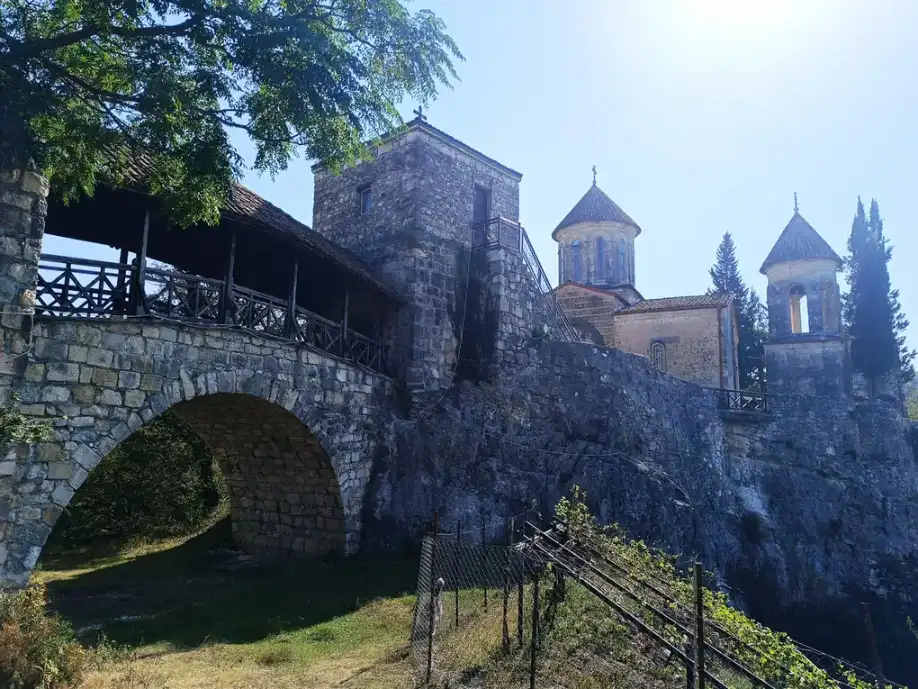
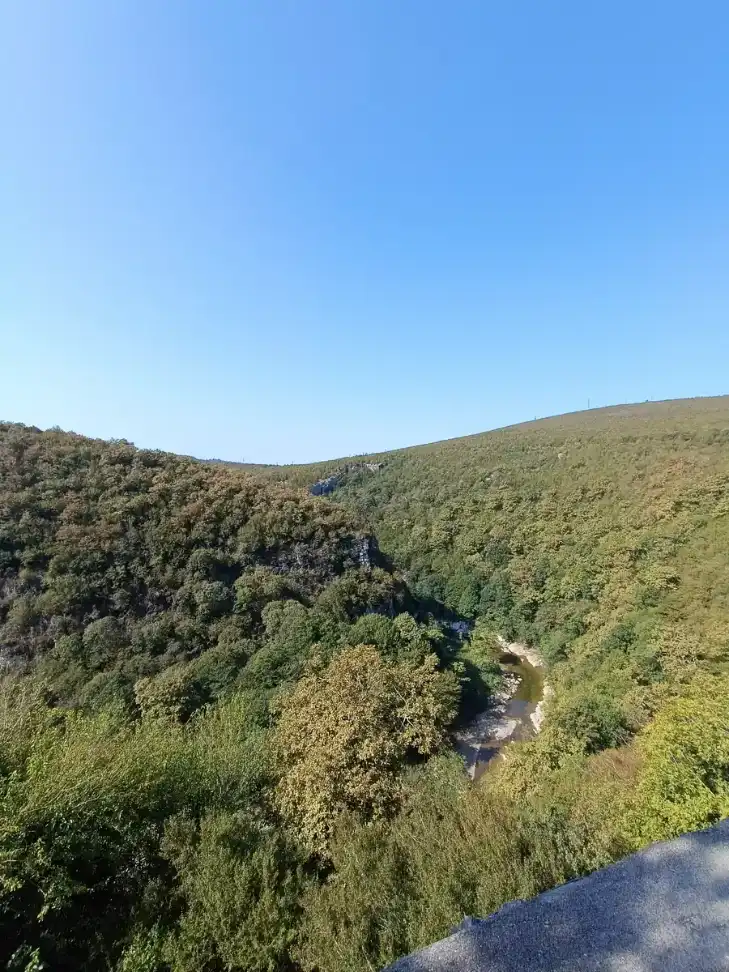
Just a short drive from the city, Motsameta Monastery sits on a rocky cliff above a bend in the Tskaltsitela River, reached by a stone arched bridge. It is small, peaceful and beautiful in the morning light. Combine it with nearby Gelati Monastery, a UNESCO World Heritage Site, for an easy half-day trip.
Tskaltubo
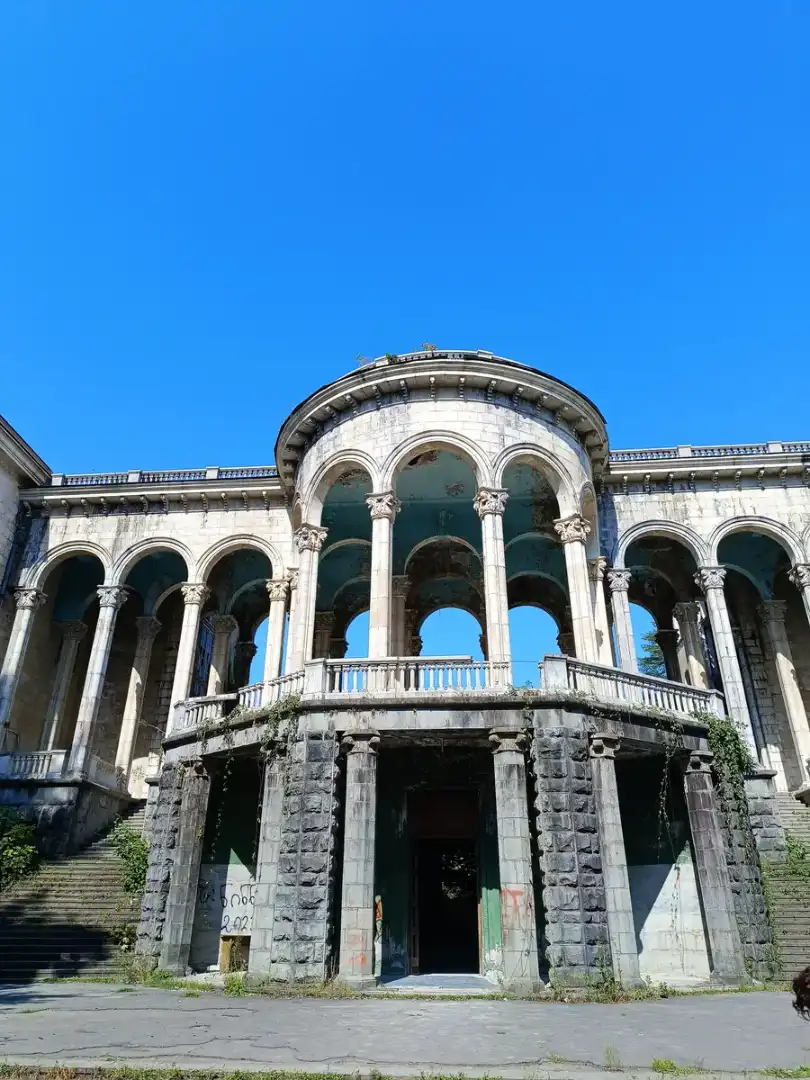
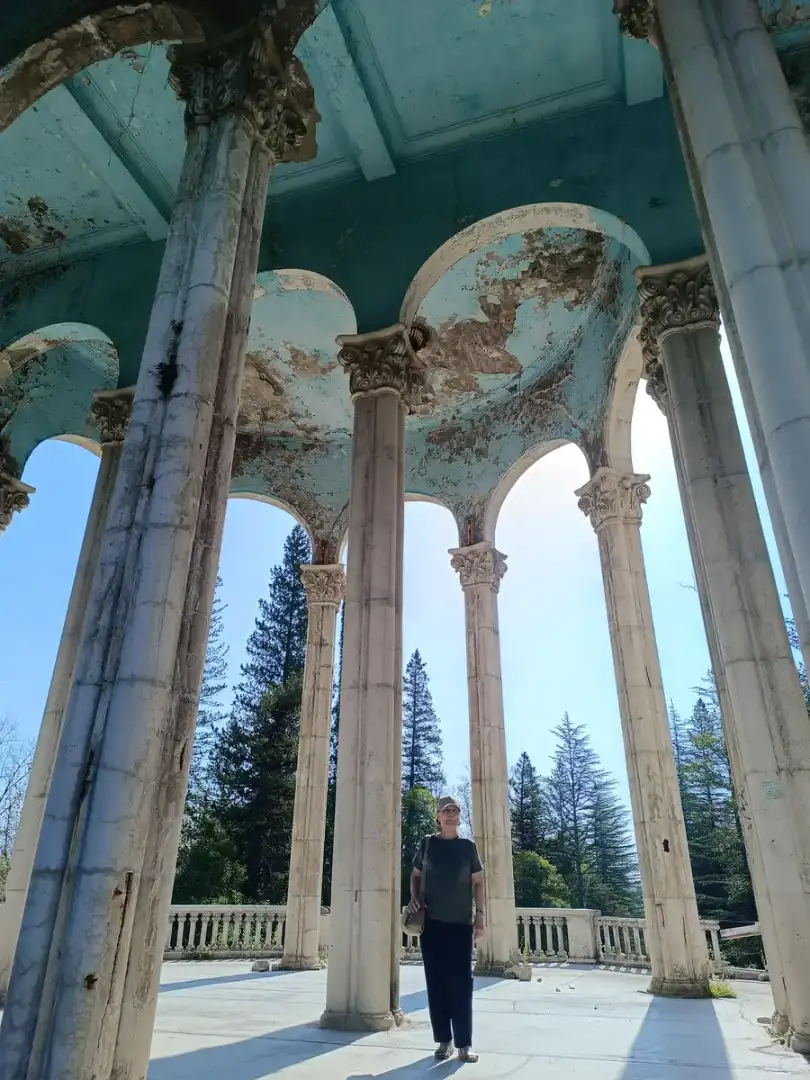
Twenty minutes from Kutaisi lies Tskaltubo, once one of the grandest spa resorts of the Soviet Union. Many of its huge sanatoriums now stand abandoned, with columns, rotundas and grand staircases slowly being taken over by trees and ivy. It is an extraordinary place for photography, but parts of the buildings are unsafe, so stay on solid ground and do not climb.
Prometheus Cave
Named after the Greek hero who, according to myth, was chained to the Caucasus, Prometheus Cave is a series of large halls filled with stalactites and stalagmites, lit in changing colors. The walk inside is comfortable and well-paved, and an optional underground boat ride ends the visit. It is a great choice for a rainy day.
Sataplia Nature Reserve
Just northwest of the city, Sataplia combines three things in one short visit: a cave with stalactites, a forest trail, and dinosaur footprints preserved in the rock, protected under a modern pavilion. A glass-floored viewing platform at the top of the hill looks out over Kutaisi and, on clear days, toward the mountains. It is small and easy, which makes it a good half-day trip with children.
What to eat in Kutaisi
Kutaisi is the capital of Imereti, and Imeretian food is some of the most comforting in Georgia.
| Dish | What it is |
|---|---|
| Imeruli khachapuri | The classic round cheese bread, filled with salty Imeretian cheese; the region’s pride |
| Pkhali | Spinach, beet or bean pâté with walnuts and garlic, topped with pomegranate seeds |
| Lobio | Bean stew cooked in a clay pot, served with corn bread (mchadi) and pickles |
| Khinkali | Juicy dumplings, eaten by hand |
| Churchkhela | Walnuts on a string dipped in thickened grape juice, sold at the market |
| Imeretian wine | Light white wines from local grapes such as tsitska and tsolikouri |
Order an Imeretian khachapuri at least once: it is simpler than the boat-shaped Adjarian version, and many Georgians say it is the original. For a full guide, see my article on Georgian food.
Where to stay in Kutaisi
| Area | Best for |
|---|---|
| Old town and riverside | Walking to the market, the White Bridge and cafés; atmospheric guesthouses |
| Below Bagrati Cathedral (Ukimerioni Hill) | Quiet streets and views over the city |
| Near the central square | Easy access to minibuses and airport buses |
Kutaisi is a city of family-run guesthouses rather than big hotels. Many hosts serve homemade breakfast and can arrange taxis for day trips, which is one of the easiest ways to see the canyons.
Getting from Kutaisi to Tbilisi, Batumi and Svaneti
To Tbilisi. Minibuses (marshrutkas) run throughout the day and take about four hours. Trains are slower but more comfortable, and some airport buses go straight to Tbilisi.
To Batumi. About two to two and a half hours by minibus or train, a good choice if you want to add the Black Sea coast. See my guide to Batumi at night.
To Svaneti. Minibuses run to Mestia, mainly in the warmer months; the mountain road takes most of the day, so leave in the morning.
How many days do you need in Kutaisi?
One day. Enough for Bagrati Cathedral, the botanical garden with the oak chapel, the market and a walk along the river.
Two days. Add one full day trip: Martvili Canyon and Martvili Monastery, or Okatse Canyon and Prometheus Cave.
Three days. The ideal length. Add Motsameta, Gelati and Tskaltubo, and you will have seen the best of the region without rushing.
Kutaisi also makes a good stepping stone to the mountains. Many travelers continue north to Svaneti, which is especially beautiful in the fall.
Is Kutaisi good for kids?
Yes. Kutaisi is one of the more relaxed places in the country to travel with children. The center is compact and quieter than Tbilisi, and food is familiar and filling: bread, cheese, grilled meat and khachapuri appeal to most kids.
For families, Prometheus Cave is the easiest day trip, with paved paths and a fun boat ride. Martvili Canyon is great for older children, with a short walk and a boat. Okatse’s hanging walkway is better for confident kids who are not afraid of heights, and the abandoned buildings of Tskaltubo are not a place for small children to explore. Bring sun protection in summer and a light rain jacket year-round, as western Georgia is green for a reason.
Practical tips for Kutaisi
Best time to visit. The best time to visit is late spring (May to June) or early fall (September to October), with mild weather and fewer crowds. July and August are hot and humid.
Money. The currency is the Georgian lari (GEL). Cards work in most cafés and hotels, but carry cash for markets, minibuses and small guesthouses.
Language. Georgian is the main language. Russian is widely understood by older people, and younger people often speak some English. A few words of Georgian go a long way (see below).
Say hello in Georgian: gamarjoba
The first word you will hear in Kutaisi is gamarjoba (გამარჯობა, said ga-mar-JO-ba), the everyday Georgian greeting. Its root means “victory”, so when you say hello, you are really wishing someone a victory. The polite reply is gagimarjos (გაგიმარჯოს), “may you be victorious too”. Try it at the market or in a guesthouse: even a clumsy gamarjoba usually earns a big smile, and sometimes an extra piece of churchkhela.
| Georgian | Pronunciation | Meaning |
|---|---|---|
| გამარჯობა | ga-mar-JO-ba | Hello |
| გაგიმარჯოს | ga-gi-MAR-jos | Hello (reply) |
| მადლობა | mad-LO-ba | Thank you |
| ნახვამდის | nakh-VAM-dis | Goodbye |
| გაუმარჯოს | ga-u-MAR-jos | Cheers! (a toast) |
Etiquette in churches. Cover shoulders and knees, and women should bring a scarf. Speak quietly and never photograph a service without permission.
Getting around. Marshrutkas are cheap but can be confusing. For day trips, a taxi for the day shared between several people is often good value.
Frequently asked questions
Is Kutaisi worth visiting?
Yes. Kutaisi, Georgia has a historic center, Bagrati Cathedral, a chapel inside a 400-year-old oak, and some of the country’s best canyons, caves and monasteries within an hour’s drive. Two to three days is ideal.
How do I get from Kutaisi airport to the city?
Buses and shuttles meet most flights and reach the center in about 30 to 40 minutes. Taxis and ride-hailing apps take about 25 to 30 minutes.
What are the best day trips from Kutaisi?
Martvili Canyon, Okatse Canyon, Prometheus Cave, Motsameta and Gelati monasteries, and the abandoned spa town of Tskaltubo are the most popular day trips.
How many days should I spend in Kutaisi?
One day covers the city itself. Two to three days lets you add the best day trips without rushing.
Is Kutaisi good for families with kids?
Yes. The city is calm and compact, and Prometheus Cave and Martvili Canyon are easy, exciting trips for children.
How do you say hello in Georgian?
The Georgian greeting is gamarjoba (გამარჯობა). It comes from the word for victory, and the usual reply is gagimarjos, “victory to you too”.
What is Gelati Monastery?
A 12th-century monastery and academy founded by King David the Builder about 6 miles (10 km) from Kutaisi, famous for its golden mosaics and a UNESCO World Heritage Site.
How do I get from Kutaisi to Tbilisi?
By minibus (about four hours), by train, or by airport buses that continue to Tbilisi.
Where is the smallest church in Kutaisi?
A tiny chapel built inside the hollow trunk of a roughly 400-year-old oak stands in the Kutaisi Botanical Garden. It is dedicated to the Virgin Mary.
More than a gateway
Kutaisi, Georgia rewards anyone who stays longer than a bus transfer. Spend an evening watching the light fade behind Bagrati, step inside the chapel in the old oak, and then head out to the turquoise water of Martvili and the dizzying walkway above Okatse. You may arrive for a cheap flight, but you will leave wishing you had planned more time.