When travelers ask, “What do people eat in Tonga?” it helps to know one fact first: Tonga is the only Pacific nation never formally colonised by a foreign power, and it remains the region’s only kingdom. That unbroken line of monarchy and custom shows up directly on the table, in a food culture organized as much around rank and ceremony as around ingredients.
The base is familiar Polynesian territory, root crops, coconut, and fish and pork, but the way food is presented, particularly at a pola feast tray, is distinctly Tongan.
What do people eat in Tonga? The three pillars
1. Root crops: the starch base
- Talo (taro), the primary staple
- ‘Ufi (yam), ceremonially important, tied to the agricultural calendar
- Kumala (sweet potato), common, easier to grow than taro
- Manioke (cassava/tapioca), increasingly common, hardy
The yam calendar matters in Tonga much as it does in Vanuatu. Certain festivals and social obligations are timed around planting and harvest, and a good yam crop carries prestige beyond its nutritional value.
2. Coconut: cream and the cooking base
Coconut cream (lolo) is squeezed from grated coconut and forms the base of lu pulu, ‘ota ika, and most traditional cooking. As elsewhere in Polynesia, nothing about the coconut goes unused.
3. Fish and pork: the proteins of status
Reef and pelagic fish supply everyday protein, while pork carries real ceremonial weight. A whole roasted pig at a feast is a direct statement about the importance of the occasion and the standing of the family hosting it.
Lu pulu: the national dish
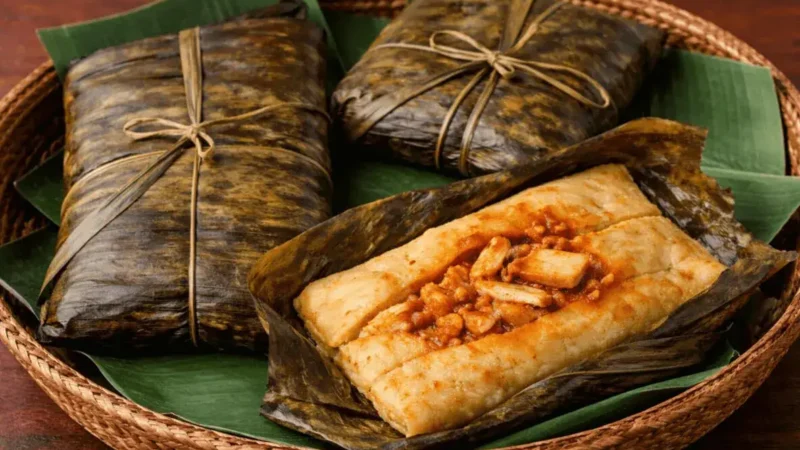
Lu pulu is corned beef (or sometimes tuna) mixed with coconut cream, wrapped in taro leaves, and baked in the ‘umu, Tonga’s earth oven.
The “pulu” in the name reflects the historical dominance of tinned corned beef as the protein of choice. An imported ingredient that became so embedded in Tongan cooking that it now defines the national dish. Traditionally eaten on Sundays alongside baked yam or kumala, lu pulu is the dish most likely to appear at any significant Tongan gathering.
Why corned beef became Tongan food
Tinned corned beef arrived through trade in the colonial period and, unlike in many places where imported meat stayed a poor substitute for fresh protein, it became genuinely preferred for lu pulu specifically because its salt and fat content works well with the taro leaves and coconut cream. This is worth noting: lu pulu isn’t a compromise dish born of scarcity. Many Tongans consider the corned beef version the “correct” one over fresh meat alternatives.
‘Ota ika: Tonga’s raw fish salad
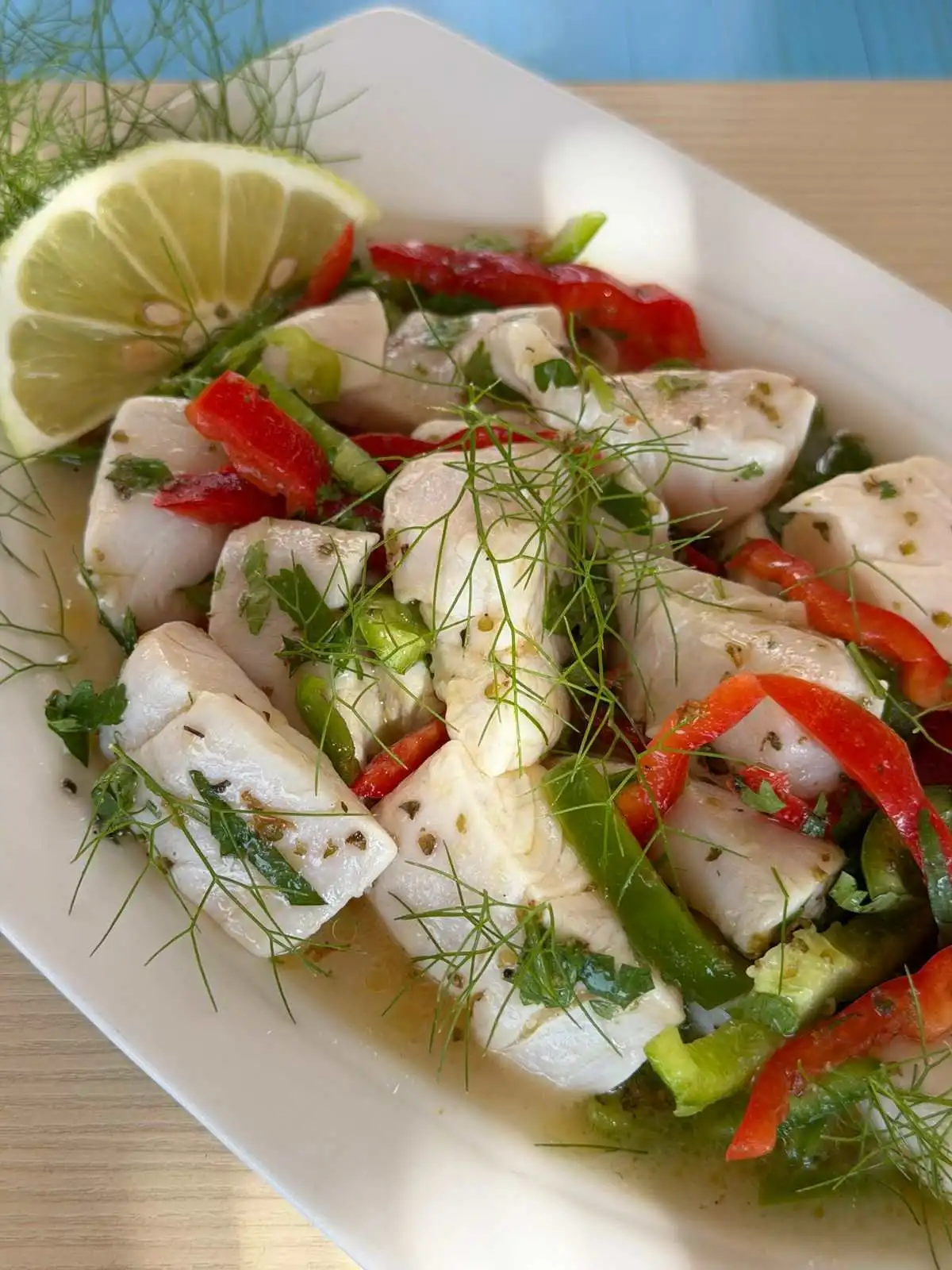
‘Ota ika is Tonga’s definitive raw fish dish: firm, sashimi-grade reef fish marinated in citrus juice until it firms and whitens, then folded into rich coconut cream (lolo) with finely sliced onion, tomato, cucumber, and sometimes mild chilli.
It sits within the same Pacific-wide raw fish tradition as ika mata (Cook Islands), oka i’a (Samoa), and kokoda (Fiji), but Tongan ‘ota ika tends toward a richer, creamier finish than some neighbouring versions.
Traditional dishes at a glance
| Dish | What it is | When it’s eaten |
|---|---|---|
| Lu pulu | Corned beef or tuna with coconut cream in taro leaves | Sundays, feasts |
| ‘Ota ika | Raw fish cured in citrus, folded into coconut cream | Everyday, gatherings |
| Feke | Octopus cooked in coconut milk | Feasts |
| ‘Umu pork | Whole suckling pig roasted in the earth oven | Major feasts |
| Manioke chips | Fried tapioca root | Everyday snack |
| Faikakai | Sweet pudding, often banana or taro-based with coconut caramel | Dessert, celebrations |
| Ika mo’u | Fish and root vegetables steamed together | Everyday, umu cooking |
| Otai | Refreshing fruit and coconut water drink | Everyday, hot weather |
The pola: how a real Tongan feast is served
At a significant Tongan feast, food isn’t served in individual courses. Up to 30 different dishes may be arranged on a pola, a long woven tray made from coconut fronds, including suckling pig, crayfish, chicken, octopus, pork, and a full range of root vegetables steamed in the umu.
Guests eat from this shared spread, and the scale of a pola is itself a public statement about the occasion’s importance and the host family’s resources and effort. Royal and chiefly feasts can involve poles many meters long.
Otai: the drink that answers Tonga’s heat
Otai is a cold drink made from grated or diced fruit, commonly watermelon or mango, mixed with coconut water and sometimes coconut cream. It’s genuinely refreshing and served at everyday meals as much as at feasts, functioning as Tonga’s answer to a fruit punch.
How is food cooked in Tonga?
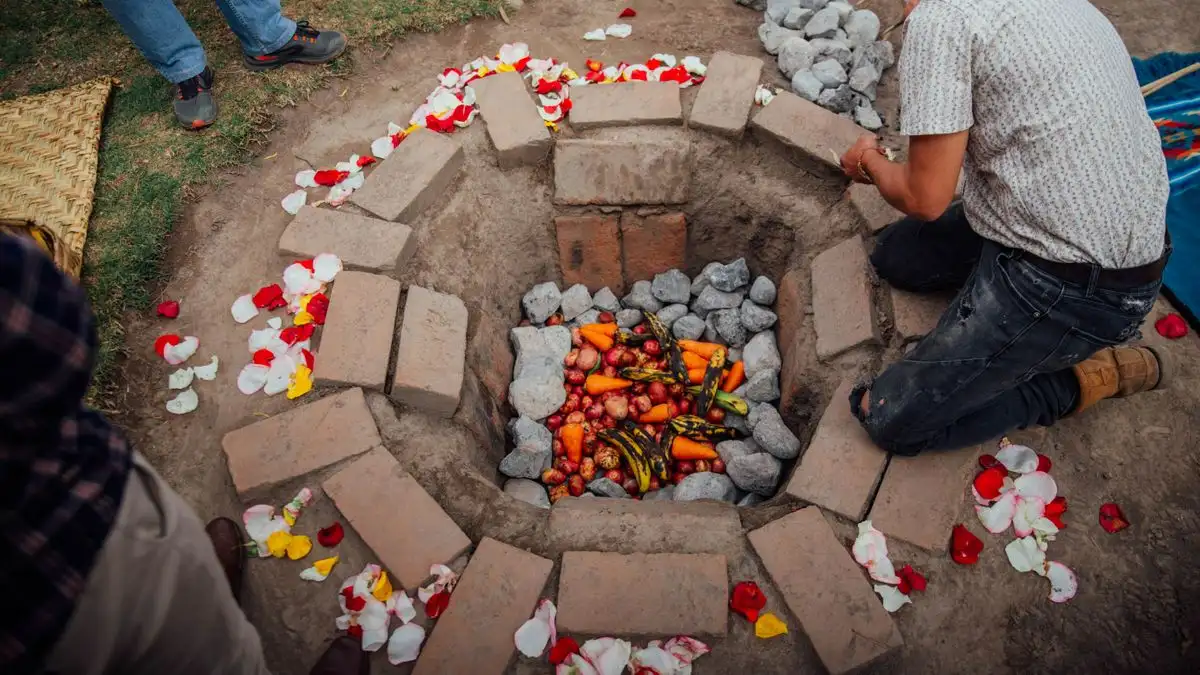
The ‘umu. Volcanic stones heated until scorching, food wrapped in banana or taro leaves, laid on the stones, and covered with more leaves and sand to steam-bake for several hours. The centerpiece method for lu pulu and any major feast.
Coconut cream preparation. Central to ‘ota ika (raw, folded in) and lu pulu (cooked, as the sauce within the leaf parcel).
Boiling and grilling. For everyday meals when a full umu isn’t practical, root crops boiled, fish grilled directly over coals.
What do people eat in Tonga daily?
Weekday meals
- Breakfast: bread or leftover root crop, tea
- Lunch: rice or root crop with tinned fish or leftover feast food
- Dinner: fish or chicken with taro or kumala
Sunday: the day everything stops
Tonga observes Sunday more strictly than almost anywhere else in the Pacific, and the reason is unusual: it isn’t custom or church pressure, it’s constitutional law.
Clause 6 of the 1875 constitution, drafted under King George Tupou I, declares the Sabbath sacred forever and prohibits trade, work and public entertainment on it. The clause goes further than closing shops. Any contract signed on a Sunday is legally void in Tonga. That is not a symbolic provision; it is enforceable, and it has stood for a hundred and fifty years.
The debate is live rather than historical. King Tupou VI has raised Sunday observance in parliament, and the question of how strictly the clause should apply in a modern economy is argued openly.
For food, the practical effect is that Sunday is the biggest cooking day of the week by a wide margin. Families gather for church and a substantial midday meal, often lu pulu, ‘umu-cooked pork, and root vegetables, that functions similarly to Samoa’s to’ona’i. Everything is prepared on Saturday, because Sunday work is the thing being prohibited.
Feasts and rank
Tongan society retains a working system of rank tied to the monarchy and nobility, and food service at formal occasions still reflects it. Who is served first, what dishes appear on whose pola, and how the meal is structured all carry social meaning beyond nutrition.
Why is Tonga’s food culture built around rank?
Rank and hierarchy shape what people eat in Tonga at every feast, a social structure covered by the Encyclopaedia Britannica in its overview of Tongan society.
Because Tonga’s monarchy and chiefly system were never dismantled by colonisation. Where other Pacific nations had traditional structures overlaid or replaced by colonial administration, Tonga’s system evolved on its own terms, and food remained one of the clearest ways that structure gets expressed.
A pola’s size and content, who eats first at a feast, and which cuts of pork go to which family are not incidental details. They are the social order made visible on a woven tray. Understanding this is close to essential for understanding what people eat in Tonga beyond the recipes themselves.
How travelers can experience what people eat in Tonga
Talamahu Market, Nuku’alofa
Tonga’s main market is the best single stop for fresh produce, root crops, and prepared food, including ‘ota ika sold ready to eat.
Feast nights and cultural shows
Resorts on Tongatapu and Vava’u run feast evenings featuring ‘umu-cooked food, often with a smaller-scale pola, alongside traditional dance.
Sunday, respected rather than worked around
Given how strictly Sunday closure is observed, plan around it rather than expecting restaurants or shops to be open. If you have any local connection, an invitation to a Sunday family meal is the most genuine food experience available.
Etiquette worth knowing
- Dress modestly, particularly outside resort areas
- Remove shoes before entering a home
- Wait to be shown where to sit; seating reflects rank
- Accept food when offered
- Never touch a Tongan’s head. It carries particular cultural weight, extending even to remarks about food served near it at formal events
What is the national dish of Tonga?
Tonga has no official national dish, but lu pulu is the one most Tongans would name: corned beef wrapped in taro leaves with coconut cream and baked in an umu, the underground oven. ʻOta ʻika, raw fish marinated in citrus and coconut cream, is another favorite often called Tonga’s signature dish.
Frequently asked questions: what do people eat in Tonga?
What is the national dish of Tonga?
Lu pulu, corned beef and coconut cream wrapped in taro leaves and baked in the ‘umu, is Tonga’s national dish and a Sunday staple.
What is ‘ota ika?
‘Ota ika is Tonga’s raw fish salad: citrus-cured fish folded into coconut cream with onion, tomato, and cucumber. It’s the Tongan version of the raw-fish dish found throughout Polynesia.
What is a pola?
A pola is a long woven tray made from coconut fronds used to serve a full Tongan feast. Sometimes holding up to 30 different dishes at once, its size signalling the importance of the occasion.
Is Tongan food spicy?
Generally mild. ‘Ota ika can carry a little chilli heat, but coconut cream, citrus, and the smokiness of the ‘umu define most Tongan cooking rather than spice.
Why do Tongans use corned beef in a national dish?
Tinned corned beef became embedded in Tongan cooking through colonial-era trade, and its salt and fat content works well with taro leaves and coconut cream. Many Tongans consider it the authentic version of lu pulu rather than a substitute.
Why is everything closed on Sundays in Tonga?
Because it’s law, not just custom. Clause 6 of Tonga’s 1875 constitution declares the Sabbath sacred and prohibits trade and work on Sundays. And any contract signed on a Sunday is legally void. It was drafted under King George Tupou I and still stands.
Is the Tongan Sunday law actually enforced?
Yes. Shops, offices and most services close, and the contract-voiding provision is real law rather than a symbolic clause. Cooking for Sunday is done on Saturday for exactly this reason.
Conclusion: what do people eat in Tonga? It carries the weight of rank
What people eat in Tonga can’t be separated from who Tonga is. The only kingdom in the Pacific, with a chiefly system that survived intact and a Sunday that the whole country still stops for. Lu pulu and ‘ota ika are the dishes to know, but the pola tray and the rank it encodes are the real subject.
For a comparison with a neighbouring Polynesian nation with a similar food structure but a different colonial history, see our guide to what people eat in Samoa, or explore what people eat in Kiribati.