When travelers ask, “What do people eat in Fiji?” the honest answer needs two threads instead of one. Fiji has an indigenous iTaukei food culture built on fish, root crops, and coconut, cooked in the earth oven exactly as it has been for centuries. It also has one of the Pacific’s largest Indo-Fijian populations, descended from indentured labourers brought by British colonial administrators, whose food, curry, roti, dhal, is now just as central to daily Fijian eating.
Both threads are genuinely Fijian. Neither is a footnote to the other.
What do people eat in Fiji? The three iTaukei pillars

1. Root crops and starches
- Dalo (taro). The primary staple, boiled or used in palusami-style leaf parcels
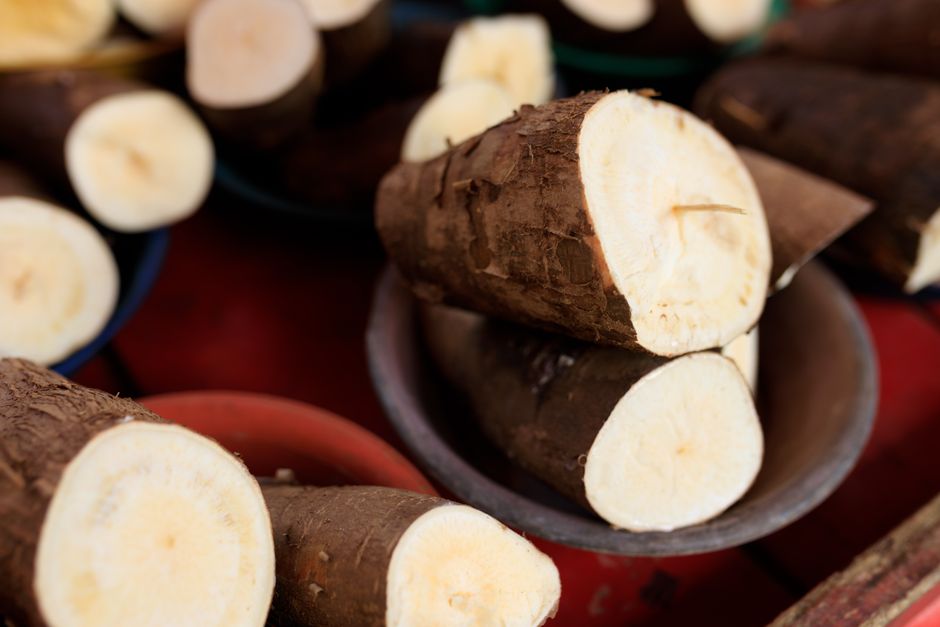
- Cassava (tavioka), increasingly dominant due to its hardiness
- Breadfruit (uto), seasonal
- Yaqona-adjacent yam varieties, grown but less central than in Tonga or Vanuatu
2. Fish and seafood
- Reef fish and tuna, raw or grilled
- Freshwater fish from Fiji’s larger islands
- Mud crab and prawns, particularly around Viti Levu’s coastal villages
- Sea urchin roe, a genuine local delicacy in some coastal communities
3. Coconut
Coconut milk and cream form the base of kokoda and palusami, and, as everywhere in this series, nothing about the tree is wasted, from husk fuel to leaf wrapping.
Kokoda: the national dish
Kokoda is Fiji’s national dish and its version of the Pacific raw-fish salad: firm white fish marinated in lime and lemon juice until it firms and whitens, then combined with coconut milk, chilli, onion, tomato, spring onion, capsicum, and, distinctively, a splash of seawater for extra salinity.
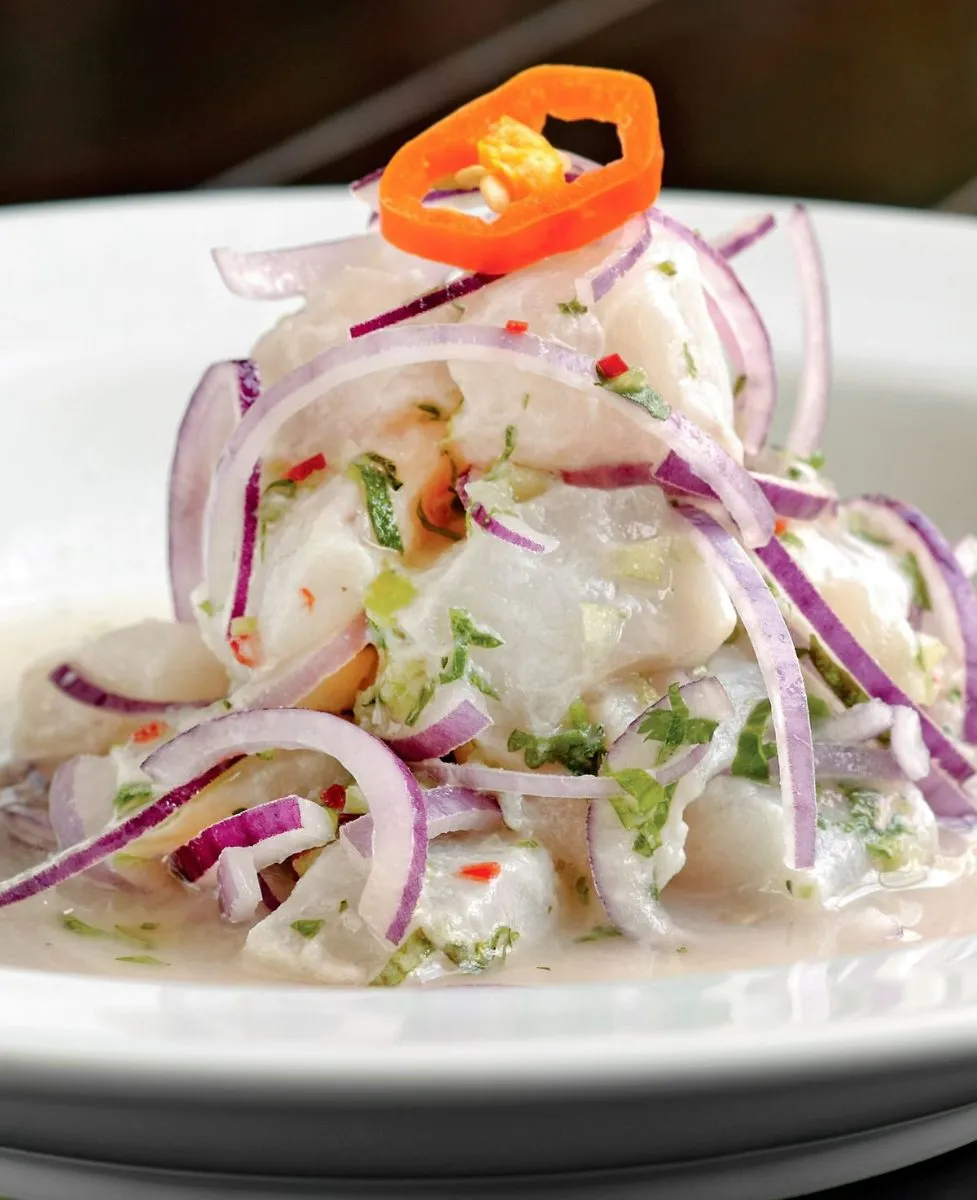
It’s served as a starter in essentially every restaurant in the country, from beachside shacks to upscale resorts, and it’s the dish most visitors will encounter first. Kokoda sits within the same regional family as ika mata, oka i’a, and ‘ota ika, but the addition of capsicum and seawater gives it a distinct character.
Lovo: Fiji’s earth oven
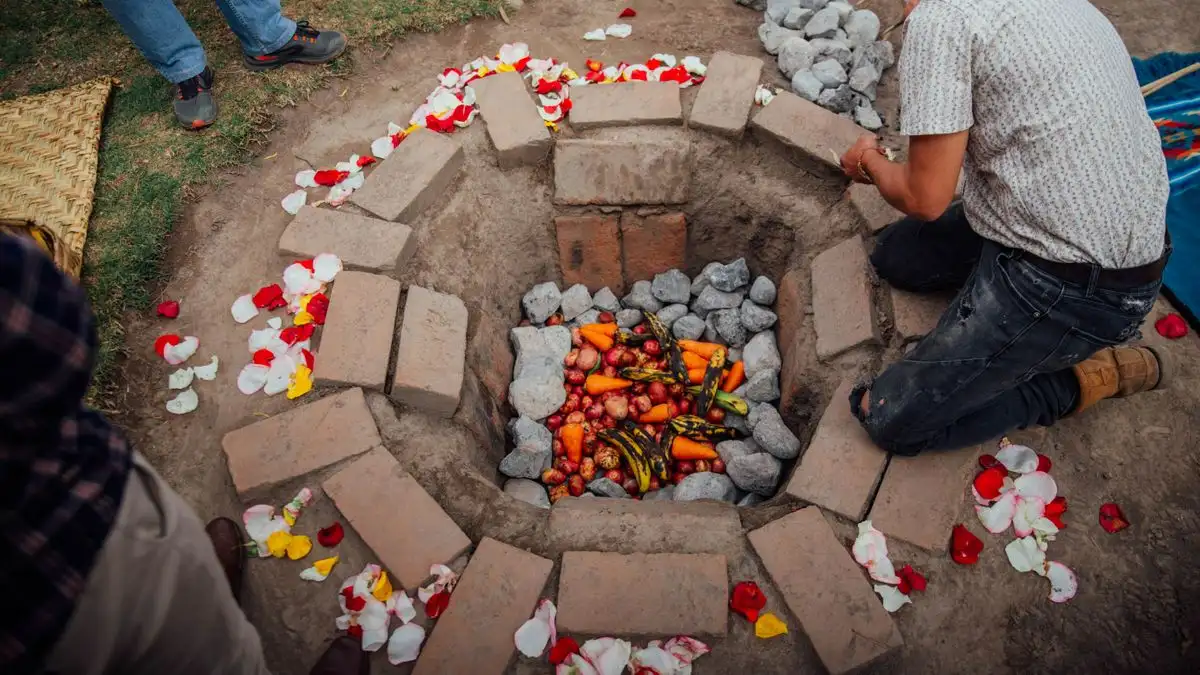
Lovo is both the cooking method and the feast built around it. Food slow-cooked in a pit oven dug into the ground.
Hot coals or heated stones go in first, food wrapped in banana leaves goes on top, and the whole pit is covered and left for several hours. What emerges is tender and smoky: whole fish, chicken, pork, and palusami-style taro parcels, all cooked together.
Lovo is central to Fijian celebrations, weddings, church events, village gatherings, and resorts across Fiji run lovo nights for visitors, generally using the genuine method rather than a shortcut version.
Palusami: shared with Samoa, cooked Fijian-style
Palusami appears in Fiji as well as Samoa: taro leaves filled with coconut milk, onion, and traditionally corned beef, wrapped into parcels, and cooked in the lovo. Fresh meat is used more often in Fiji’s version than in the historically corned-beef-dependent Samoan and Tongan versions, though corned beef remains common.
Traditional and everyday dishes at a glance
| Dish | What it is | Origin within Fiji’s food culture |
|---|---|---|
| Kokoda | Raw fish in coconut milk, lime, chilli | iTaukei |
| Lovo | Earth-oven feast: fish, chicken, pork, taro parcels | iTaukei |
| Palusami | Taro leaves with coconut milk and meat | iTaukei |
| Rourou | Taro leaves cooked in coconut cream, simpler than palusami | iTaukei |
| Curry (chicken, fish, or vegetable) | Spiced stew, roti or rice on the side | Indo-Fijian |
| Roti | Flatbread, eaten with curry | Indo-Fijian |
| Dhal | Lentil soup | Indo-Fijian |
| Chop suey | Stir-fried noodles or rice with meat and vegetables | Chinese-Fijian |
Why curry is as Fijian as kokoda
Indo-Fijians make up a substantial share of Fiji’s population, descended primarily from indentured labourers brought from India between 1879 and 1916 to work colonial sugar plantations. Their food, curry, roti, dhal, and a wide range of regional Indian dishes adapted with local ingredients, is not a separate cuisine operating alongside Fijian food. It’s eaten by iTaukei and Indo-Fijian households alike, sold at the same roadside stalls, and served at the same family tables in mixed communities.
A curry house and a kokoda stand can sit next to each other on the same street in Nadi or Suva, and a single family meal might include both. Any honest account of what people eat in Fiji has to include curry as genuinely local food, not an import that stayed separate.
Chop suey and the Chinese-Fijian layer
A smaller but long-established Chinese-Fijian community added its own layer. Stir-fried noodle and rice dishes that, like Samoa’s sapasui, have been thoroughly localised into everyday Fijian eating rather than remaining a distinct restaurant cuisine.
How is food cooked in Fiji?
The lovo. Fiji’s earth oven, used for feasts, celebrations, and increasingly for tourist cultural evenings. The definitive method for large-scale traditional cooking.
Coconut milk preparation. The base for kokoda (raw, mixed in) and palusami/rourou (cooked, as the sauce within leaf parcels).
Curry cooking. Slow-simmered spiced stews, a genuinely everyday cooking method in Indo-Fijian and mixed households, using techniques brought from India and adapted with local vegetables and fish.
Grilling. Simple and common for fish and chicken on an ordinary weekday.
What do people eat in Fiji daily?
In Suva and Nadi
- A genuinely mixed diet: curry and roti one night, fish and taro the next
- Indian sweet shops, Chinese takeaways, and iTaukei food stalls operate side by side
- Supermarkets stock imported goods extensively alongside local produce
- Street food, curry puffs, roti parcels, kokoda cups, widely available and cheap
In coastal and rural villages
- iTaukei food culture stays closer to fish, taro, cassava, and coconut
- The lovo remains a genuine weekly or event-based practice, not a performance
- Village protocol (see below) still governs how meals and visits are structured
Kava (yaqona): the ceremony that structures Fijian social life
Kava, described by the Encyclopaedia Britannica as a ceremonial plant central to Pacific social life, is as much a part of what people eat in Fiji as any dish on the table.
No account of what people eat, or more precisely drink, in Fiji is complete without yaqona, Fiji’s name for kava.
The dried, pounded root of Piper methysticum is mixed with water and strained through cloth, producing a muddy, earthy, mildly numbing drink. In iTaukei villages, a sevusevu, a formal presentation of yaqona root to the village chief, is the traditional way to request permission to visit or stay, and it remains genuinely practiced, not staged for tourists.
Kava is drunk from a shared coconut shell cup, passed around a circle, with specific etiquette: clap once before receiving the cup, drink it in a single go, then clap three times after.
How travelers can experience what people eat in Fiji
Markets in Suva and Nadi
Suva’s municipal market is one of the largest and most vibrant in the Pacific, selling kava root, root vegetables, fresh fish, and an enormous range of both iTaukei and Indo-Fijian prepared food.
Village visits and sevusevu
If visiting a village, a proper sevusevu presentation of kava to the chief is expected practice, usually arranged through a local guide or host. This isn’t a photo opportunity, it’s the actual protocol for being welcomed.
Lovo nights
Resorts across Fiji run lovo feast evenings, generally using genuine earth-oven cooking. Worth doing at least once for the smoky, slow-cooked results that a stovetop can’t replicate.
Etiquette worth knowing
- Cover shoulders and knees when visiting a village
- Remove hats and sunglasses when entering a village
- Don’t touch anyone’s head
- Accept kava when offered during a ceremony; clap once before, drink in one go, clap three times after
- Ask before photographing a sevusevu or village ceremony
Frequently asked questions: what do people eat in Fiji?
What is the national dish of Fiji?
Kokoda, raw fish marinated in lime and coconut milk with chilli, onion, and vegetables, is Fiji’s national dish and available in nearly every restaurant.
What is a lovo?
A lovo is both Fiji’s earth oven and the feast cooked in it. Fish, chicken, pork, and taro leaf parcels wrapped in banana leaves and slow-cooked over hot coals or stones for several hours.
Is curry really Fijian food?
Yes. Indo-Fijians, descended from indentured labourers brought under British colonial rule, make up a large share of Fiji’s population, and curry, roti, and dhal are everyday food eaten across communities, not a separate cuisine.
What is yaqona?
Yaqona is Fiji’s name for kava, a mildly sedating drink made from pounded root, central to village ceremony and social life, including the sevusevu welcome ritual.
Is Fijian food spicy?
It depends which tradition. iTaukei dishes like kokoda and lovo food are generally mild. Indo-Fijian curries can be genuinely spicy, depending on the household and region of origin.
What do people drink in Fiji?
Yaqona (kava), coconut water, tea, and Fiji Bitter beer. Fiji also bottles and exports its own well-known mineral water.
Conclusion: what do people eat in Fiji? Two food cultures, fully merged
What people eat in Fiji can’t be reduced to kokoda and lovo, even though both are genuinely central to iTaukei tradition. Curry houses and kava ceremonies exist in the same country, often on the same street, sometimes at the same table. That combination, indigenous Melanesian-Polynesian cooking alongside a fully localised Indo-Fijian cuisine, is what actually defines Fijian food today.
For a comparison with another Pacific food tradition, see our guide to traditional food in Vanuatu, or explore what people eat in Kiribati.