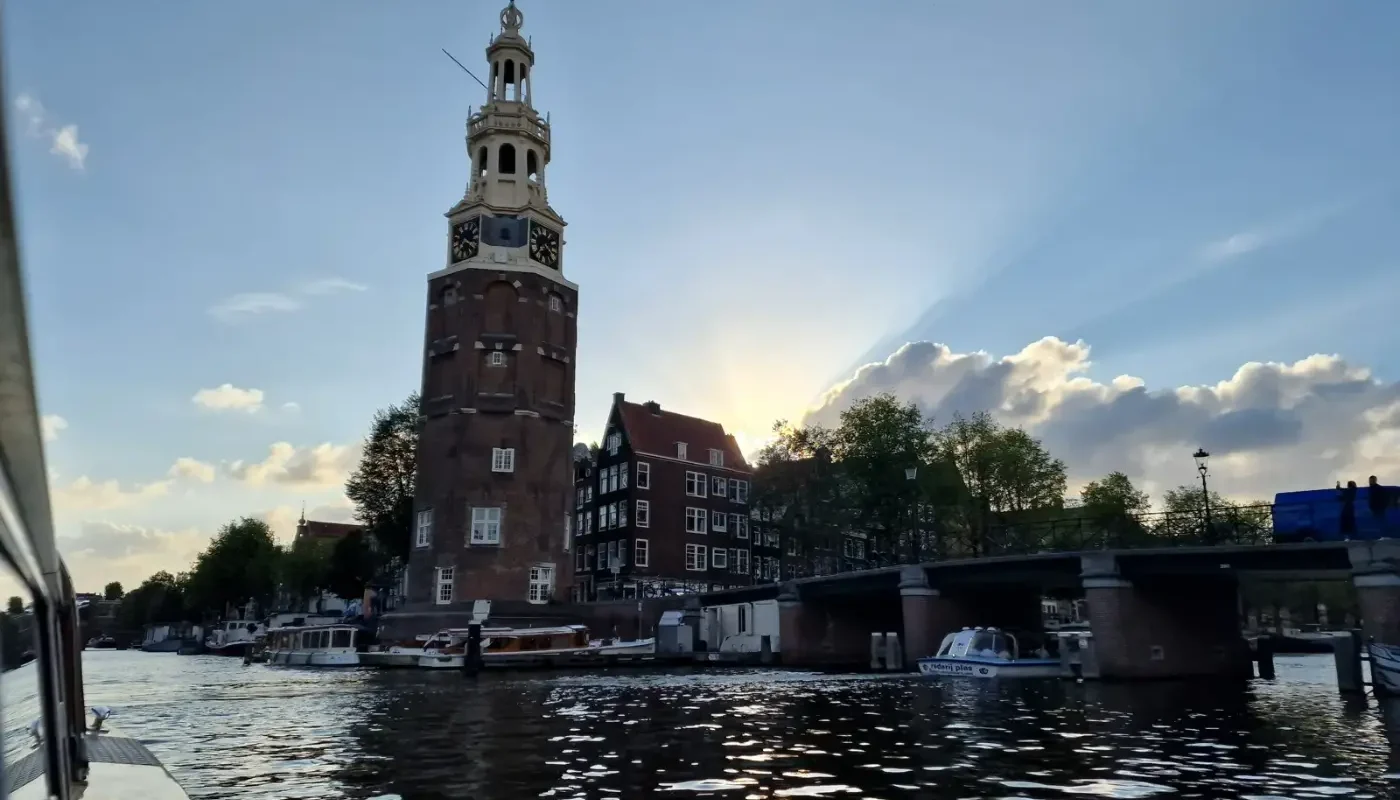
Ask anyone what not to miss in the Dutch capital, and the answer comes back almost instantly: get out on the water. For most first-time visitors, an Amsterdam canal cruise is the single best introduction to the city. Amsterdam was built around its canals, and from the water you see the city the way it was designed to be seen: gabled merchant houses, arched bridges, houseboats, and church towers rising above the rooftops. Three things make the trip worth planning rather than booking on impulse: the type of boat you choose, the time of day you go, and knowing which landmarks to look for as you pass them.
I took an evening Amsterdam canal cruise in late summer, and all of the photos in this guide are from that trip. Here is what I learned.
1. Why the canals matter
Amsterdam’s canal ring was dug in the 17th century, during the Dutch Golden Age, when the city was one of the richest trading ports in the world. The three main canals, the Herengracht, Keizersgracht, and Prinsengracht, form concentric half-circles around the old center, lined with the tall, narrow homes of the merchants who grew rich on that trade.
The canal ring is a UNESCO World Heritage Site, recognized as a masterpiece of urban planning. Altogether, Amsterdam has more than 60 miles (100 km) of canals and around 1,500 bridges. Walking gives you glimpses of all this; a boat lets you see how it all fits together.
2. Big glass boats vs. small open boats
The most important choice you will make is the type of boat.
Large glass-topped boats are the classic Amsterdam canal cruise. They carry dozens of passengers, run on fixed routes, and usually include a recorded audio guide in several languages. They are affordable, run all year, and the glass roof keeps you dry when it rains, which in Amsterdam is often. The downside is that the glass can reflect light and make photos harder, and the experience feels less personal.
Small open boats carry a much smaller group, often with a live guide who is also the skipper. They can reach narrower canals that big boats cannot, and nothing sits between you and the view. Many include drinks and snacks. They cost more and are less comfortable in bad weather, but on a dry evening they are hard to beat.
My cruise was on a mid-sized boat with an open deck at the back. Standing there, with the wake spreading behind us and the brick facades sliding past, was the best seat on the boat.
3. Choose the right time of day
Your Amsterdam canal cruise will feel very different depending on when you go.
Morning cruises are the quietest, with calm water and fewer boats. The light is soft, and it is a good choice if you want to take photos without crowds.
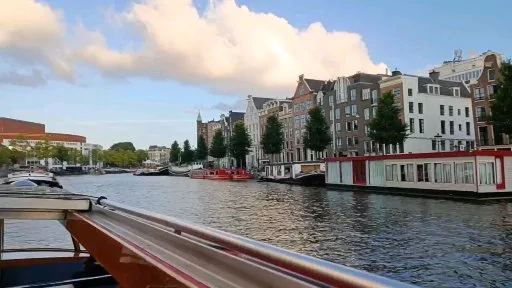
Late afternoon and early evening, especially in summer, is the golden hour for the canals. The low sun lights up the facades, the water turns gold and blue, and the city starts to wind down. This is when I went, and the light was exceptional.
Night cruises show the bridges outlined with small lights and the houses glowing from within. It is romantic, but photos are harder, and details of the architecture disappear.
In summer, the sun sets late, often after 9:00 PM, which gives you long evenings on the water.
4. Landmarks to look for from the water
A good Amsterdam canal cruise is far more rewarding when you know what you are looking at.
Montelbaanstoren. This tower on the Oudeschans canal was originally built in the early 16th century as part of the city’s defenses, with its decorative spire added later. It leans very slightly, and its reflection in the water is one of the most photographed views in the city.
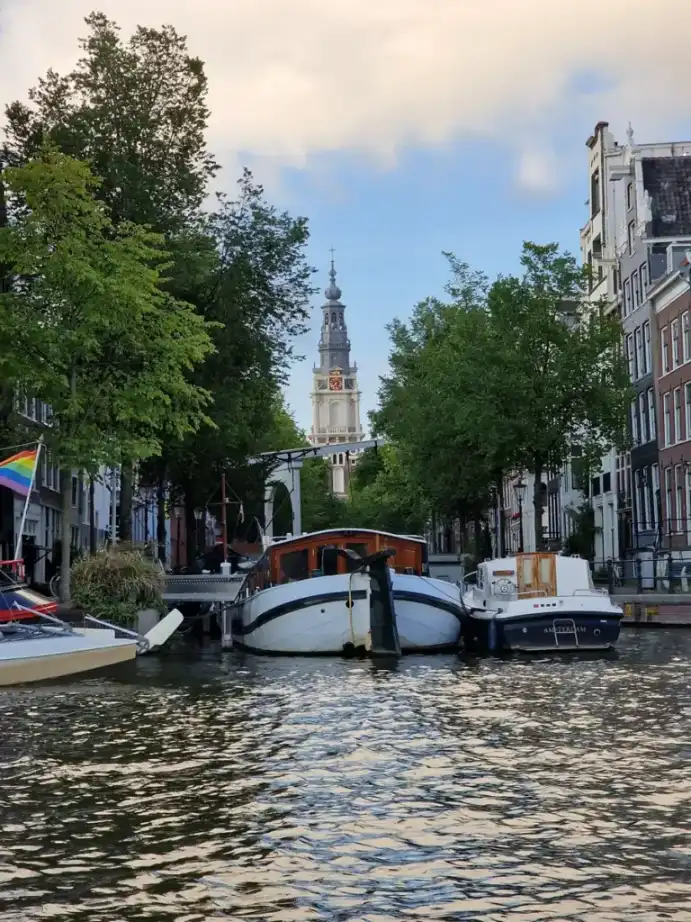
Zuiderkerk. The spire of the South Church rises above the Groenburgwal canal, framed by trees and a white drawbridge. It is one of the most painted views in Amsterdam, and even Claude Monet painted it.
The Skinny Bridge (Magere Brug). This white wooden drawbridge over the Amstel is lit with hundreds of small lights after dark.
Dancing houses. Many old canal houses lean forward or to the side. Some tilt because their wooden foundations shifted over the centuries; others were built leaning forward on purpose, so that goods could be hoisted up to the upper floors on the hooks still visible under many gables.
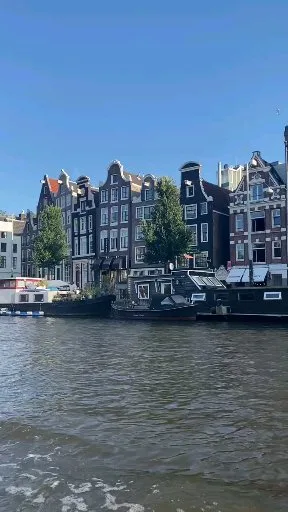
5. Houseboats and life on the water
One of the details that surprises first-time visitors is how many people actually live on the canals. Amsterdam has thousands of houseboats, ranging from converted cargo barges to modern floating homes with rooftop gardens and potted plants on deck.
From the water, you get a look at this lifestyle that is impossible from the street: bicycles on deck, laundry drying in the sun, and residents reading on a lounge chair a few feet from passing boats. There is even a small houseboat museum in the city if you want to see inside one.
Remember that these are private homes. Photos from the water are fine, but keep a respectful distance.
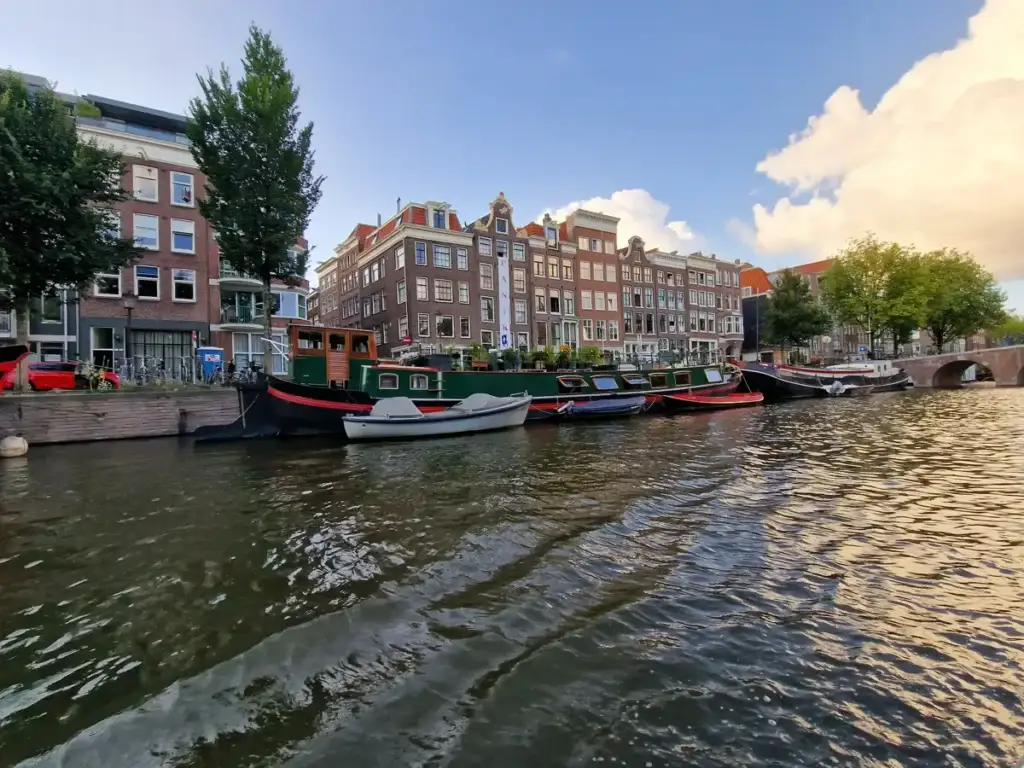
6. Beyond the canal ring: the IJ and the harbor
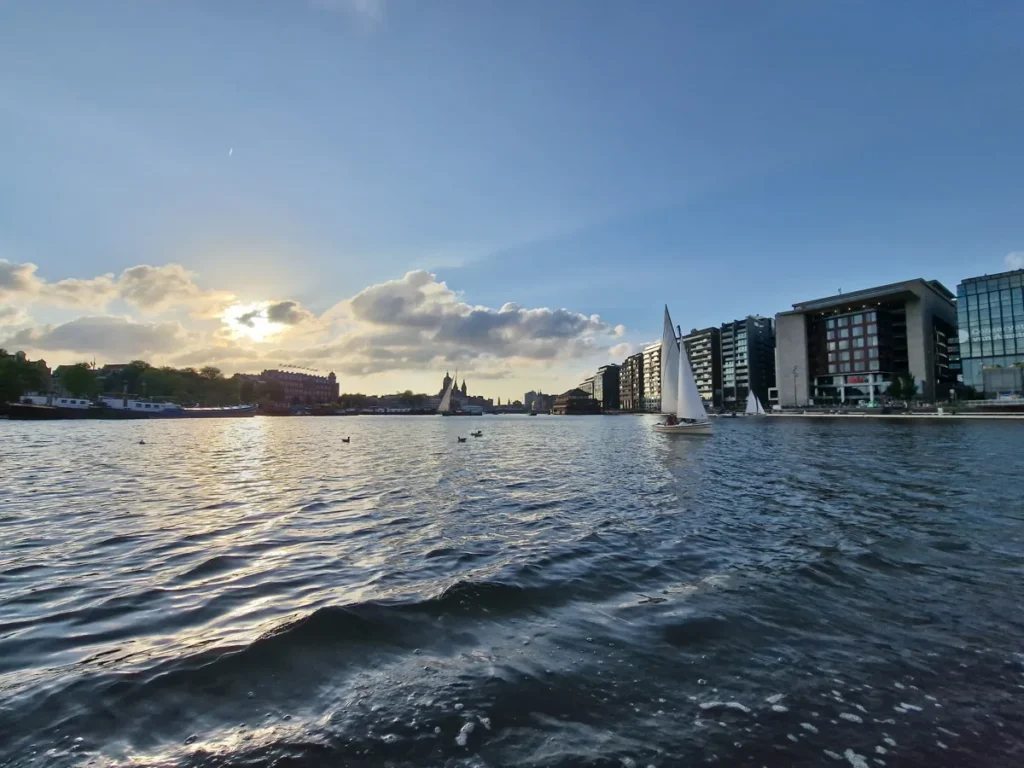
Many Amsterdam canal cruise routes also go out onto the IJ, the wide waterway behind Central Station. The change is dramatic: the narrow canals open up to a broad expanse of water with sailboats, river cruise ships, and modern architecture along the northern shore.
If you want to see the harbor on a budget, take one of the free public ferries that cross the IJ from behind Central Station. They run frequently, carry pedestrians and bicycles, and give you a short but spectacular ride across the water, especially at sunset.
7. Practical tips for booking
Tickets. Prices for a standard one-hour Amsterdam canal cruise on a large boat are affordable, typically in the range of $20 to $30 per adult. Small-boat tours with drinks usually cost more. Booking online in advance is often cheaper and guarantees a place in summer.
Duration. Most standard cruises last 60 to 75 minutes, which is enough for a first visit. Longer dinner cruises run two hours or more.
Departure points. Many boats leave from the area around Central Station, the Damrak, and the Rijksmuseum. Choose a departure point near your hotel or your next stop to save time.
Weather. Bring a light jacket, even in summer. It gets cool on the water in the evening, and open boats catch the wind.
Hop-on hop-off boats. These let you get on and off at stops near major museums. They are useful for combining sightseeing and transport, but they are less of a guided experience.
What to wear and bring on board
A little preparation makes a big difference on the water, where the weather can change quickly.
Layers. Even on a warm summer day, the breeze on an open boat can feel cool, especially in the evening. A light jacket or sweater is always worth carrying. From October to April, dress warmly, with a hat and gloves for open boats.
Rain protection. Amsterdam gets rain in every season. Many open boats provide blankets or ponchos, but a compact umbrella or waterproof jacket is still useful. If rain is forecast, a covered glass boat is the more comfortable choice.
Camera and phone. The light on the canals changes constantly, and you will take more photos than you expect. A fully charged phone and a small power bank are a good idea. A wrist strap is even better, since plenty of phones end up at the bottom of the canals every year.
Snacks and drinks. Some small-boat tours include drinks and snacks, and some allow you to bring your own. Check the rules when you book. On most large boats, you can buy drinks on board.
Traveling with kids or limited mobility
Canal boats are one of the easiest ways for families and travelers with limited mobility to see Amsterdam. There are no hills, no long walks, and you see the main sights from your seat.
Large glass-topped boats are usually the best choice for families with young children. They are covered, have seating for everyone, and many have a restroom on board. Some small boats have narrow steps and low benches that can be tricky with a stroller, so ask before booking.
For wheelchair users, several operators run boats with a lift or a level entrance. Accessibility varies from boat to boat, so contact the company in advance and mention your needs. Many operators also offer lower prices for children, and infants often ride free.
Combine the cruise with a walk
A boat tour shows you the city from the water. Walking the same streets afterward is the perfect way to fill in the details.
The Jordaan. Just west of the canal ring, this former working-class neighborhood is now one of the most charming parts of Amsterdam, with narrow streets, small canals, independent shops, cafes, and hidden courtyard gardens called hofjes.
The Nine Streets. Known locally as De 9 Straatjes, these nine short streets cross the main canals between the Jordaan and the city center. They are lined with boutiques, vintage shops, and cafes, and they are best explored slowly.
The Plantage and the eastern docks. Quieter and greener than the center, this area near the Montelbaanstoren has wide canals, botanical gardens, and historic warehouses converted into homes.
A good plan is to take a morning or early evening cruise, then walk one of these neighborhoods. You will recognize bridges and buildings you saw from the water, and the city will make much more sense.
8. A day trip idea: the coast at Scheveningen
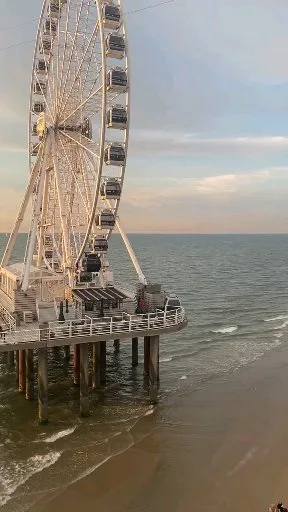
If you have extra time in the Netherlands, the North Sea coast makes a great contrast to the canals. Scheveningen, the beach district of The Hague, is about an hour from Amsterdam by train. Its long sandy beach and pier with a Ferris wheel over the sea make for a relaxed half day, especially at sunset.
Frequently asked questions
Is an Amsterdam canal cruise worth it?
Yes. An Amsterdam canal cruise is the easiest way to understand how the city was built and to see its UNESCO-listed canal ring, historic houses, and bridges from the angle they were designed to be seen from. One hour on the water is enough for a first visit.
How long is an Amsterdam canal cruise?
Most standard cruises last 60 to 75 minutes. Small-boat tours often run around 75 to 90 minutes, while dinner and evening cruises can last two hours or more.
What is the best time for an Amsterdam canal cruise?
Late afternoon and early evening offer the best light, especially in summer when the sun sets late. Mornings are quieter, and night cruises are best for seeing the bridges lit up.
Should I choose a big boat or a small boat?
Big glass-topped boats are cheaper, run in any weather, and include an audio guide. Small open boats are more personal, reach narrower canals, and are better for photos, but they cost more and are less comfortable in the rain.
How much does an Amsterdam canal cruise cost?
A standard one-hour cruise on a large boat typically costs about $20 to $30 per adult. Small-boat tours, dinner cruises, and tours with drinks usually cost more.
See the city the way it was built to be seen
Amsterdam makes the most sense from the water. On an Amsterdam canal cruise, the gabled houses, leaning towers, arched bridges, and floating homes stop being a pretty backdrop and start telling the story of a city that turned water into wealth. Pick your boat, catch the evening light if you can, and keep an eye out for that leaning tower on the Oudeschans. It is an hour you will remember long after the trip.
Traveling with kids? See our pick of the best European city for families, and learn how to use AI for travel planning. The canal ring is a UNESCO World Heritage Site.