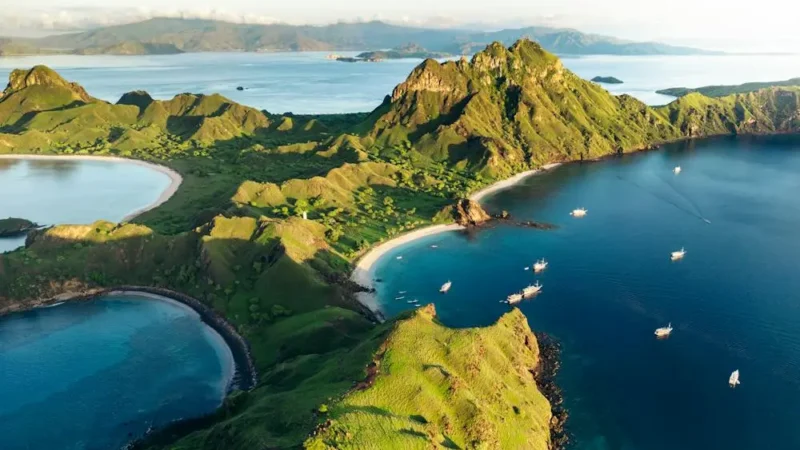
When American travelers think of Egypt, pyramids and pharaohs come to mind — rarely white sand beaches and turquoise reef waters. But an Egypt beach vacation along the Red Sea coast is one of the most rewarding and affordable tropical trips you can book from the US. The Red Sea riviera stretches for hundreds of miles along Egypt’s eastern shore, and its resorts deliver warm water, world-class snorkeling, and lush tropical gardens at a fraction of what you would pay in the Caribbean or Southeast Asia.
Three things make this destination stand out: the clarity and warmth of the Red Sea itself, the all-inclusive resort culture that keeps daily costs predictable, and the year-round sunshine that means there is no real “off season.” Here are nine things every first-time visitor should know — and if you are still mapping out the rest of your itinerary, our guide to using AI for travel planning can help fill in the gaps.
1. The Red Sea is not what you picture
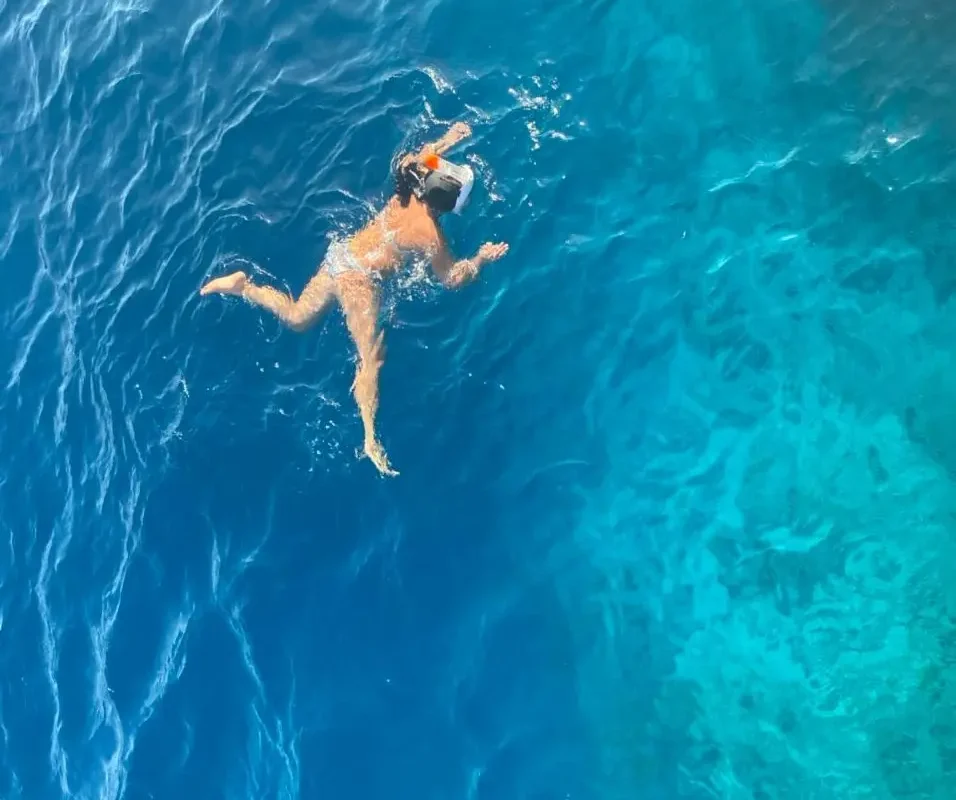
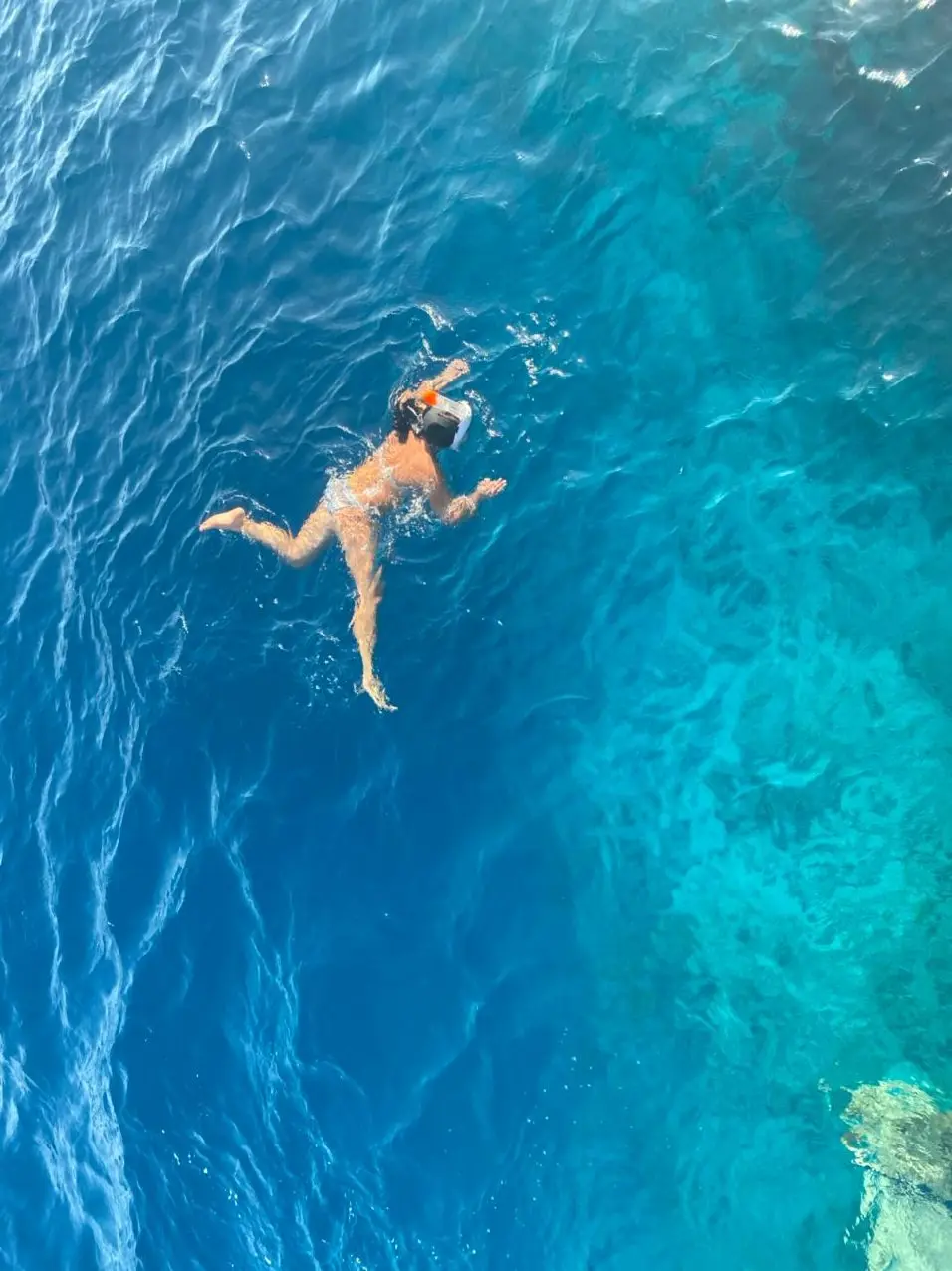
Most first-time visitors expect flat, calm water that looks like a hotel pool. The Red Sea is better than that. Visibility regularly reaches 100 feet or more, and the water stays a vivid shade of turquoise even close to shore. Coral reefs grow right up to the beach at many resorts, which means you can snorkel from the sand without booking a boat.
The marine life is extraordinary — hawksbill turtles, lionfish, moray eels, and hundreds of species of reef fish live in the shallow house reefs that line the coast. If you have never snorkeled before, this is one of the easiest places in the world to start, because the water is warm, the visibility is high, and the reefs are steps away.
2. Pick the right resort town for your Egypt beach vacation
Egypt’s Red Sea coast has several distinct resort towns, and choosing the right one shapes your entire Egypt beach vacation.
Hurghada is the most popular starting point for American travelers. It has the widest range of all-inclusive resorts, a busy downtown strip with restaurants and shops, and easy access to Giftun Island — a protected marine park with some of the best snorkeling on the coast. Hurghada works well for families and first-timers who want a mix of beach time and nightlife.
Sharm El Sheikh sits on the southern tip of the Sinai Peninsula and is the go-to for serious divers. The Ras Mohammed National Park, just south of town, is consistently ranked among the top ten dive sites in the world. Sharm tends to attract a slightly more upscale crowd, and its reef systems are deeper and more dramatic than Hurghada’s.
Marsa Alam is the quiet choice for travelers who want a slower-paced Egypt beach vacation. It is farther south, less developed, and popular with travelers who want pristine reefs without the crowds. Dugong sightings in Abu Dabbab Bay are a genuine possibility here — one of the few places in the world where you can see these gentle creatures in shallow water.
El Gouna is a purpose-built resort town just north of Hurghada. Think of it as the planned-community version of a Red Sea beach vacation — canals, lagoons, golf courses, and a curated feel. It draws couples and repeat visitors who want comfort without the bustle.
3. All-inclusive is the move (and it is genuinely affordable)
Egypt’s Red Sea resorts run heavily on the all-inclusive model, and for good reason. A solid four-star all-inclusive for your Egypt beach vacation in Hurghada or Sharm El Sheikh typically costs between $50 and $120 per person per night, depending on the season and how far in advance you book. That covers your room, three meals a day, drinks, pool and beach access, and often basic water sports like kayaking or windsurfing.
For comparison, a similar setup in Cancún or Punta Cana runs two to three times as much. The dollar stretches far in Egypt, and the resort standard is surprisingly high — many properties feature sprawling tropical gardens, multiple pools, private beach areas, and on-site dive centers.
4. The gardens are an unexpected highlight
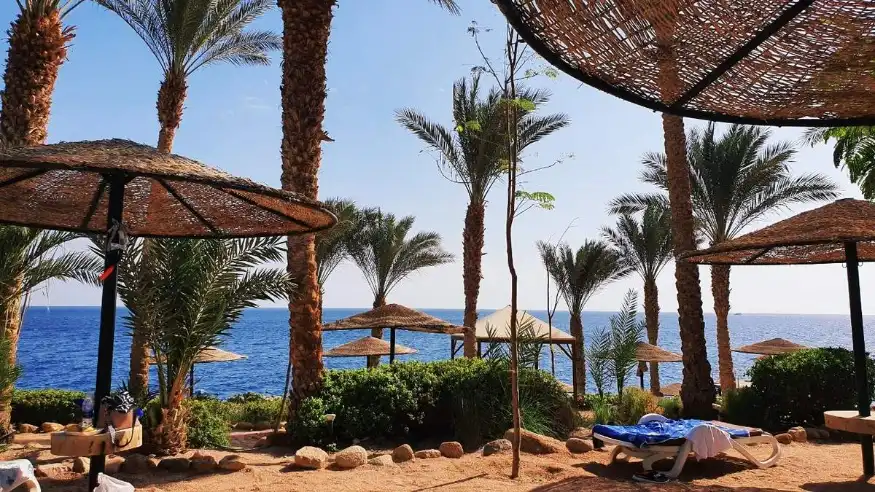
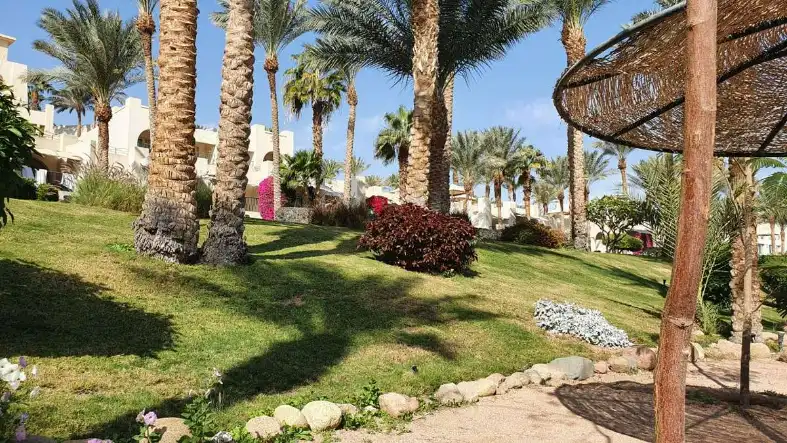
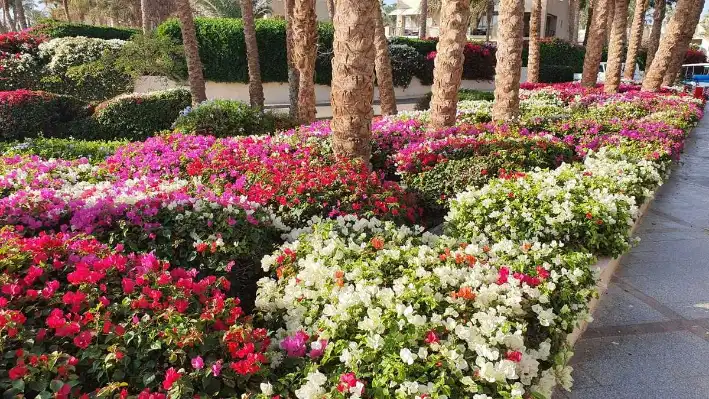
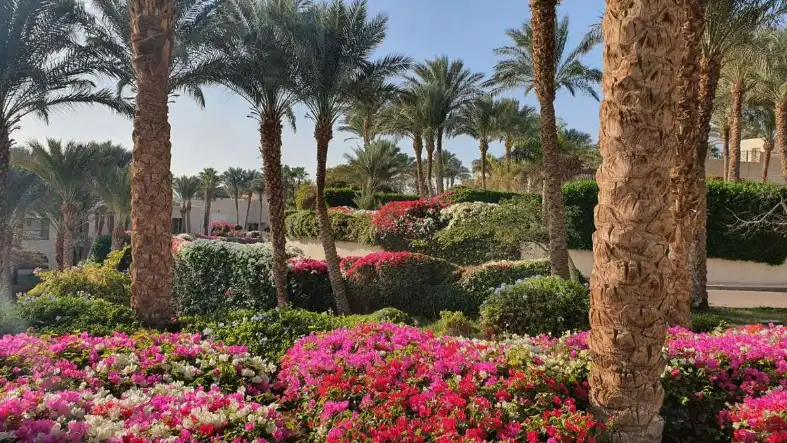
This catches most visitors off guard. Red Sea resorts invest heavily in their landscaping, and the result is acres of tropical gardens that feel completely out of place in a desert country. Palm-lined walkways, flowering bougainvillea, sculpted hedges, and rose gardens surround the pools and pathways.
The contrast is striking — you walk through a lush green corridor with birds singing overhead, then step onto a white sand beach with the Sahara visible in the hazy distance behind the resort. For photographers, the golden-hour light through these garden paths is some of the best you will find anywhere.
5. You can swim year-round (but some months are better)
The Red Sea does not really have a cold season. Water temperatures hover between 70°F (21°C) in January and 84°F (29°C) in August. That means snorkeling and swimming are comfortable twelve months a year, though you might want a thin rash guard in the winter months.
Air temperature is where the seasons matter. Summer (June through August) pushes well past 100°F (38°C), and the heat is intense enough to limit your time outside the water. The sweet spot for an Egypt beach vacation is October through April, when daytime temperatures sit between 75°F and 90°F (24–32°C) and the water is still warm enough to swim without a wetsuit.
For your Egypt beach vacation, wind is the other variable worth checking. Hurghada gets steady breezes that are a blessing in summer but can kick up chop in spring. Sharm El Sheikh is more sheltered. If calm water matters to you, check wind forecasts for your specific week.
6. The visa is simple (and cheap)
Getting ready for your Egypt beach vacation starts with the paperwork: Getting ready for your Egypt beach vacation starts with the paperwork: US passport holders can get an Egypt visa on arrival at any international airport for $25. You pay at a bank counter before passport control, and the process takes about ten minutes. The visa is good for 30 days, which is more than enough for a beach vacation.
Alternatively, you can apply for an e-visa online before your trip — it costs slightly more but saves time at the airport. Either way, make sure your passport is valid for at least six months beyond your arrival date.
Direct flights from the US to Hurghada do not exist yet, so you will connect through a European hub. Cairo, Istanbul, and Frankfurt are the most common layover cities. Total travel time from the East Coast runs about 14–16 hours depending on the connection. From the West Coast, add another four or five hours.
7. Pack light and modest (with one important exception)
Egypt is a Muslim-majority country, and while resort towns are relaxed by local standards, a little cultural awareness goes a long way. Inside the resort, swimwear and shorts are perfectly normal. Outside the resort — at a market, in a taxi, or visiting a mosque — cover your shoulders and knees. Lightweight linen pants and a loose cotton shirt solve this without taking up luggage space.
The one thing you should not skimp on is reef-safe sunscreen. The Red Sea’s coral reefs are a fragile ecosystem, and oxybenzone-based sunscreens accelerate coral bleaching. Mineral sunscreens with zinc oxide or titanium dioxide protect both your skin and the reef. Bring enough from home — reef-safe options are harder to find locally.
Also pack: water shoes (some resort beaches have rocky entries rather than pure sand), a dry bag for your phone on boat trips, and a light windbreaker for the desert chill that drops in after sunset from November through February.
8. Safety is better than you think
The Red Sea resort corridor is one of the most secure tourism zones in Egypt. Hurghada and Sharm El Sheikh have heavy security presence, and the resort areas are well separated from the rest of the country. The US State Department’s travel advisory for Egypt makes a specific exception for Red Sea resort towns, noting their lower risk profile compared to other regions.
Standard travel precautions for any Egypt beach vacation apply: keep valuables in your room safe, use licensed taxis or resort shuttles for transport, and carry a photocopy of your passport rather than the original when exploring downtown. Credit cards are widely accepted at resorts and larger restaurants, but carry some Egyptian pounds (EGP) for smaller shops, tips, and market purchases. ATMs are available in all resort towns.
Tap water is not drinkable — stick to bottled water, which costs almost nothing and is available everywhere.
9. Combine it with the classics (if you want to)
One of the best things about an Egypt beach vacation is how easy it is to bolt on a cultural side trip. Cairo is a short domestic flight from both Hurghada and Sharm El Sheikh — roughly an hour in the air. You can spend a morning at the Pyramids of Giza and the Grand Egyptian Museum, then be back at your beach lounger by sunset.
Luxor is even closer to the southern Red Sea resorts. Day trips from Marsa Alam or Hurghada to the Valley of the Kings are popular and well-organized. If you are already spending a week at the beach, adding two or three days in Cairo or Luxor turns a great vacation into a genuinely memorable one.
That said, plenty of travelers come to the Red Sea with no intention of seeing a single pyramid, and that is a perfectly valid plan. The beach, the reef, and the resort gardens are more than enough to fill a week.
Frequently asked questions
Is Egypt safe for an American beach vacation?
The Red Sea resort towns — Hurghada, Sharm El Sheikh, Marsa Alam, and El Gouna — are among the safest destinations in Egypt. Heavy security, a dedicated tourism police force, and well-maintained resort infrastructure make them comfortable for solo travelers, couples, and families. The US State Department notes a lower risk profile for these areas compared to other parts of the country.
How much does an Egypt beach vacation cost from the US?
A week-long all-inclusive stay at a four-star Red Sea resort runs roughly $350–$850 per person for accommodation, meals, and drinks. Round-trip flights from major US cities average $600–$1,000 depending on season and booking lead time. Total cost for a ten-day trip, including flights, visa, excursions, and spending money, typically falls between $1,200 and $2,500 per person — significantly less than comparable Caribbean or Maldives packages.
What is the best month to visit the Red Sea?
October and November offer the ideal balance: warm water (around 79°F / 26°C), comfortable air temperatures in the low 80s°F (27–29°C), and smaller crowds compared to the European winter rush in December and January. March and April are also excellent, with blooming resort gardens and calm seas.
Do I need to know Arabic for a Red Sea vacation?
No. English is widely spoken at resorts, dive centers, restaurants, and tour operators throughout the Red Sea coast. Hotel staff, guides, and taxi drivers in tourist areas communicate comfortably in English. Learning a few Arabic greetings — as-salāmu alaykum (peace be upon you) and shukran (thank you) — is appreciated but never required.
Can I snorkel if I have never done it before?
Absolutely. The Red Sea is one of the most beginner-friendly snorkeling destinations in the world. Many resorts have shallow house reefs accessible directly from the beach, with calm water and extraordinary visibility. Gear rental is inexpensive (roughly $5–$10 per day), and most dive centers offer guided snorkel trips with basic instruction included.
Your Egypt beach vacation starts with one decision
An Egypt beach vacation is one of those trips that sounds exotic until you realize how straightforward the logistics actually are. Visa on arrival, affordable all-inclusive resorts, warm water year-round, and some of the best snorkeling on the planet — all within a single connection from most US airports. The hardest part is choosing between Hurghada’s energy and Marsa Alam’s solitude. Once you land and see that first flash of turquoise water from the plane window, the rest takes care of itself.