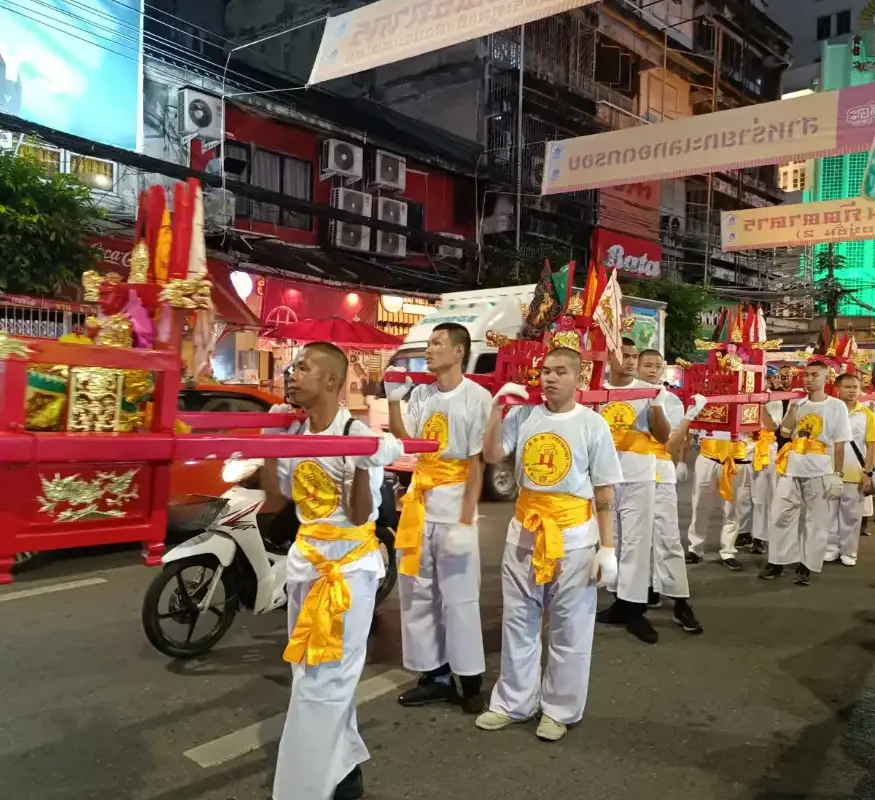
For nine days every fall, a sea of small yellow flags appears across Bangkok’s Chinatown, and thousands of people dressed in white fill the streets. This is the vegetarian festival, known in Thai as Tesagan Gin Je, and it is one of the most colorful and least understood events in the Thai calendar. Three things define it: the yellow flags that mark vegetarian food, the white clothing worn by devotees, and the nine days of purification in honor of the Nine Emperor Gods.
I happened to be in Bangkok on the final night of the festival, and I followed the crowds, the lanterns, and the drums through the streets of Yaowarat. All the photos in this guide are my own.
1. What the vegetarian festival is
The vegetarian festival is a Taoist tradition brought to Thailand by Chinese immigrants, particularly the Hokkien and Teochew communities. It honors the Nine Emperor Gods, and it takes place during the first nine days of the ninth month of the Chinese lunar calendar.
During these nine days, devotees follow a strict vegetarian diet, known as jay or je (เจ), to purify body and mind. Many also dress in white, avoid alcohol, and refrain from arguments and other impure behavior. Temples hold ceremonies every day, and the festival ends with a procession that sends the gods off.
Because it follows the lunar calendar, the dates change every year, but the festival almost always falls in late September or October. The Tourism Authority of Thailand publishes the dates each year.
Who are the Nine Emperor Gods?
The Nine Emperor Gods, known in Hokkien as Kiu Ong Ya, are Taoist deities associated with the nine stars of the Big Dipper, a constellation long connected with health, long life, and fortune in Chinese belief. During the festival, they are believed to descend to earth, and devotees purify themselves in order to welcome them.
The origins of the festival in Thailand are often traced to Phuket in the 19th century. According to a popular account, a traveling Chinese opera troupe fell ill with a fever while performing on the island, and recovered only after keeping a strict vegetarian diet in honor of the Nine Emperor Gods. The practice spread with Chinese communities across the country, including to Bangkok, where Chinatown has celebrated it for generations.
For many Thai-Chinese families, the festival is less about dramatic ritual than about renewal: a yearly reset of body and mind, shared with family and neighbors around the table.
2. Bangkok vs. Phuket: two very different festivals
If you have heard of this festival before, it may have been in connection with Phuket, where it is famous, and sometimes shocking, for its processions of mah song: devotees in a trance who pierce their cheeks with skewers, swords, and other objects as a sign of devotion.
The Bangkok vegetarian festival is much gentler. There are processions, drums, firecrackers, and ceremonies at Chinese temples, but the focus is mainly on food, prayer, and community. For most travelers, this makes Bangkok the easier and more comfortable place to experience the festival, especially with children or if you are sensitive to blood.
3. Follow the yellow flags
The most important thing to know as a visitor is the meaning of the yellow flags. During the festival, restaurants, food stalls, and street vendors that serve jay food hang small yellow flags with red characters. The characters spell jay in Chinese and Thai, and they mean one thing: this food is vegetarian and pure.
In Yaowarat, the flags are everywhere, strung above stalls, taped to carts, and printed on menus. Wherever you see them, you can eat without meat. For vegetarians and vegans visiting Thailand, it is one of the easiest times of year to eat well.
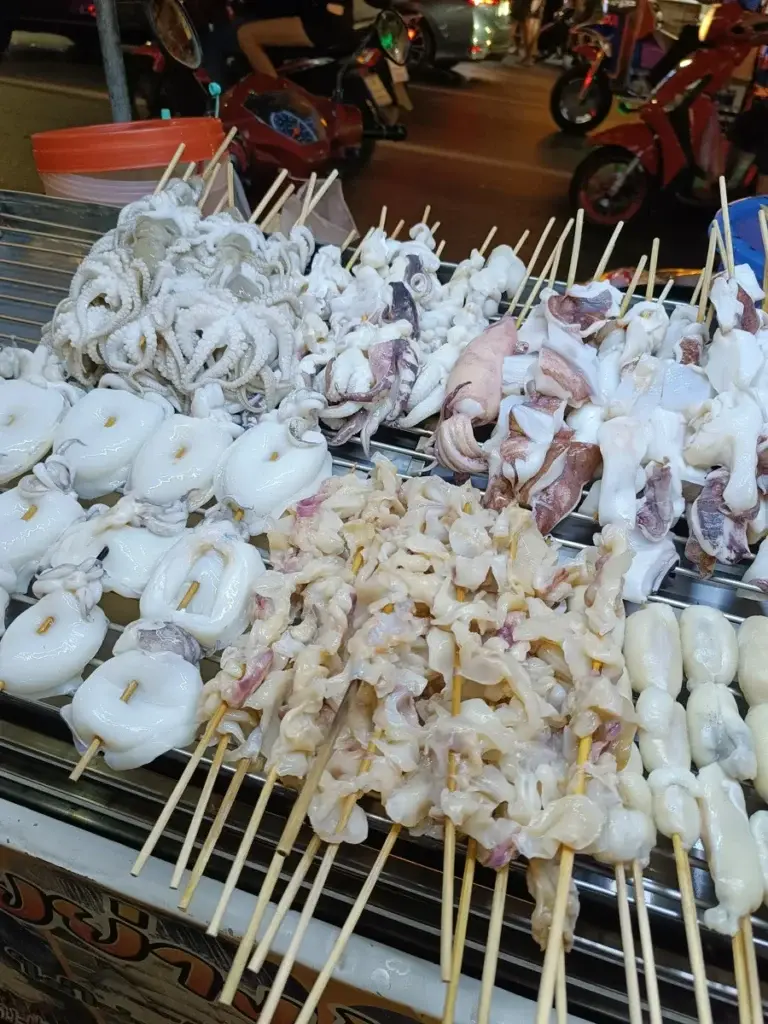
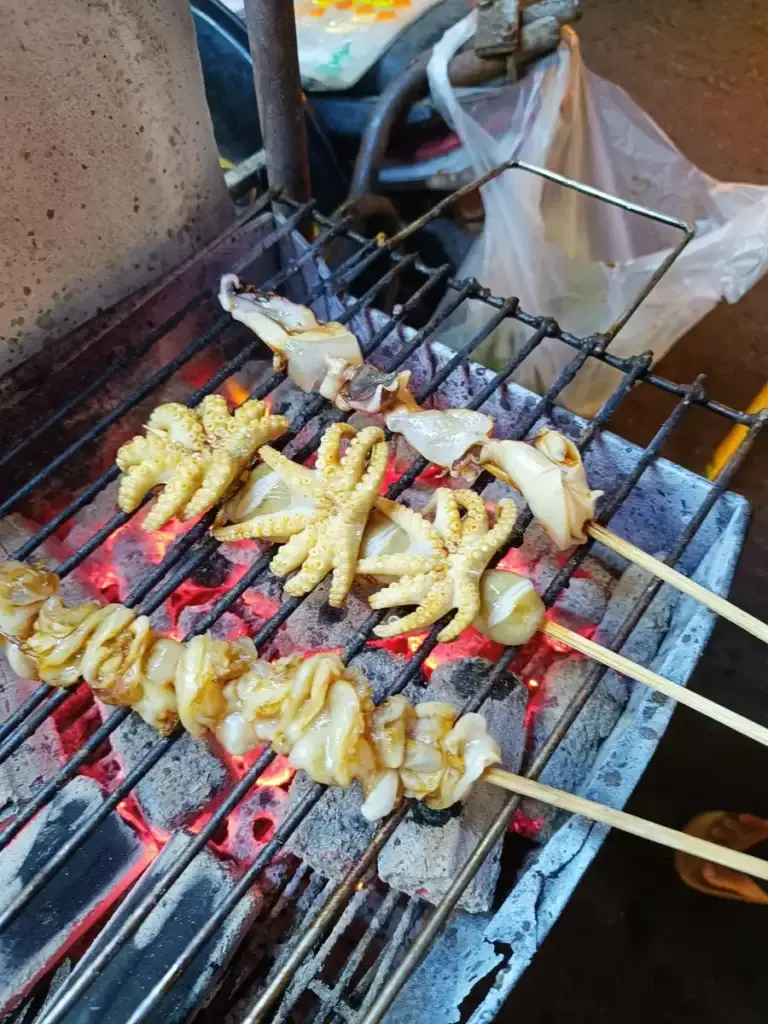
One thing surprised me on my first night: not every stall in Chinatown switches to jay. Right next to the yellow flags, vendors kept grilling squid and meat skewers over charcoal, and crowds lined up for both. That is exactly why the flags matter. If you are keeping the festival rules, or you simply want to try real jay food, check for a yellow flag before you order.
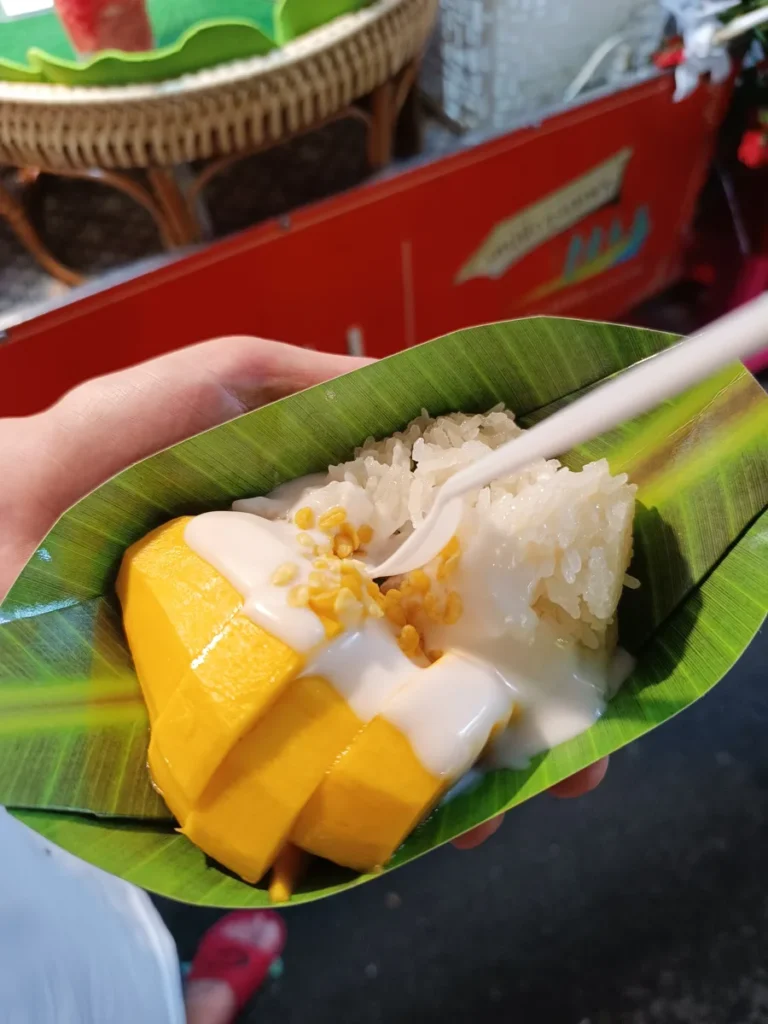
Some local favorites are naturally jay-friendly. Mango sticky rice, khao niao mamuang, made with sweet ripe mango, sticky rice, and coconut cream, contains no animal products and was on sale all along the festival route.
4. What jay food really is
Jay food is stricter than ordinary vegetarian food. It contains no meat, fish, or seafood, and usually no eggs, milk, or other animal products, which makes it close to vegan.
It also excludes a group of strong-smelling plants: garlic, onions, shallots, chives, and leeks. According to tradition, these are believed to stimulate the passions and disturb the calm of the mind, so they are avoided during the nine days.
What makes jay food so interesting is the creativity. Cooks use tofu, gluten, mushrooms, and soy protein to create astonishing imitations of meat and seafood: “pork” skewers, “shrimp,” “fish balls,” and even “roast duck.” On the streets of Chinatown during the vegetarian festival, you can try vegetarian versions of dishes you thought you already knew.
Look out for yellow noodles (in jay form, made without egg), stir-fried vegetables, fake-meat satay, tofu in brown sauce, and sweet desserts made with coconut, sesame, and mung beans.
What to eat: a short jay menu
If you are not sure where to start, here are some dishes worth looking for at the yellow-flag stalls. Names are given in Thai where they are commonly used.
Pad pak ruam (stir-fried mixed vegetables). A simple, fresh dish of greens and mushrooms, cooked without garlic during the festival.
Kuay tiew jay (vegetarian noodle soup). A clear, fragrant broth with rice noodles, tofu, and vegetables, often topped with fried tofu skin.
Tao hoo tod (fried tofu). Crispy cubes of tofu served with a sweet and spicy dipping sauce.
Mock meat skewers. Gluten and soy “pork” or “chicken” grilled on skewers and brushed with a sweet glaze. They look remarkably like the real thing.
Mock duck. Slices of seasoned gluten that imitate roast duck, served over rice with a dark, sweet sauce.
Kanom jay (vegetarian sweets). Look for sticky rice cakes, sesame balls, and coconut desserts, which are naturally free of animal products.
A good strategy is to walk the whole of Yaowarat Road once without buying anything, then go back to the stalls with the longest lines of local customers.
5. Why everyone wears white
White clothing is the second great symbol of the festival. Devotees wear white throughout the nine days, as a sign of purity and of their commitment to the rules of the festival.
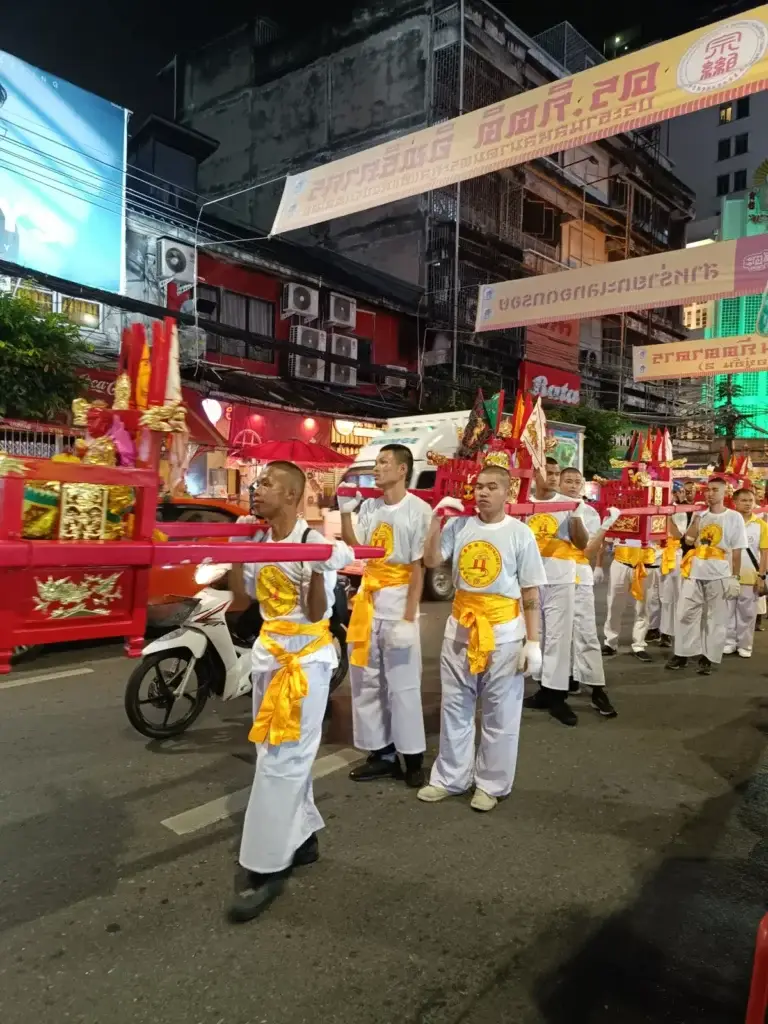
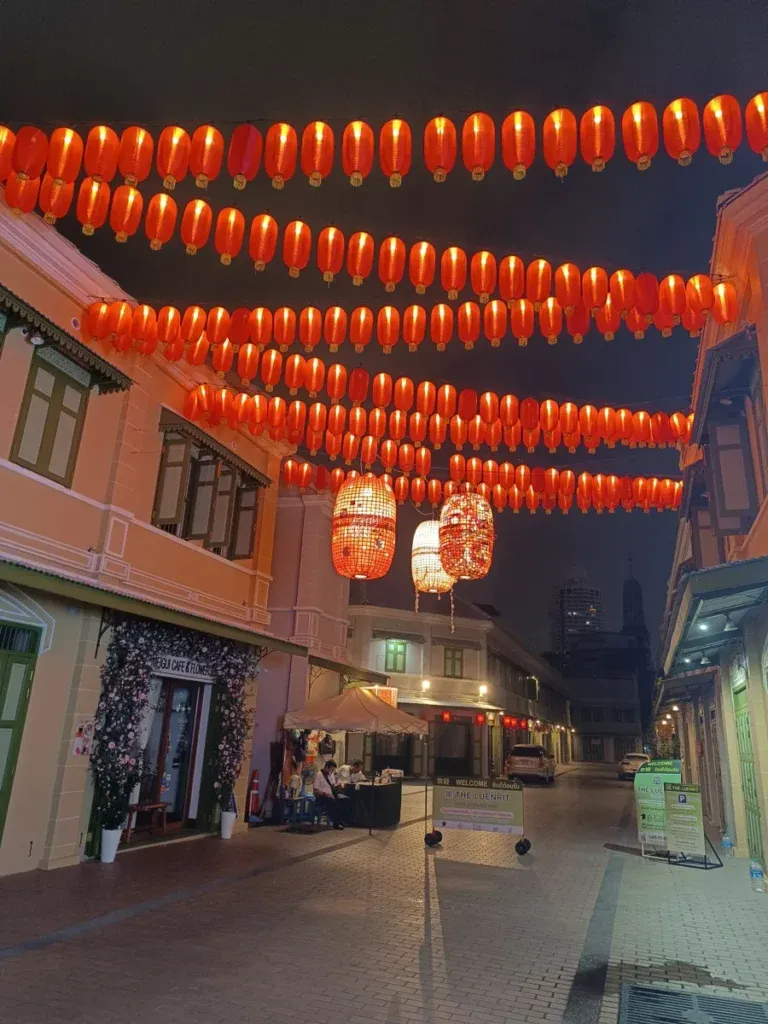
In the processions, the effect is striking. On the final night, I watched a long line of people in white clothes and white headbands walk through Chinatown behind banners, drums, and a decorated shrine, with the red lanterns of the street glowing overhead. It is not a performance for tourists; it is a religious ceremony, and the atmosphere is both festive and serious.
Visitors are welcome to wear white too. It is a nice gesture if you plan to spend time at the temples, though no one will expect it.
6. Where to go in Bangkok
Yaowarat Road (Chinatown). The heart of the Bangkok vegetarian festival. The main road and the lanes around it fill with food stalls, and the whole district is decorated with yellow flags and red lanterns. Evenings are the busiest and most atmospheric.
Wat Mangkon Kamalawat. Bangkok’s most important Chinese Buddhist temple, also known by its Chinese name, Leng Noei Yi. It is the religious center of the festival in Chinatown, with ceremonies, incense, and long lines of devotees.
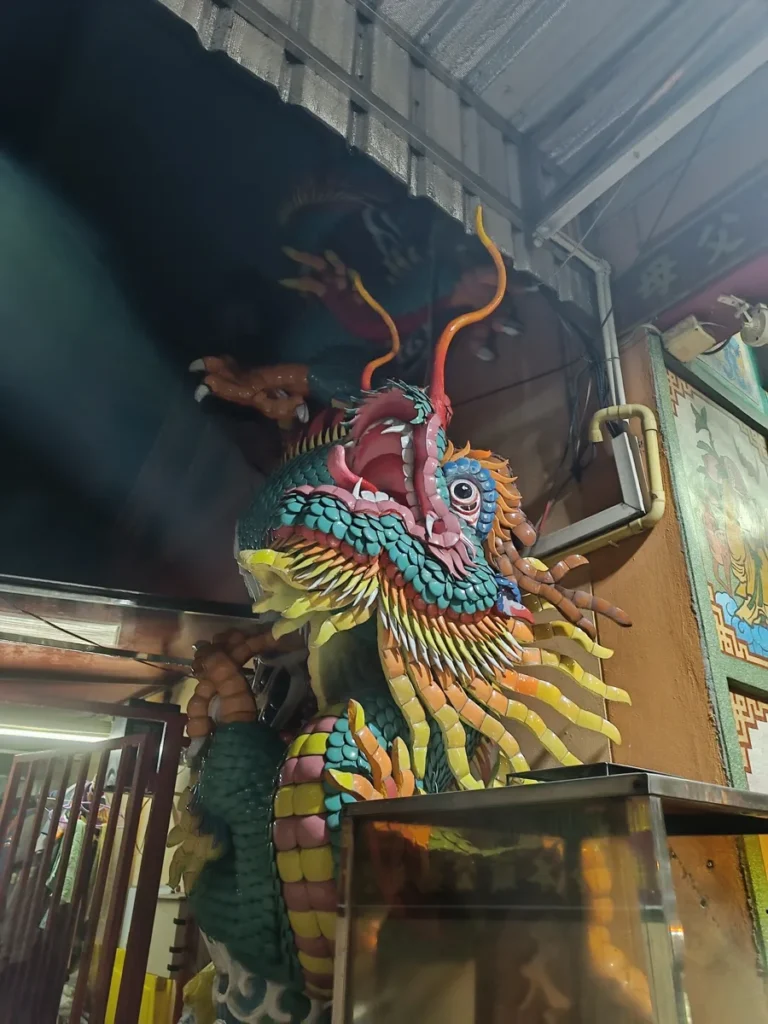
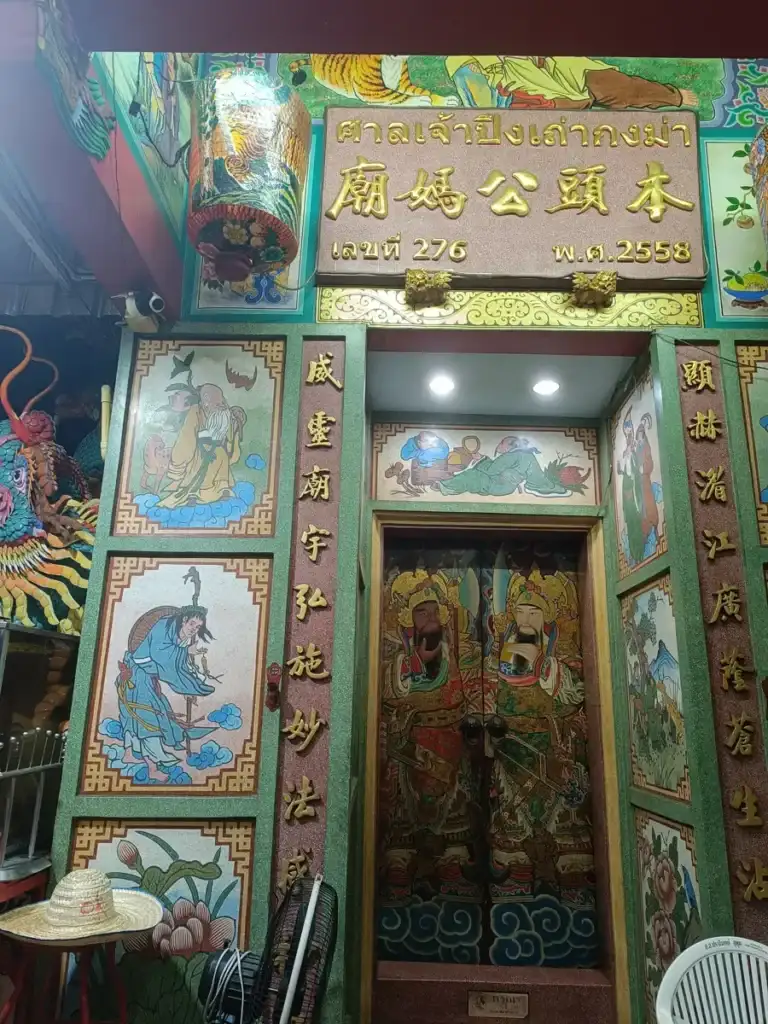
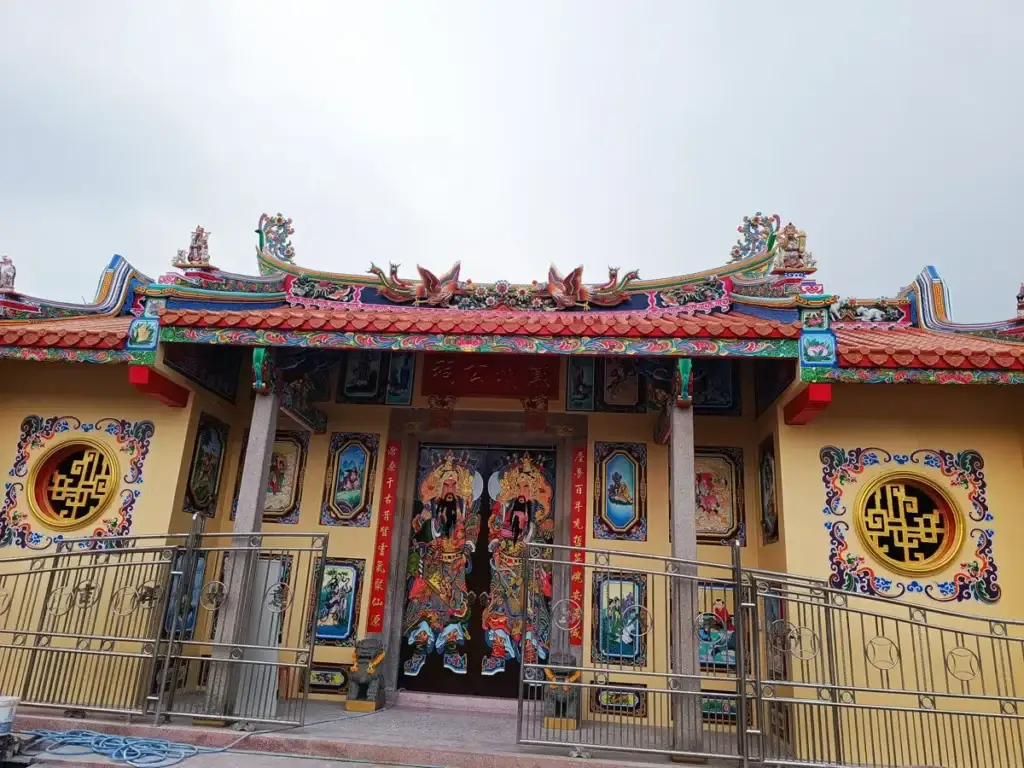
Chinese shrines in the side streets. Chinatown is full of smaller shrines, often with ornate doorways, painted guardians, and dragon sculptures. During the festival, many hold their own ceremonies and are especially lively.
Other Chinese communities. Chinese temples and shrines in other parts of Bangkok, and in other cities with large Chinese communities, also celebrate, but Chinatown is by far the best place for a first visit.
7. The final night
If you can, plan to be in Chinatown on the last night of the festival. This is when the procession sends the Nine Emperor Gods back to the heavens, and the streets are at their most crowded and exciting.
Expect drums, gongs, clouds of incense, and firecrackers, sometimes very close to the crowd. Devotees in white carry sedan chairs and shrines through the streets, and people line the roads to pay their respects. The procession can move quickly and unpredictably, so give it space.
Afterward, the yellow flags come down, the restaurants go back to their usual menus, and Chinatown returns to normal until the next year.
8. Etiquette for visitors
The vegetarian festival is a religious event, and a few simple rules will help you enjoy it respectfully.
Do not bring meat into temple areas. Eat meat elsewhere, and do not carry non-jay food into temples or shrines during the festival.
Dress modestly. Cover your shoulders and knees when visiting temples. White or light-colored clothing is a thoughtful touch.
Ask before photographing people. Devotees in processions are taking part in a ceremony, not posing for tourists. Photos of the procession from a distance are generally fine; close-up portraits should be asked for.
Protect your ears. Firecrackers are part of the festival, and they can be very loud. If you are sensitive to noise, or traveling with children, bring earplugs.
Keep your belongings close. Chinatown is crowded during the festival, so keep your phone and wallet secure.
9. Planning your visit
When. Check the official dates with the Tourism Authority of Thailand, as they change each year. The first and last nights are usually the most spectacular.
Getting there. The MRT Blue Line stops at Wat Mangkon station, right in the middle of Chinatown. It is the easiest way to arrive, as traffic in Yaowarat during the festival is heavy.
When to go during the day. Evenings, from around 6:00 PM, are the best time for food and atmosphere. Many stalls stay open until late at night.
Cost. Jay street food is inexpensive, usually a few dollars per dish. Bring cash in small notes, as many stalls do not take cards.
Frequently asked questions
What is the vegetarian festival in Thailand?
The vegetarian festival, or Tesagan Gin Je, is a nine-day Taoist festival held during the ninth lunar month, usually in late September or October. Devotees eat a strict vegetarian diet called jay, wear white, and honor the Nine Emperor Gods. The biggest celebrations are in Phuket and in Bangkok’s Chinatown.
What do the yellow flags mean in Thailand?
Yellow flags with red characters mark stalls and restaurants selling jay food, which is strictly vegetarian and free of animal products and strong-smelling plants such as garlic and onion. They appear mainly during the vegetarian festival.
What is jay food?
Jay food is a strict form of vegetarian cooking with no meat, fish, eggs, dairy, or other animal products. It also excludes garlic, onions, shallots, chives, and leeks. It often uses tofu, gluten, and mushrooms to imitate meat and seafood.
Is the Bangkok vegetarian festival the same as the one in Phuket?
The two follow the same tradition and dates, but Phuket’s festival is famous for dramatic processions with face piercing. The Bangkok vegetarian festival is gentler and focuses on food, temple ceremonies, and processions in Chinatown.
Can tourists take part in the vegetarian festival?
Yes. Visitors are welcome to eat jay food, visit temples, and watch the processions. Wearing white is a respectful gesture but not required. Follow temple etiquette and ask before photographing devotees.
Nine days of yellow and white
The vegetarian festival shows a side of Bangkok that most visitors never see: its Chinese soul. For nine days, Chinatown is full of yellow flags, white clothes, red lanterns, and the smell of incense and fried tofu, and the whole neighborhood seems to slow down and turn inward. If your trip falls in the fall, check the dates, follow the yellow flags, and let Yaowarat feed you something you will not find anywhere else in the world.
Planning more time in the city? See our list of free things to do in Bangkok. For this year’s official vegetarian festival dates, check the Tourism Authority of Thailand.