If you search for traditional food in Nauru, most websites give a short answer: “They eat imported food.” True — but incomplete. Nauru once had a thriving island cuisine built on coconut palms, reef fishing, and pandanus groves. Today, after a century of phosphate mining erased most fertile land, food has become both a daily challenge and a cultural memory. This guide explores what Nauruans used to eat, what they eat now, and how a cuisine can survive even when the land does not. We’ll uncover the stories behind traditional food in Nauru — from the sacred coconut crab to the silent groves of pandanus — and show how culture endures when the earth beneath it is gone.
Traditional food in Nauru before phosphate mining
For centuries, Nauruans lived almost entirely from what the ocean and coastal forest provided. With no rivers and thin soil, every edible plant and fishing ground was managed by clans. Their traditional diet included:
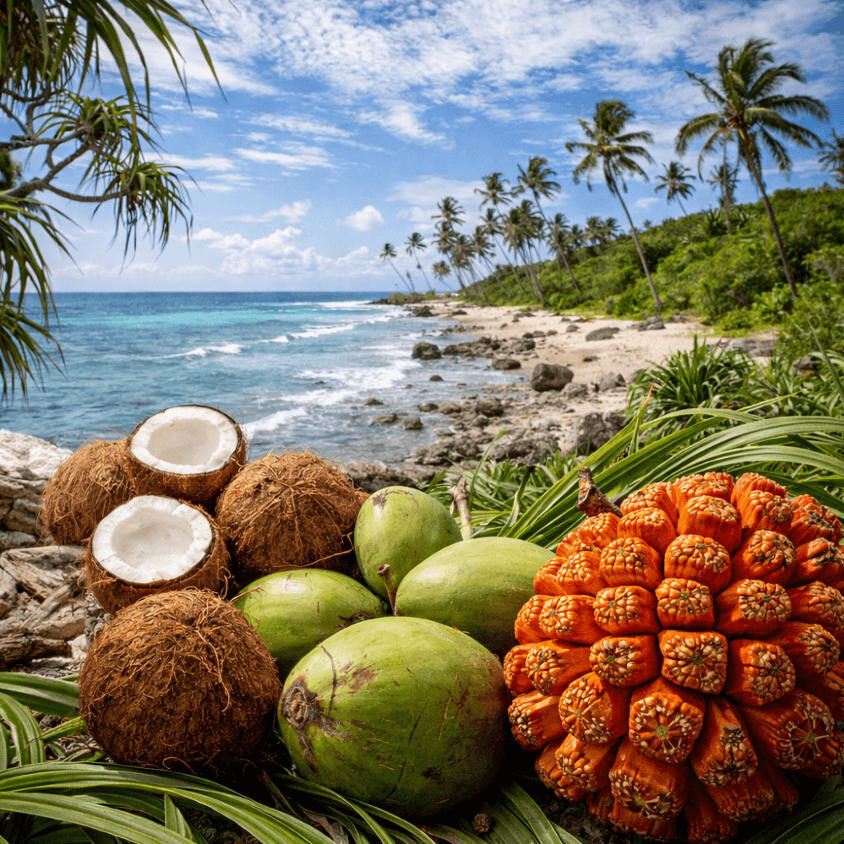
- Coconut (mwen) — used for milk, oil, sap, and flesh
- Reef fish — caught with woven nets and wooden spears
- Pandanus fruit — dried into sweet, long-lasting travel food
- Coconut crab (itoj) — reserved for celebrations
- Breadfruit and bananas — grown in the coastal belt
Meals were communal. Fishing zones were inherited. Sharing food was a sign of respect and social balance — not just nutrition.
How phosphate mining rewrote Nauru’s diet
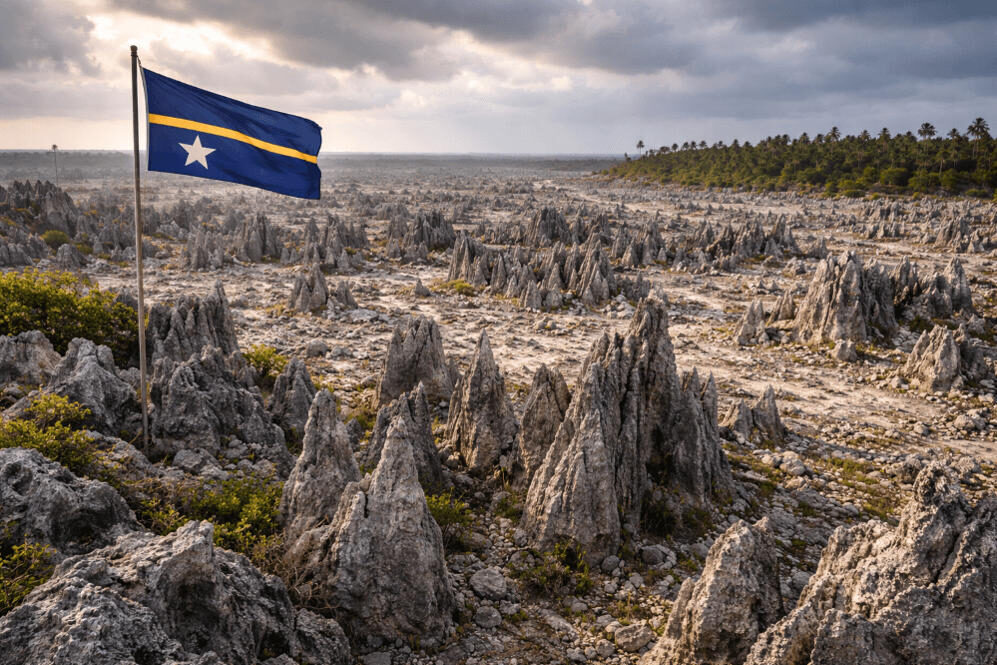
When phosphate extraction began in 1906, the scale of transformation was unimaginable. Over decades, mining carved away the island’s interior, leaving sharp limestone pinnacles where forests once stood. Today, nearly 80% of Nauru is no longer suitable for farming or housing.
Gardens disappeared, coconut groves thinned, pandanus trees stopped bearing fruit. With little arable land remaining, Nauru became almost entirely dependent on imported food shipments.
“We once ate what grew and swam around us. Now our food arrives by ship.” — Local teacher, Nauru
What do people eat in Nauru today?
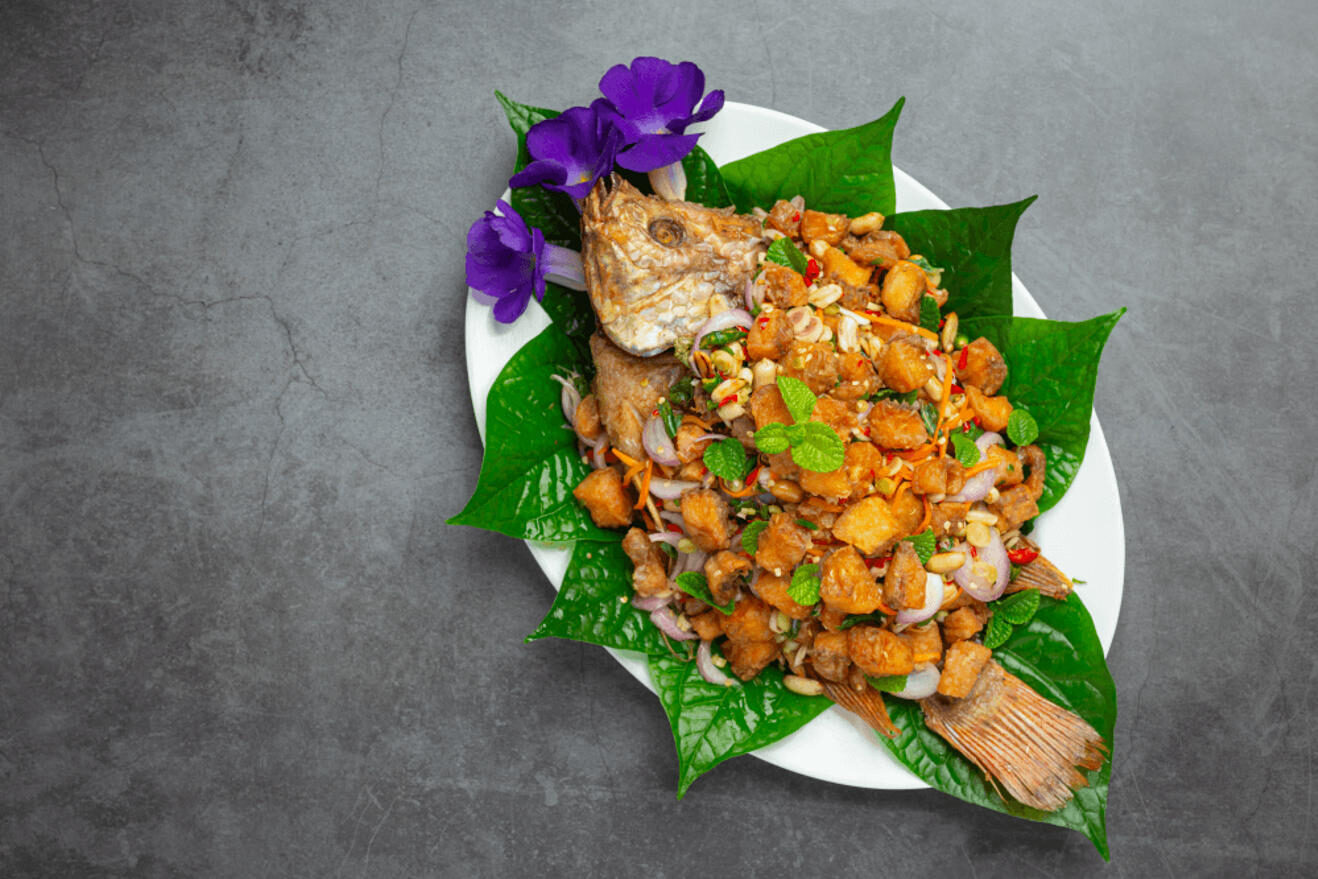
Modern meals look very different from the traditional island table. Common foods include:
- White rice — daily meal base
- Canned corned beef — fried with onions
- Instant noodles — affordable and shelf-stable
- Sugary drinks and sweet tea
- Fresh fish — still eaten, but less frequently
This shift has contributed to serious health challenges. According to WHO data, Nauru now has one of the highest rates of obesity and type-2 diabetes in the Pacific.
Does any traditional food still survive?
Fragments remain — mostly tied to ceremony and memory.
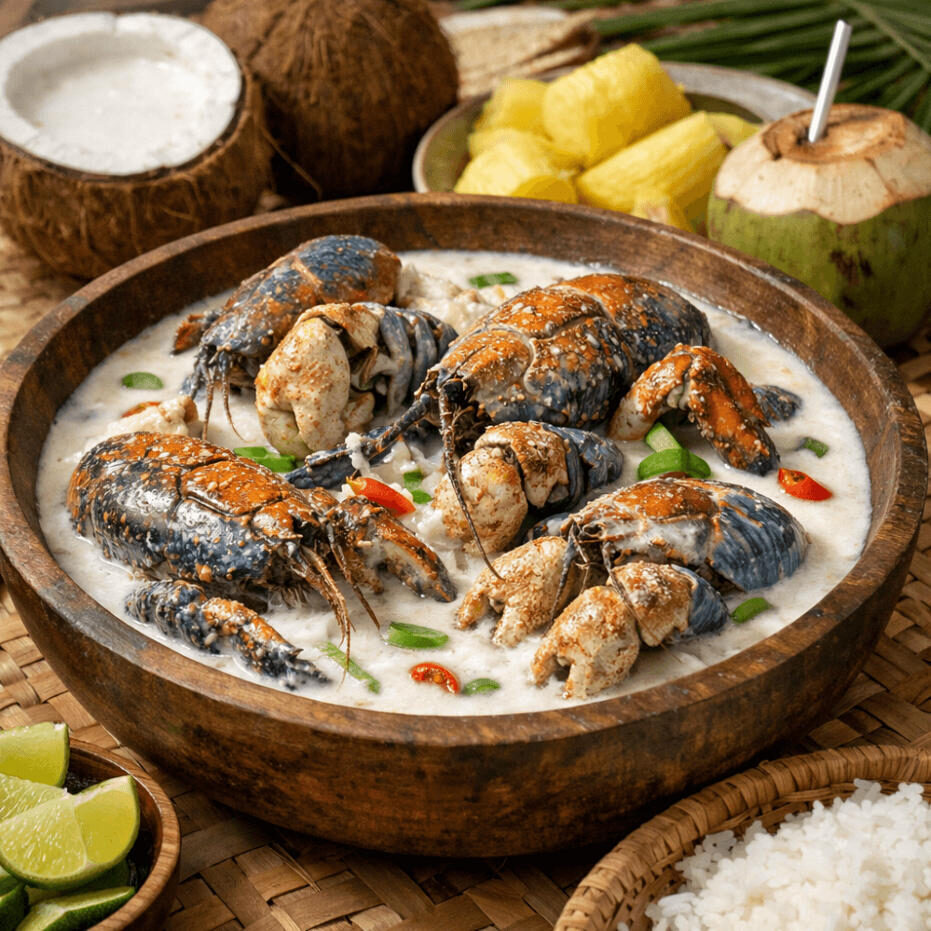
1. Itoj (Coconut crab)
The most iconic dish. Served at weddings, funerals, and Independence Day celebrations. Wild coconut crabs are now rare; some families keep them in small enclosures.
2. Reef fishing
A few elder fishermen still go out at dawn. Younger generations rarely learn these techniques.
3. Coconut and Pandanus
Scattered palms remain along the coast. Pandanus fruit is remembered more in stories than on plates.
Eating in Nauru as a visitor
- Ask before photographing food or people
- If offered food, accept — it is a gesture of respect
- Imported goods like tea or rice make appreciated gifts
- Avoid commenting on diet or health topics
Can vegans or vegetarians eat in Nauru?
Options are extremely limited. Fresh vegetables arrive by air freight and sell quickly.
Tip: If you visit, bring your own dry food. Rice, beans, and nuts are the safest options.
The future of food in Nauru
- Hydroponic gardens growing lettuce and herbs
- Community fishing programs
- School projects teaching traditional food knowledge
Nauru’s cuisine may never fully return to its pre-mining state. But cultural knowledge — how to fish, how to prepare itoj, how to share meals — continues to survive.
Exploring traditional food in Nauru reveals not just what people ate, but how culture persists when the very land that fed them has vanished. In a nation where 80% of the surface is scarred by mining, food is no longer grown — it is remembered, revived in ceremony, or shipped in from afar. The coconut crab, once abundant, now appears only at weddings. Pandanus cakes, once a staple, are now stories told to children. Yet, in every shared meal, in every elder’s tale of fishing with woven nets, traditional food in Nauru lives on — not as a relic, but as resistance. For travelers, tasting this cuisine means witnessing survival. For locals, it means honoring ancestors who turned ocean and sky into nourishment — even when the earth beneath them was stolen.
Explore more Oceania travel guides
Frequently Asked Questions about traditional food in Nauru
What is traditional food in Nauru?
Historically: coconut crab, reef fish, pandanus cakes, and coconut. Today: mostly imported rice, canned meat, and noodles.
Can you eat coconut crab in Nauru?
Yes — but mainly during major ceremonies.
Is there fresh produce in Nauru?
Very little. Most fruits and vegetables are air-freighted and expensive.
Why is Nauru dependent on imported food?
Phosphate mining destroyed arable land. Less than 20% of the island supports plant life.