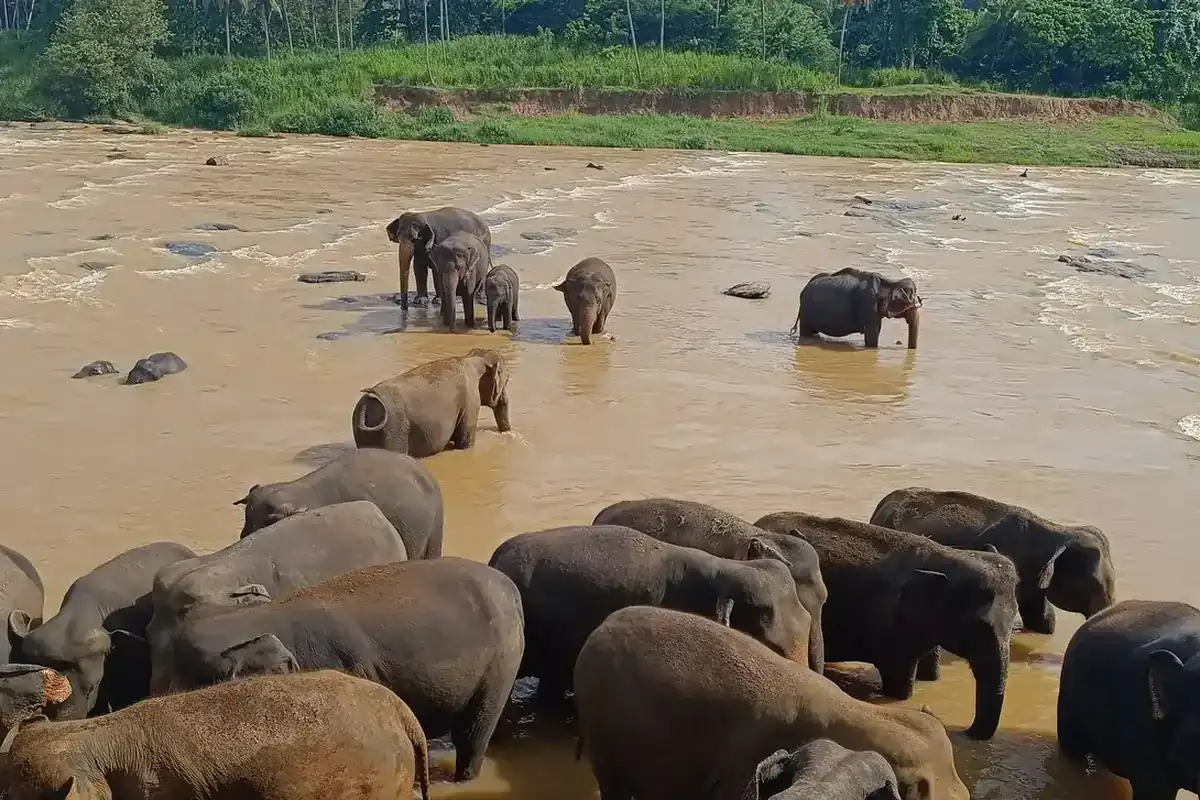
Few places in Sri Lanka are as famous, or as debated, as the Pinnawala Elephant Orphanage. Its big moment comes when dozens of elephants walk down the street to bathe together in the river, a sight that appears on postcards, tour itineraries and Instagram feeds. But in recent years many travelers have started asking a harder question: is Pinnawala ethical, and is there a better way to see elephants in Sri Lanka?
I visited Pinnawala and watched the herd bathe in the Maha Oya River, and later saw decorated elephants walk in a Buddhist procession on the south coast. This guide explains what a visit looks like, the history of the orphanage, the criticism, and the alternatives that put the animals first, so you can decide for yourself.
Pinnawala Elephant Orphanage at a glance
| Location | Pinnawala, near Kegalle, between Colombo and Kandy |
| Founded | 1975 |
| Elephants | More than 80, one of the largest captive herds in the world |
| Highlight | Daily group bathing in the Maha Oya River |
| Time needed | Half a day |
| Easy to combine with | Kandy, the Kandy–Colombo road trip |
| The big question | Welfare of captive elephants |
A short history of the orphanage
The Pinnawala Elephant Orphanage was opened in 1975 by Sri Lanka’s Department of Wildlife Conservation to care for baby elephants found alone in the wild, often after their mothers were killed or after they fell into wells or pits. It was meant to give orphaned calves a home where they could grow up safely.
Over the decades, the herd grew, and elephants began breeding in captivity. Today many of the elephants at Pinnawala were born there, not rescued, and the orphanage has become one of the country’s most visited tourist attractions. That shift, from rescue center to large tourist facility, is at the heart of the debate.
What a visit looks like
The river bathing. The main event happens when the mahouts (elephant keepers) lead the herd across the road and down to the Maha Oya River. The elephants spend time in the water, splashing, drinking and lying in the shallows, while visitors watch from the riverbank, from steps along the shore and from the terraces of restaurants and hotels above the river. Seeing so many elephants together, adults and calves, is remarkable.
On the grounds. Inside the orphanage, elephants spend time in open areas and under shelters, where they are fed large amounts of leaves, branches and fruit. There are usually set times when keepers bottle-feed the youngest calves, which draws the biggest crowds.
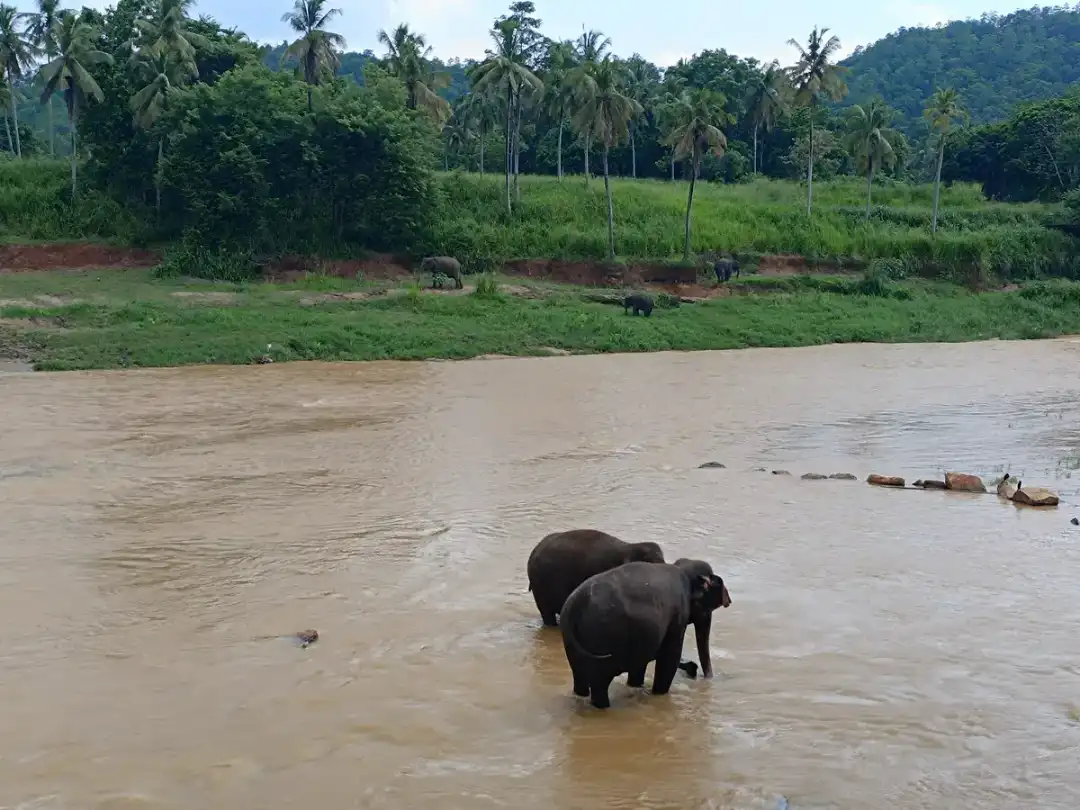
The street. On the way to and from the river, the herd walks along a lane lined with souvenir shops. Visitors are kept back, but it is a busy, noisy scene.
Bathing and feeding times can change, so check the current schedule locally or with your driver before you go.
Is Pinnawala ethical? The main concerns
Animal welfare organizations, researchers and many travel writers have raised concerns about Pinnawala. The most common are:
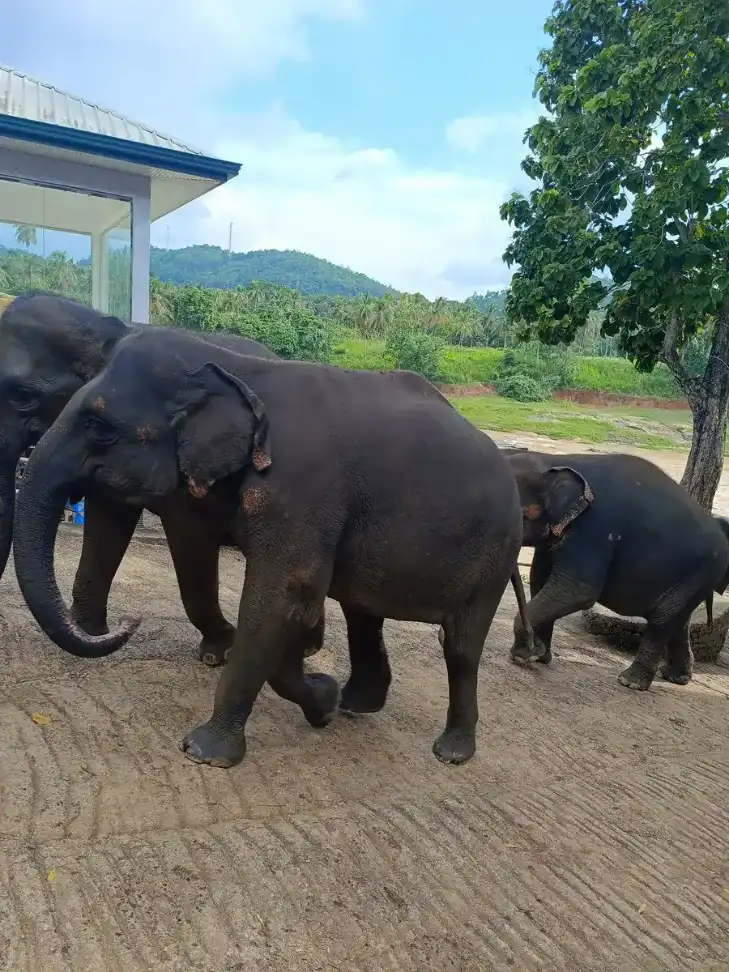
Chaining. Outside bathing and display times, many elephants are reported to be kept on chains. For a social, wide-ranging animal, long periods of restricted movement are a serious welfare issue.
Breeding for display. The orphanage has bred many calves. Critics argue that breeding animals who will never be released into the wild keeps the herd growing for tourism, not for conservation.
Crowds and stress. Large numbers of visitors close to the elephants, especially during bathing and bottle-feeding, can be stressful for the animals.
Control methods. Like most captive elephants in Asia, the herd is managed by mahouts, sometimes using hooks or sticks. Training and handling methods for captive elephants are controversial worldwide.
Lack of release. Unlike true rehabilitation centers, Pinnawala does not prepare elephants for life in the wild.
Supporters point out that the orphanage has saved many calves who would otherwise have died, that it gives the public a chance to learn about elephants, and that captive elephants cannot simply be released. Whether to visit is your decision, but it is worth knowing these facts before you buy a ticket.
Better ways to see elephants in Sri Lanka
Sri Lanka is one of the best countries in Asia to see wild elephants. These options let you watch them behave naturally:
| Where | What you see | Best time |
|---|---|---|
| Elephant Transit Home, Udawalawe | Orphaned calves raised for release back into the wild; visitors watch feeding from a viewing platform | Year-round, at feeding times |
| Udawalawe National Park | Wild elephants almost guaranteed on a jeep safari | Year-round; early morning or late afternoon |
| Minneriya and Kaudulla National Parks | “The Gathering,” when hundreds of elephants come to the reservoirs | Dry season, roughly July to October |
| Wasgamuwa and other quieter parks | Wild herds with fewer vehicles | Dry season |
| Yala National Park | Elephants, plus leopards and sloth bears | Most of the year (check seasonal closures) |
The Elephant Transit Home
If you want to see baby elephants, the Elephant Transit Home in Udawalawe is the best option. It is run by the Department of Wildlife Conservation, and the calves are raised with minimal human contact and released into the national park when they are old enough to survive. Visitors watch from a viewing platform at feeding times and do not touch the animals. It is often combined with a safari in Udawalawe National Park on the same day.
The Gathering at Minneriya
In the dry season, when other water sources dry up, elephants from the surrounding forests come to the ancient reservoir at Minneriya, and nearby Kaudulla, to drink, bathe and graze. At its peak, hundreds of elephants can gather in one place, one of the largest elephant gatherings in the world. Late afternoon is usually the best time.
Elephants in Sri Lankan culture
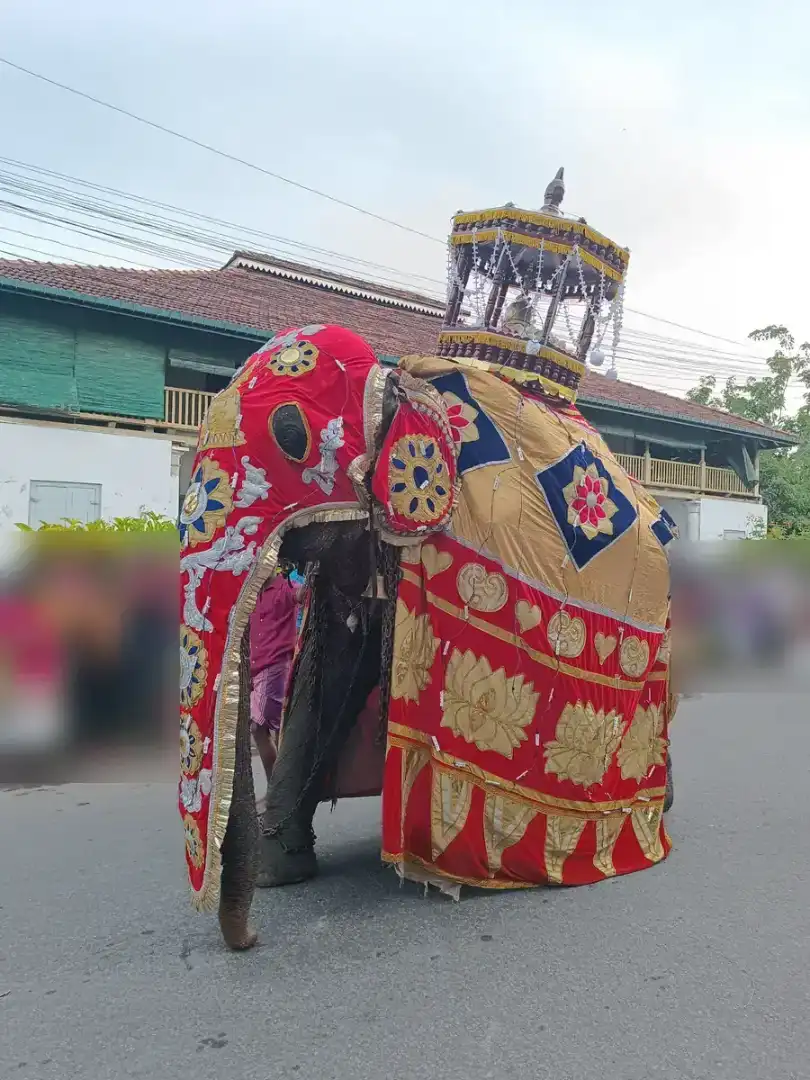
Elephants are deeply tied to Sri Lankan culture and Buddhism. In peraheras, the traditional Buddhist processions, elephants dressed in embroidered cloth and lights walk alongside drummers, dancers and torch bearers. The most famous is the Esala Perahera in Kandy, held in July or August, when a tusker carries a casket linked to the Sacred Tooth Relic of the Buddha. Smaller peraheras take place in towns across the island on full moon (poya) days.
I saw one of these processions in Matara, on the south coast: elephants in bright, embroidered costumes walking through the streets with crowds lining the road. Peraheras are a spectacular part of Sri Lankan life, but they also raise welfare questions, because elephants are kept in crowded, noisy and bright conditions for hours. Animal welfare groups and some Sri Lankan campaigners have called for better standards.
How to watch elephants responsibly
- Choose wild over captive. National parks and the Elephant Transit Home let you see elephants behaving naturally.
- Skip elephant rides. Riding requires training methods that welfare groups widely criticize.
- Do not feed or touch wild elephants. Elephants that get used to food from people can become dangerous and are often killed as a result.
- Ask your safari driver to keep distance, turn off the engine near animals and leave if too many jeeps crowd one herd.
- Never get between an elephant and its calf or block an elephant’s path.
- Avoid places that offer bathing with elephants or close-up photos for money.
- Respect elephants on the road. In some areas, wild elephants approach vehicles for food; do not feed them and do not stop too close.
Planning tips if you do visit Pinnawala
- Pinnawala is roughly halfway between Colombo and Kandy, so it is often a stop on the drive between the two.
- Foreign visitors pay a higher entry fee than locals; check the current price at the gate.
- Arrive before the bathing time to find a spot by the river.
- Keep your distance from the herd when it walks along the street.
- Consider combining your visit with a stay in Kandy and, later in your trip, a safari in a national park to see elephants in the wild.
Sri Lanka’s elephants: key facts
- Sri Lanka has one of the highest densities of wild Asian elephants in the world.
- The Sri Lankan elephant is a subspecies of the Asian elephant. Only a small share of males grow tusks, which makes tuskers especially valued in ceremonies.
- Human–elephant conflict is a serious problem: as farms expand into forests, elephants raid crops and both people and elephants die every year.
- Electric fences, protected corridors and community programs are being used to reduce conflict.
For more on Sri Lanka’s wildlife, see our guide to sea turtles in Sri Lanka, and for planning a trip with children, our guide to family-friendly beaches in Sri Lanka.
Frequently asked questions
Is the Pinnawala Elephant Orphanage ethical?
It is debated. The orphanage has rescued many calves, but it is criticized for chaining elephants, breeding them in captivity and crowding them with tourists. Many travelers now choose the Elephant Transit Home or national park safaris instead.
What is the best time to visit Pinnawala?
Plan your visit around the river bathing sessions, which usually take place in the late morning and early afternoon. Check current times locally.
Where is the Pinnawala Elephant Orphanage?
Near Kegalle, between Colombo and Kandy in central Sri Lanka.
Where can I see baby elephants ethically in Sri Lanka?
At the Elephant Transit Home in Udawalawe, where orphaned calves are raised for release into the wild and visitors watch from a platform.
Where is the best place to see wild elephants in Sri Lanka?
Udawalawe National Park year-round, and Minneriya or Kaudulla during the dry-season Gathering, roughly July to October.
Can you ride elephants in Sri Lanka?
Some places still offer rides, but animal welfare organizations strongly advise against it. Watching elephants in the wild is the better choice.
The bottom line
The Pinnawala Elephant Orphanage offers a rare sight: a whole herd of elephants bathing together in a river. But it also shows the problems of captive elephant tourism. If you go, go with open eyes. And if you want the most memorable elephant experience in Sri Lanka, watch them in the wild, at Udawalawe, Minneriya or the Elephant Transit Home, where the elephants, not the tourists, set the rules.