Georgian food is one of the most underrated cuisines on earth. Built on four pillars — fresh cheese, hand-stretched dough, slow-cooked meat, and wine fermented in clay vessels called qvevri — it turns every meal into a celebration that Americans rarely encounter outside Georgia itself.
If you have ever wondered what makes Georgian food so special, the answer is simple: every dish carries thousands of years of tradition, and every table is set as if you are honored family. If you are planning a trip, start with our Georgia travel guide for the full picture. This guide walks through 12 essential dishes, the wine culture that wraps around them, and the etiquette that makes a Georgian supra feast one of the most memorable dining experiences a traveler can have.
The four pillars of Georgian food
Before diving into individual dishes, it helps to understand why Georgian food tastes the way it does. Four ingredients show up in almost everything:
- Fresh cheese — sulguni, imeruli, and brined varieties form the backbone of breads, pies, and salads.
- Walnuts — ground into sauces (bazhe, satsivi), stuffed into eggplant, and threaded onto strings as churchkhela candy.
- Fresh herbs — tarragon, cilantro, basil, and blue fenugreek (utskho suneli) appear on the table as a free bouquet alongside every order.
- Wine — Georgia has been making wine for over 8,000 years, longer than anywhere else on record. The traditional method uses qvevri, large clay vessels buried underground, and it earned UNESCO intangible heritage status.
These four elements connect every dish on this list. Once you recognize them, Georgian food starts to feel like one long, generous conversation rather than a collection of separate plates.
1. Khachapuri — the cheese bread that defines Georgia
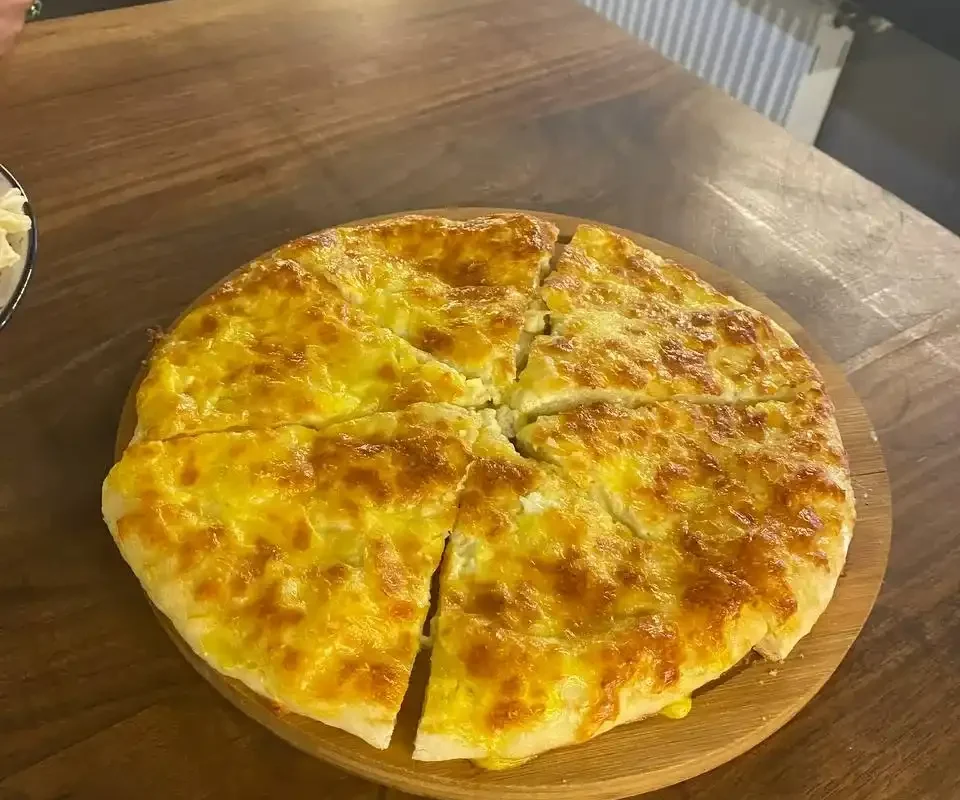
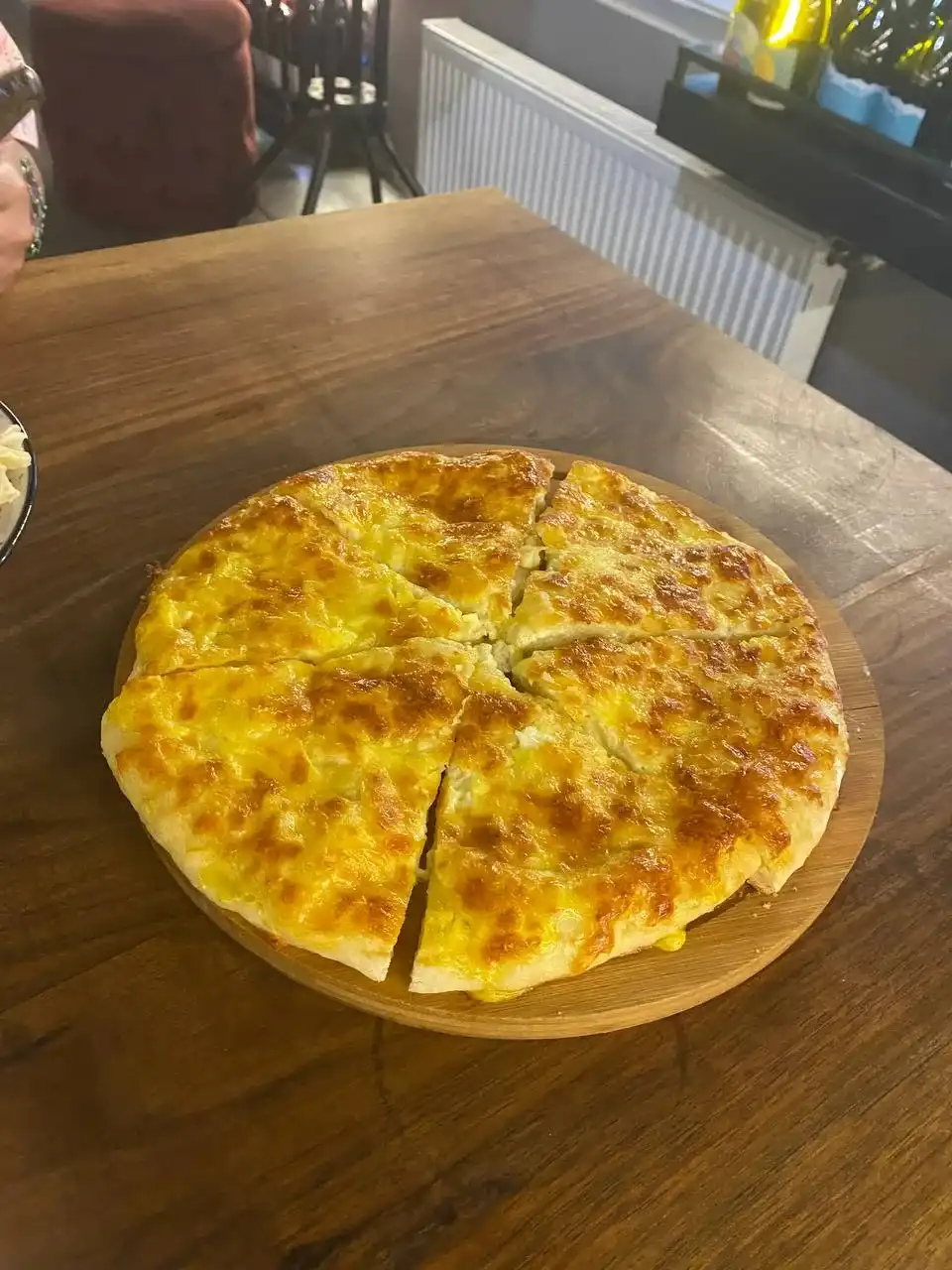
No conversation about Georgian food starts anywhere else. Khachapuri (ხაჭაპური) is cheese-stuffed bread, and Georgia has at least a dozen regional versions.
The most famous abroad is Adjarian khachapuri from Batumi — a boat-shaped bread filled with molten cheese, topped with a raw egg and a pat of butter that you stir in yourself. But locals often prefer Imeretian khachapuri, a simpler round pie with imeruli cheese inside, baked until the crust is golden and slightly crisp.
You will find khachapuri at every meal: breakfast, lunch, dinner, and everywhere in between. A whole one costs roughly $3–5 at a neighborhood bakery, making it one of the best food deals in Europe.
2. Khinkali — juicy dumplings with a strict eating rule
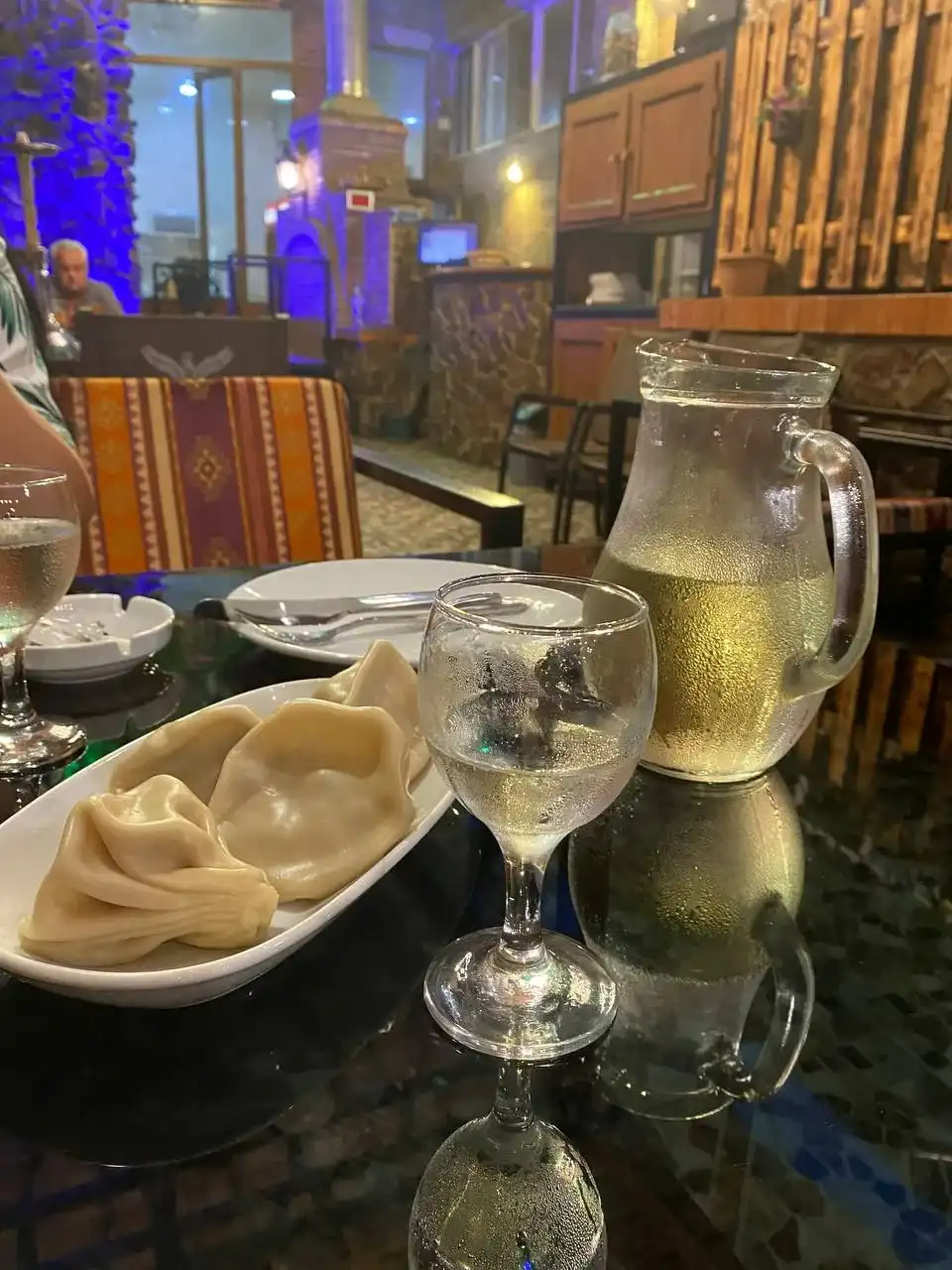
Khinkali (ხინკალი) are large, pleated dumplings filled with spiced meat and broth. They come from the mountain regions of Tusheti and Pshavi, where shepherds needed calorie-dense portable Georgian food for long days in the highlands.
The eating technique matters: hold the dumpling by its twisted top knob, bite a small hole, sip the hot broth first, then eat the rest. The knob itself is traditionally left on the plate — it serves as a handle, not food. At the end of the meal, you count the knobs to see who ate the most.
Fillings vary: beef and pork is classic, but you will also find cheese, potato, and mushroom versions. A plate of five or six is a standard order and runs about $2–3.
3. Mtsvadi — fire-grilled meat skewers
Mtsvadi (მწვადი) is the grilled-meat pillar of Georgian food. Chunks of pork, beef, or chicken are marinated simply — often just salt, onion, and pomegranate juice — then grilled over grapevine embers that add a subtle smoky sweetness you cannot replicate on gas.
Georgians take mtsvadi seriously. Families grill it at weekend picnics in the countryside, and restaurants serve it on long metal skewers with raw onion rings and a bowl of tkemali (sour plum sauce) on the side.
4. Chanakhi — slow-cooked lamb stew
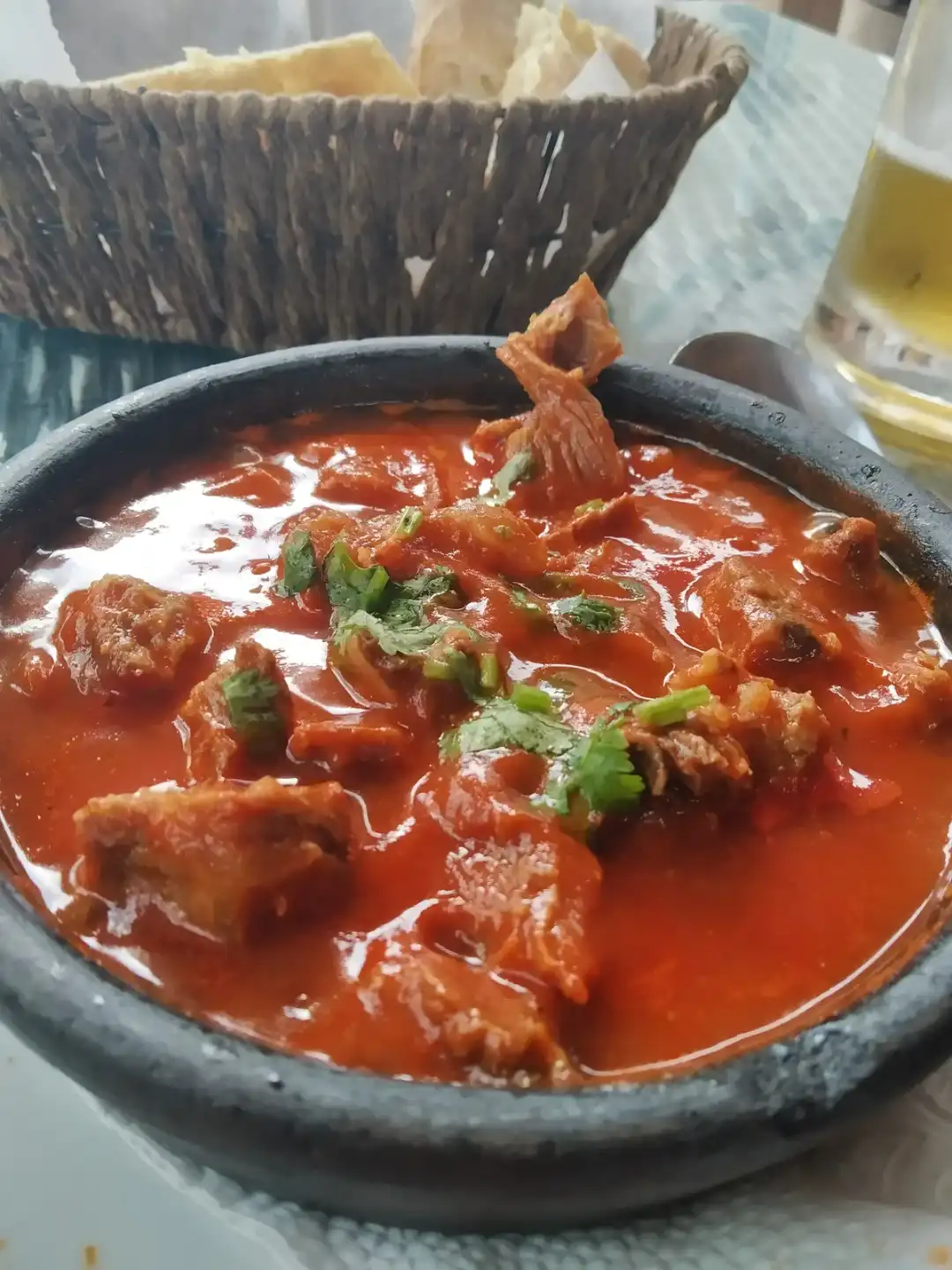
Chanakhi (ჩანახი) is a one-pot stew of lamb (or beef), potatoes, tomatoes, and eggplant, layered in a clay pot and slow-baked until everything melts together. No stirring — the layers cook into each other naturally.
It is Georgian food at its most honest: no complicated technique, just good ingredients and patience. You will find it on almost every restaurant menu outside Tbilisi, especially in the mountain regions where hearty meals fuel long days.
5. Lobio — spiced bean stew
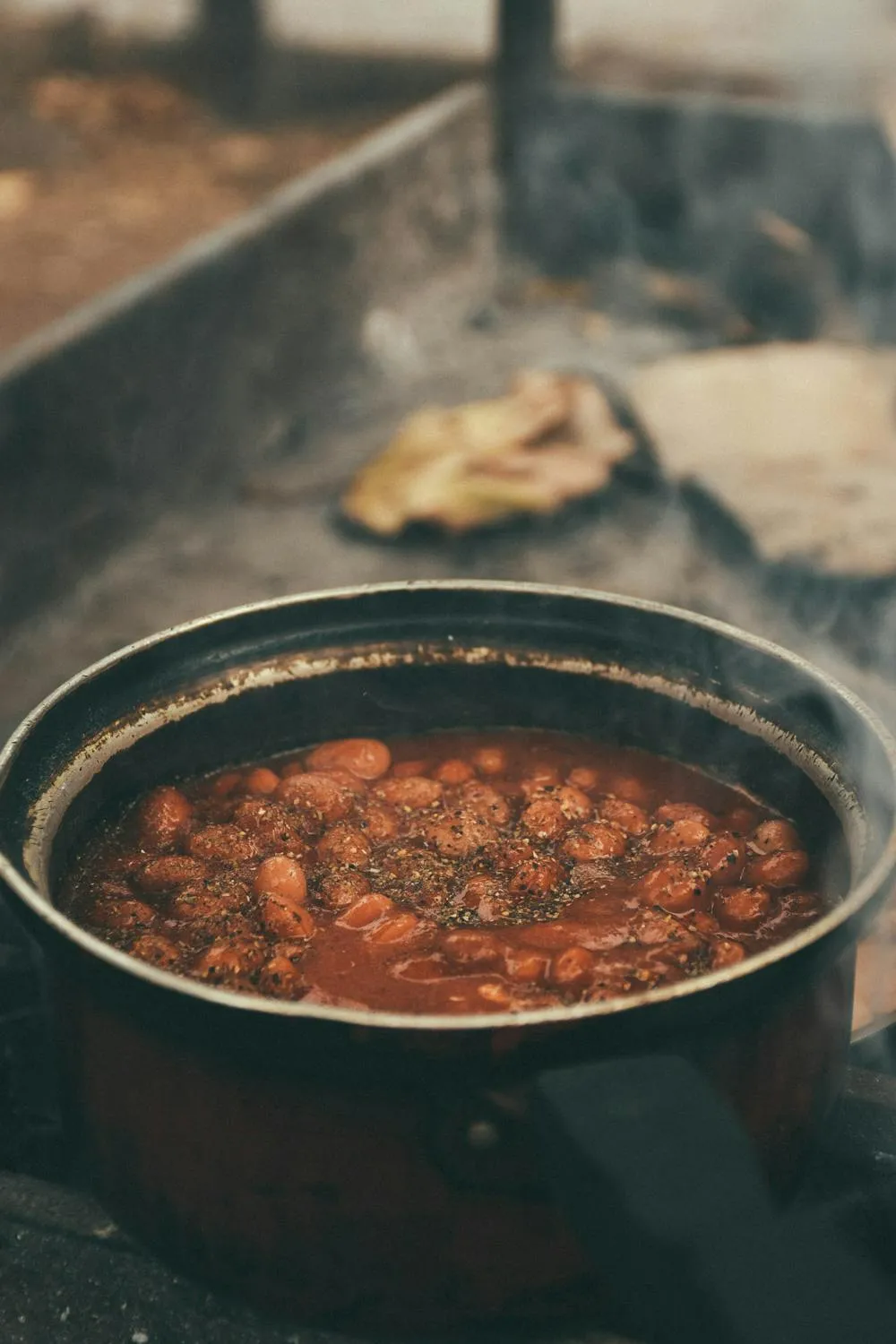
Lobio (ლობიო) is a thick kidney bean stew seasoned with onion, garlic, cilantro, and blue fenugreek. It arrives in a small clay pot with a side of mchadi (cornbread) and pickled vegetables.
The combination of lobio and mchadi is one of the cheapest and most satisfying Georgian food experiences — a full meal for under $2 and proof that Georgian food does not need to be fancy to be exceptional. Variations range from soupy to nearly solid, and some cooks add walnuts or pomegranate seeds.
6. Pkhali — walnut-herb vegetable pâté
Pkhali (ფხალი) is a cold appetizer made by grinding cooked vegetables — spinach, beet, or cabbage — with walnuts, garlic, vinegar, and herbs into a dense, flavorful paste. It is shaped into small balls or patties and topped with pomegranate seeds.
Three types of pkhali often arrive together on one plate, giving you a traffic-light arrangement of green, red, and white that doubles as one of the most photogenic Georgian food dishes.
7. Badrijani nigvzit — walnut-stuffed eggplant
Thin slices of fried eggplant rolled around a filling of crushed walnuts, garlic, and spices — badrijani nigvzit (ბადრიჯანი ნიგვზით) is the appetizer you will see on every table in the country. The walnut paste is rich enough to feel indulgent, and it represents the cold-appetizer side of Georgian food, but the dish stays light because the portions are small and the flavor is bright with vinegar and fresh herbs.
The technique is deceptively simple: slice the eggplant lengthwise, fry until golden and flexible, then spread the walnut mixture and roll. The result looks elegant enough for a fine dining plate but costs less than a dollar at most restaurants. Order it alongside pkhali for a full spread of cold appetizers before the hot dishes arrive.
8. Churchkhela — the “Georgian Snickers”
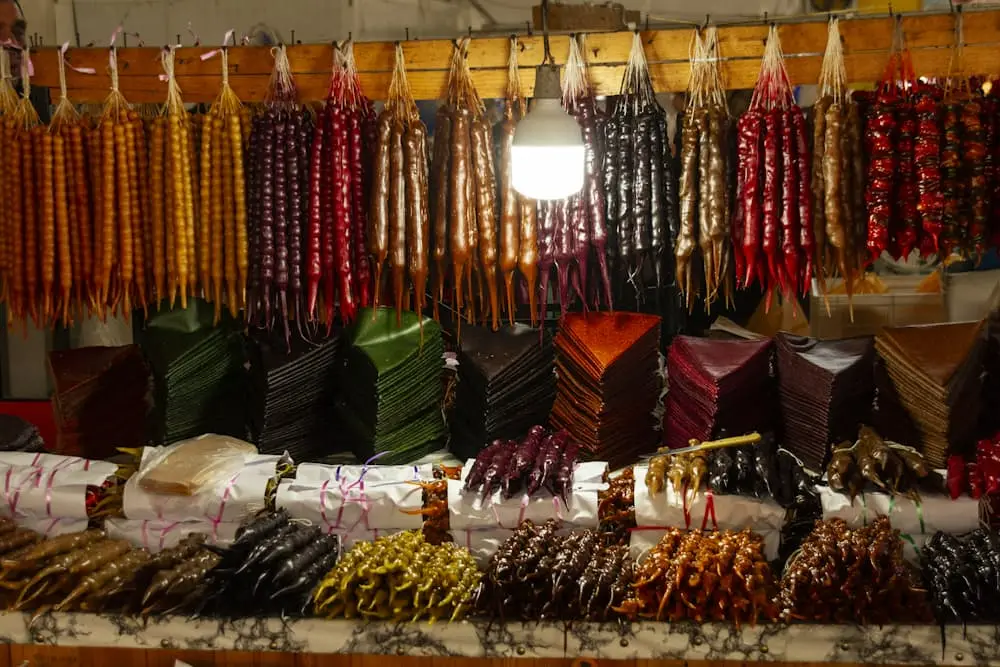
Churchkhela (ჩურჩხელა) is a string of walnuts or hazelnuts dipped repeatedly in thickened grape juice until a chewy, candle-shaped candy forms around them. It is one of the oldest portable Georgian food inventions — originally made as trail food for soldiers and travelers — high in calories, portable, and shelf-stable for months without refrigeration.
You will spot churchkhela hanging in colorful rows from market stalls everywhere, especially in Kakheti wine country where the grape harvest produces enough juice to make thousands. The flavor ranges from subtly sweet to intensely fruity depending on the grape variety. Each region has its preferred shape and thickness, and families guard their recipes closely.
The best time to buy fresh churchkhela is September and October, right after the grape harvest. The rest of the year you will find it year-round, but the texture of freshly made ones — soft, pliable, still slightly sticky — is incomparable to the dried versions sold in tourist shops.
9. Satsivi — walnut sauce over turkey or chicken
Satsivi (საცივი) is a cold dish of poultry in a thick, creamy walnut sauce spiced with cinnamon, cloves, and fenugreek. Traditionally served at New Year celebrations, it represents the richest end of Georgian food traditions.
The sauce alone contains a remarkable number of ground walnuts — sometimes a full pound per bird — which gives it a texture closer to a thick gravy than anything you would associate with nut-based cooking in Western cuisine.
10. Adjika and tkemali — the sauces that tie everything together
Georgian food lives and dies by its sauces. Two stand out:
Adjika (აჯიკა) is a fiery paste of hot peppers, garlic, herbs, and spices from the Abkhazia and Samegrelo regions. A tiny spoonful transforms grilled meat, bread, or cheese.
Tkemali (ტყემალი) is a tangy plum sauce that ranges from sour green (unripe plum) to mellow red (ripe plum). It does for this cuisine what ketchup does for American cooking — except with a complexity that ketchup cannot approach. Every family makes their own batch from backyard plum trees, and arguments over whose tkemali is best can get surprisingly heated.
11. Lobiani — bean-filled bread for fasting days
While khachapuri gets all the attention, lobiani (ლობიანი) deserves equal respect. It is the same style of bread but filled with spiced kidney beans instead of cheese. It was originally a fasting-day food, since the Georgian Orthodox calendar includes many days when dairy is off limits.
Today it stands on its own as a hearty, satisfying Georgian food staple that pairs perfectly with a cold beer or a glass of saperavi wine.
12. Kupati — grilled pork sausage
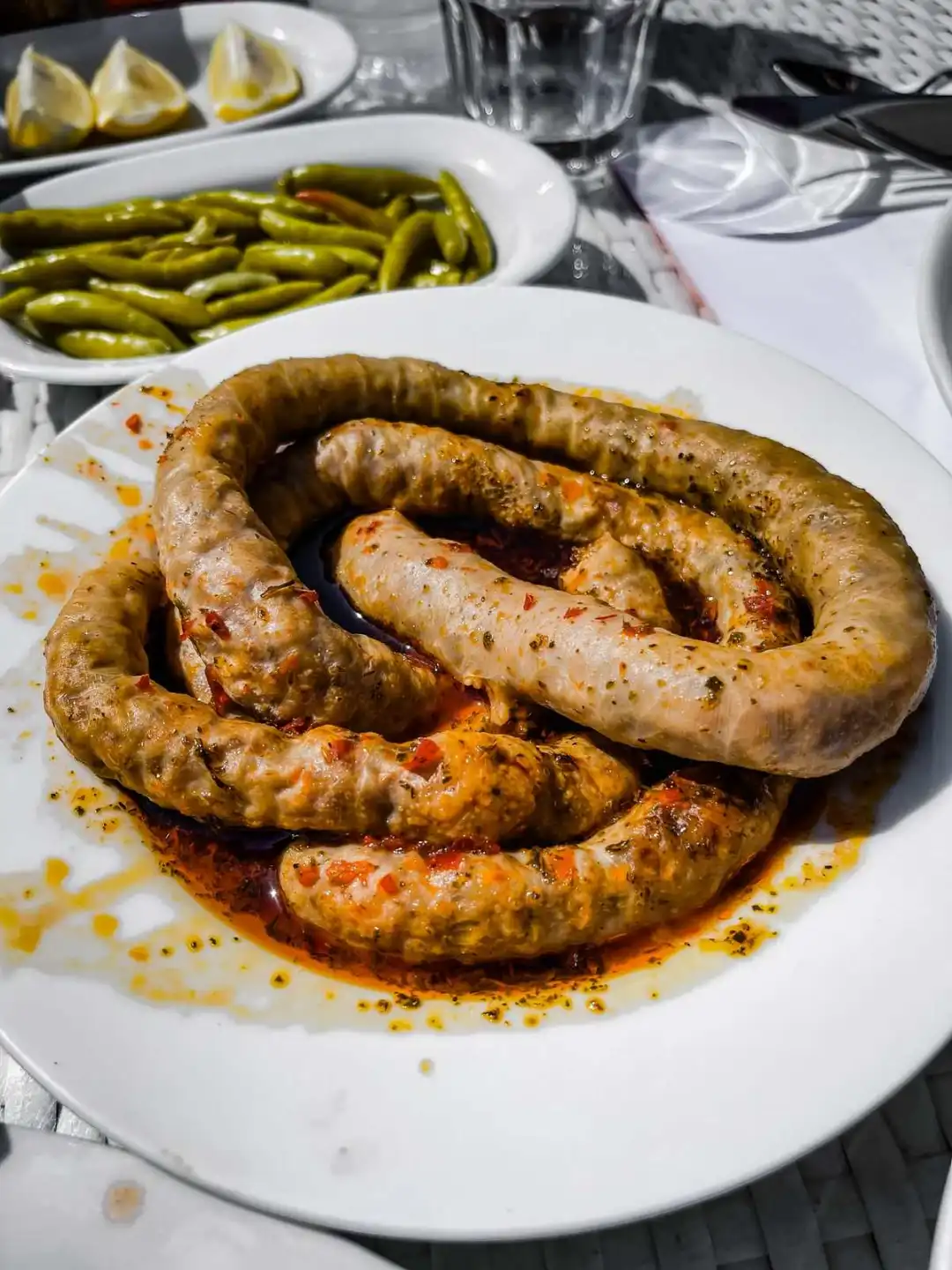
Kupati (კუპატი) is a coarsely ground pork sausage flavored with garlic, pepper, and barberry. It is grilled until the skin crisps and the inside stays juicy — a perfect companion to mtsvadi at any Georgian barbecue.
The best kupati are homemade, and in rural Georgia every family has their own recipe. If a host offers you kupati they made themselves, you have been paid a genuine compliment.
The supra — how Georgians actually eat
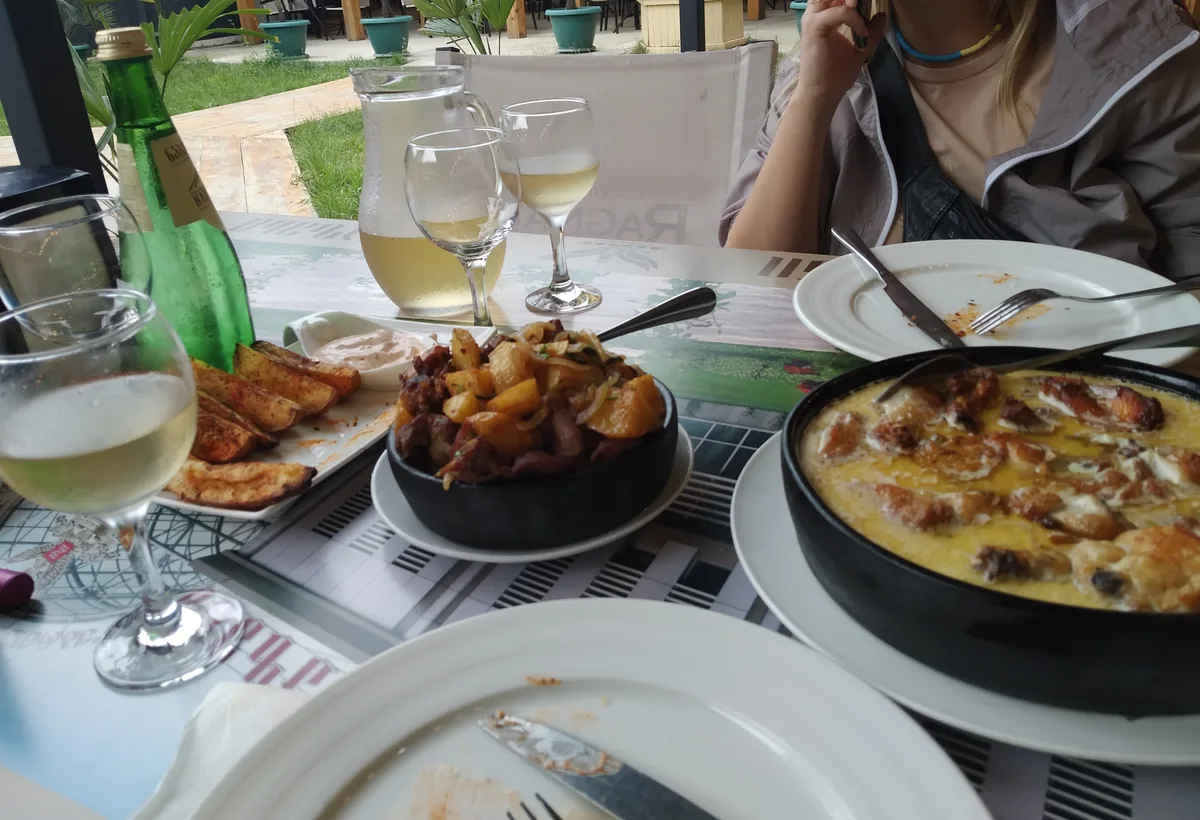
A list of dishes does not capture what makes eating Georgian food truly special. The supra (სუფრა) does.
A supra is a formal feast led by a tamada (toastmaster) who guides the table through a series of toasts — to God, to Georgia, to family, to the departed, to friendship, to the future. Each toast is followed by draining your glass of wine. The tamada speaks with genuine emotion, and guests are invited to add their own words.
The table is loaded before anyone sits down: ten, fifteen, sometimes twenty dishes appear simultaneously, covering every inch of surface. Nothing is served in courses. You eat what you want, when you want, and the host keeps refilling.
Supra etiquette for travelers:
- Accept the first drink offered to you. Refusing is seen as rejecting the host’s hospitality.
- You do not have to drain your glass at every toast if drinking wine — but with chacha (grape brandy), tradition says you finish it.
- Compliment the food specifically. Saying “the khinkali are incredible” means more than a generic “great meal.”
- The tamada is the only one who initiates toasts. Wait to be invited before offering your own.
- Pace yourself. A supra can last three to five hours.
Georgian wine — the 8,000-year tradition
No exploration of Georgian food is complete without wine. Georgia is home to over 500 indigenous grape varieties — saperavi (a deep red) and rkatsiteli (a crisp white) are the most widely planted.
The traditional qvevri method buries large clay vessels underground, where crushed grapes ferment with their skins, seeds, and stems for months. The result is “amber wine” — a white wine that looks orange-gold and has tannins like a red. It tastes unlike anything in American wine shops, and it is the fastest-growing category at natural wine bars across the US.
In Kakheti wine country, family-run wineries welcome visitors for tastings that inevitably become mini-supras. Budget roughly $10–15 for a tasting with food, though many families will not let you pay at all.
Where travelers find the best dishes
Georgian food varies by region, and eating your way across the country is one of the best reasons to travel beyond Tbilisi.
Tbilisi offers the widest variety, from fine dining restaurants reinventing traditional recipes to hole-in-the-wall khachapuri bakeries where locals line up at 7 a.m. The neighborhoods of Sololaki and Vera are packed with small restaurants where a full meal with wine rarely costs more than $12.
Kutaisi is the gateway to Imereti, where Imeretian khachapuri and lobio with mchadi are perfected to their simplest, best forms. The central market is worth a morning of wandering — vendors offer samples of cheese, churchkhela, and homemade adjika.
Sighnaghi is a hilltop wine town in Kakheti with grapevine-shaded restaurant terraces overlooking the Alazani Valley. This is where wine tastings turn into impromptu supras and you end up staying for dinner you did not plan.
Mestia is the capital of Svaneti, where kubdari (კუბდარი) — a meat pie filled with spiced beef and pork — is the local specialty not found elsewhere in the country. The mountain air and the views make every meal taste better.
Batumi brings coastal influence, meaning more fish on the menu, plus Adjarian khachapuri in its birthplace. The seaside restaurants serve Georgian food with a view of the Black Sea that makes the experience unforgettable.
Frequently asked questions
What is the most popular Georgian food?
Khachapuri (cheese bread) is the most widely eaten Georgian food, consumed daily across the country in many regional variations. Khinkali dumplings are a close second.
Is the cuisine spicy?
Most dishes are flavorful but not hot. The exception is adjika sauce from the western regions, which can be quite fiery. Herbs and walnuts give Georgian food its complexity rather than chili heat.
Can vegetarians eat well in Georgia?
Yes. Georgian food includes many vegetarian dishes: lobio (bean stew), pkhali (walnut-vegetable pâté), badrijani (stuffed eggplant), lobiani (bean bread), and various cheese dishes. Most restaurants have several vegetarian options.
How much does a meal cost in Georgia?
A full meal for one at a mid-range restaurant in Tbilisi costs roughly $8–15, including wine. Street food like khachapuri or lobiani runs $2–5. Georgian food is among the most affordable in Europe.
What should I drink with these dishes?
Traditional saperavi (dry red) pairs with grilled meats and stews. Rkatsiteli or amber wine pairs with cheese dishes and lighter fare. Chacha (grape brandy) appears at celebrations. Georgian mineral water Borjomi is served at nearly every table.
Is it similar to Turkish or Russian cooking?
Georgian food shares some ingredients with both neighbors but has its own distinct identity. The walnut-based sauces, qvevri wines, and the supra feast tradition are uniquely Georgian. Khinkali resemble Central Asian dumplings but developed independently in the Caucasus mountains.
Every meal in Georgia tells a story
The best Georgian food is not just sustenance — it is how Georgians express love, honor guests, and celebrate being alive. From a $2 lobio pot at a roadside stop to a five-hour supra at a family home in Kakheti, every bite comes with generosity that Americans rarely experience elsewhere.
These twelve Georgian food classics are your starting point. The supra is your destination. And the wine, poured freely and toasted sincerely, is the thread that ties it all together.