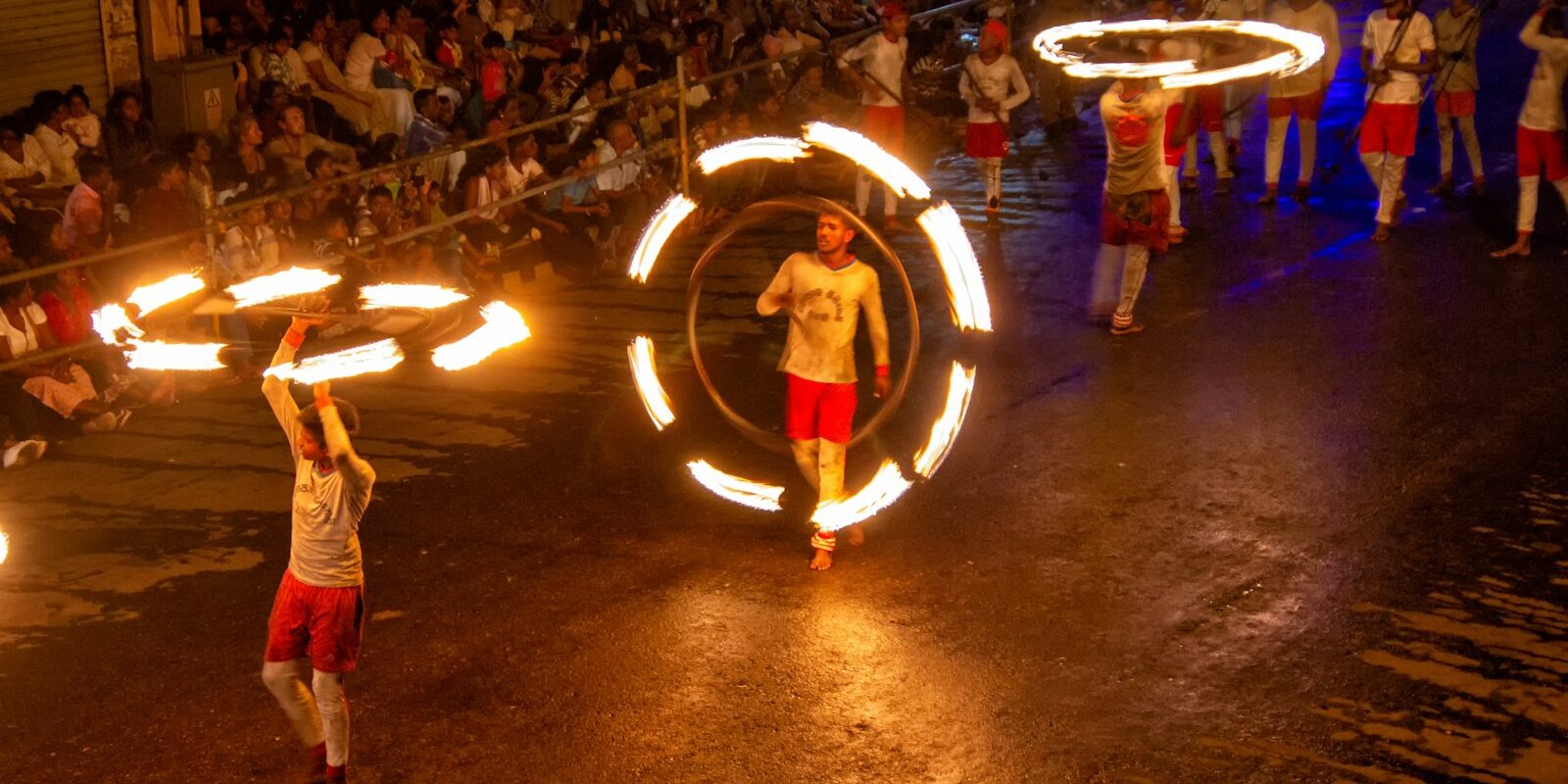
For ten nights every year, the centre of Kandy stops being a normal town. Drummers, fire dancers, whip crackers and decorated elephants move through streets packed shoulder to shoulder, and the noise arrives before the procession does. This is the Esala Perahera, and it is often described as the oldest continuously performed cultural procession in the world.
Dates accurate as of August 2026. Perahera dates shift each year with the lunar calendar and are set by the temple, usually a few months ahead. Always confirm on the official Sri Dalada Maligawa site before booking travel.
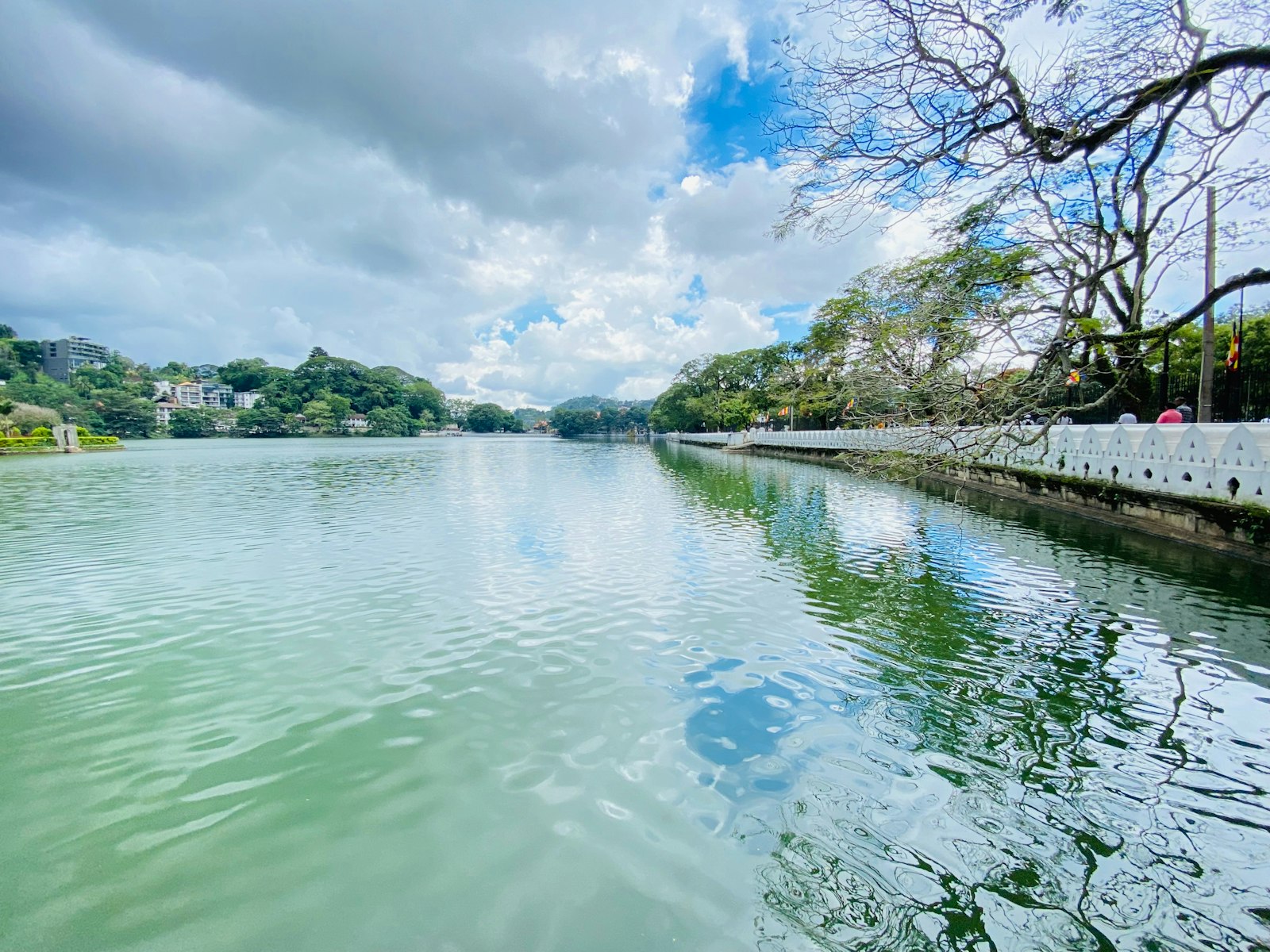
What the Esala Perahera actually is
The Esala Perahera is a Buddhist procession honouring the Sacred Tooth Relic of the Buddha, kept at the Temple of the Sacred Tooth Relic (Sri Dalada Maligawa) in Kandy. It runs for ten nights in the lunar month of Esala, which falls in July or August.
One detail surprises most visitors: the actual Tooth Relic never leaves the temple. What the lead elephant carries through the streets is a golden casket, the karanduwa, holding a replica. The relic itself stays behind, which is why the temple continues its normal rituals during the festival.
Why a tooth decided who ruled the country
According to the temple’s own account, the relic reached Sri Lanka in 310 CE, carried by Princess Hemamala and Prince Dantha, who hid it in her hair to smuggle it out of conflict in the Kalinga kingdom of India. It arrived during the reign of King Kithsirimewan and was first housed at Isurumuniya.
From then on the relic was not simply a religious object. Whoever held it was considered the rightful ruler. A king without the Tooth Relic was, in the eyes of the people, not truly a king. That is why the relic moved with the capital through Anuradhapura, Polonnaruwa, Dambadeniya, Yapahuwa, Kurunegala, Gampola, Kotte, Seethawaka and finally Kandy, and why King Wimaladharmasooriya I went to such lengths to bring it there.
When the British took the kingdom in 1815, they left the country without a king but allowed the procession to continue under a lay custodian, the Diyawadana Nilame. That office still exists, and the man holding it still walks in the procession today.
Esala Perahera 2026: the full schedule
The festival splits into two halves. The Kumbal Perahera covers the first five nights and starts modestly, growing a little each evening. The Randoli Perahera covers the last five and is the spectacle people travel for, with the largest number of elephants and performers.
| Event | Date | Start time |
|---|---|---|
| Kumbal Perahera, nights 1–5 | 18–22 August 2026 | ~6:30–6:55 PM |
| Randoli Perahera, nights 1–4 | 23–26 August 2026 | ~6:45–7:00 PM |
| Final Randoli (grand procession) | 27 August 2026 | 6:43 PM |
| Diya Kapeema (water cutting) | 27 August 2026 | 1:28 AM |
| Dahawal Perahera (day procession) | 28 August 2026 | 2:18 PM |
The Diya Kapeema, or water-cutting ceremony, happens before dawn at the Mahaweli River at Getambe. A priest cuts the water with a sword to symbolically divide it, then draws a pitcher that is kept until the following year. Most tourists sleep through it; it is the part locals consider essential.
What you actually see, in order
Five separate processions move as one. The Maligawa Perahera from the Temple of the Tooth leads, followed by four devale peraheras representing the deities Natha, Vishnu, Kataragama and Pattini, each with its own custodian and its own musicians.
The sequence stays roughly the same each night:
- Whip crackers open the way. Around thirty of them, cracking long whips whose sound is said to represent thunder and lightning clearing the path.
- Torch bearers and fireball dancers follow, working with open flame at close range.
- Flag bearers carry temple and provincial standards.
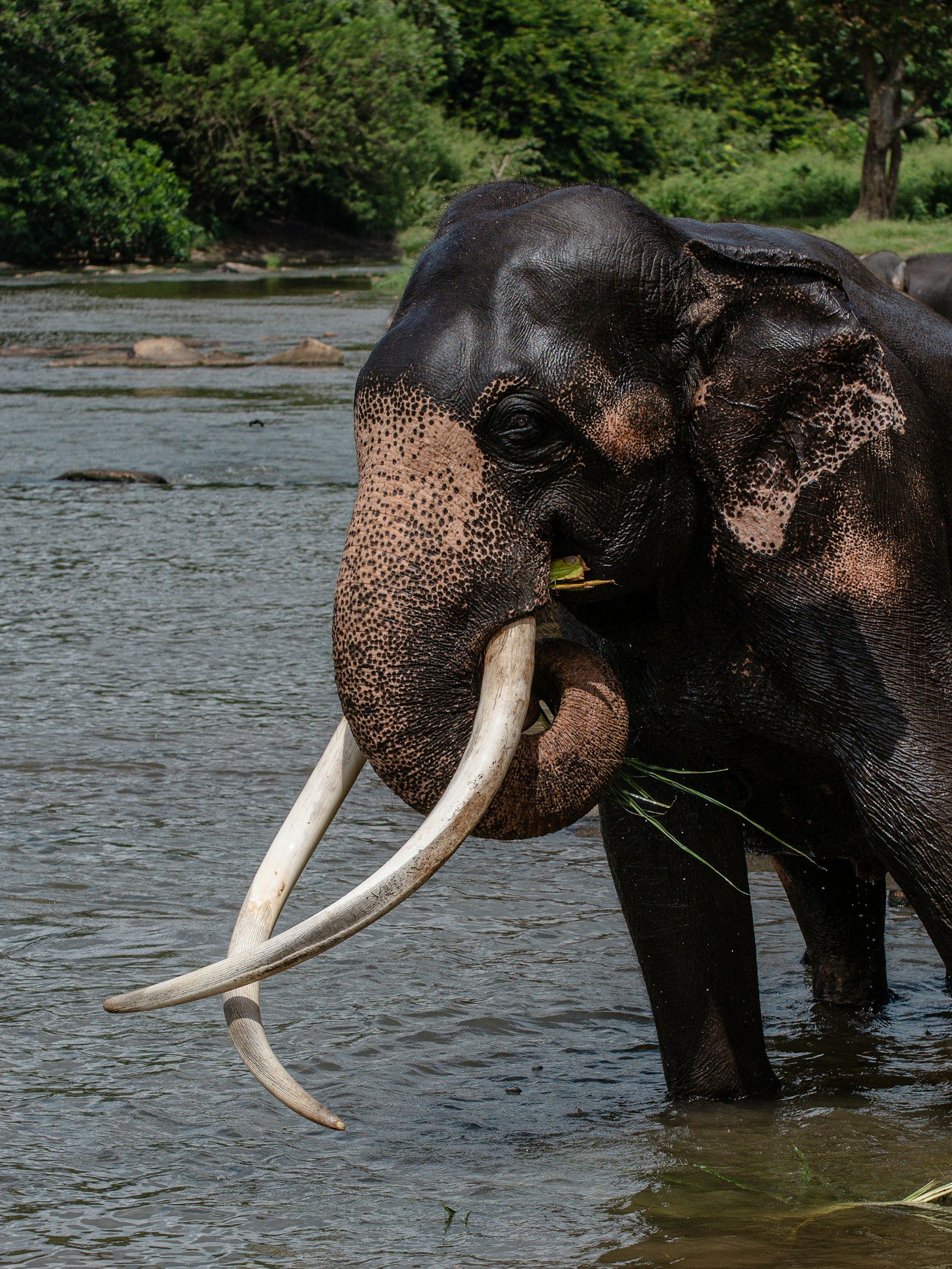
- Kandyan drummers (hevisi) set the rhythm, and at close range the sound is physical rather than musical.
- Dancers in the ves, naiyandi, udekki and pantheru traditions, each a distinct style with its own costume.
- The Maligawa Tusker, lit up and heavily decorated, carrying the golden casket at the centre of the first procession.
- The Diyawadana Nilame, the temple’s lay custodian, walking behind the tusker in full Kandyan court dress.
- The four devale processions, each following in fixed order with its own drummers and dancers.
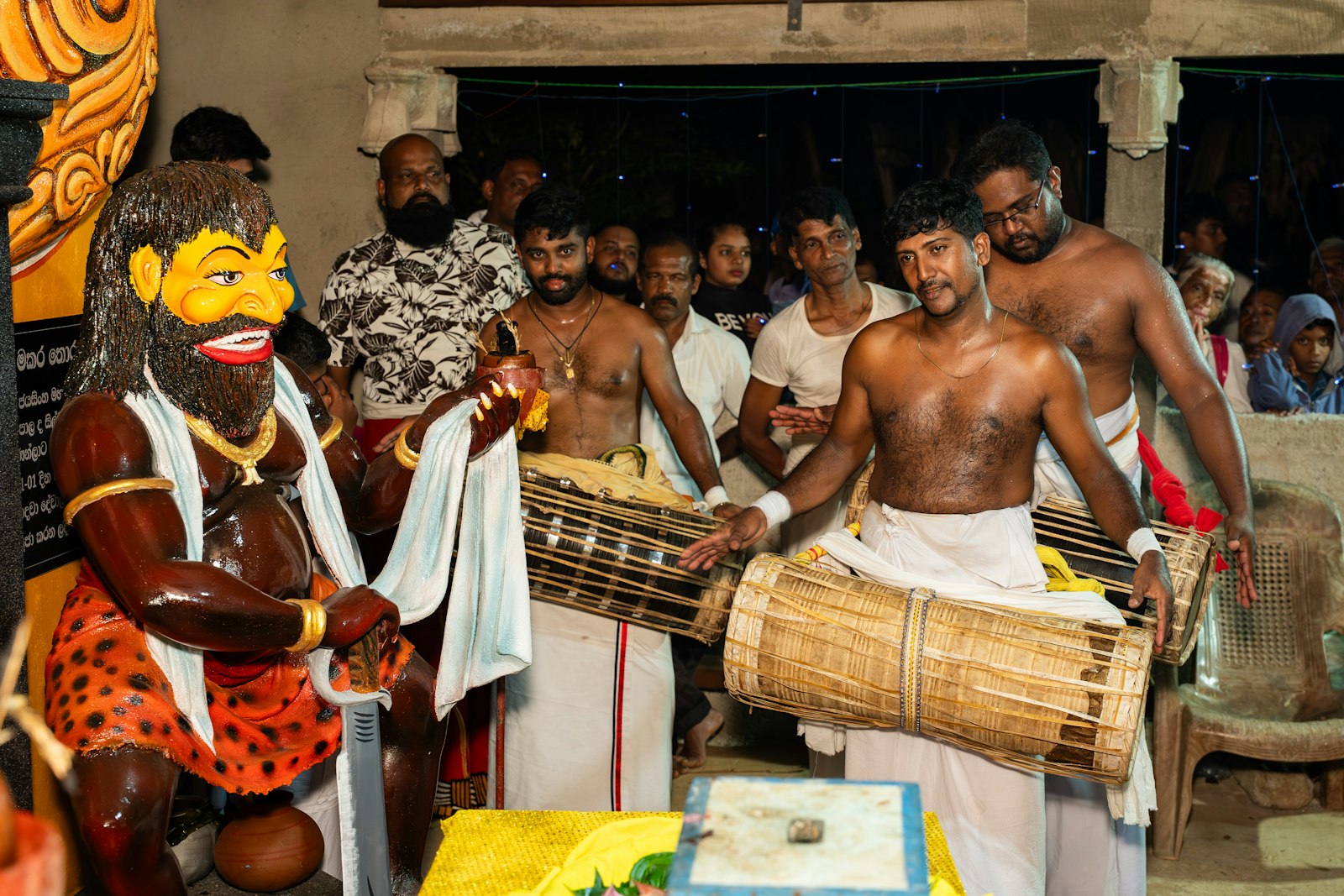
The elephants: what you should know before you go
This part is usually left out of festival write-ups, and it shouldn’t be.
The Perahera uses dozens of captive elephants, and the practice draws sustained criticism from animal welfare organisations. The issue reached international attention in 2019 when photographs circulated of Tikiri, a visibly emaciated elderly elephant costumed and walking in the procession. Documented concerns include elephants kept on short chains during the day, walking several kilometres a night for ten consecutive nights, and doing so through dense crowds, fireworks and amplified noise.
The counter-argument from within Sri Lanka is that the elephants’ role is centuries old and religiously significant, and that many of the animals are temple-owned and cared for year-round. There is also a practical shift underway: the captive elephant population is shrinking as older animals die, capturing wild elephants is now restricted, and upkeep costs are high. Some processions have begun using fewer animals, and mechanical or model elephants have appeared in smaller peraheras.
We’re not going to tell you whether to attend. But if you do go, it is worth watching with open eyes rather than treating the elephants purely as decoration, and worth knowing that the debate inside Sri Lanka is real and ongoing rather than something imposed from outside.
Practical advice for watching
- Arrive very early. Streets fill hours before the advertised start, and the procession itself often begins later than scheduled.
- Seating is sold along the route. Hotels, shops and private balconies rent seats, prices climb steeply toward the final nights. Free standing space exists but requires patience and an early arrival.
- Later nights are bigger. If you want scale, aim for the Randoli nights. If you want smaller crowds, the first Kumbal nights are far more manageable.
- Dress respectfully. This is a religious event, not a street carnival.
- Expect noise. Drums, whips and firecrackers at close range are genuinely loud, worth thinking about if you’re bringing a small child.
- Book accommodation months ahead. Kandy fills up and prices rise sharply during the ten nights.
Other peraheras worth knowing
Kandy’s is the largest, but it isn’t the only one.
| Perahera | Where | When | Character |
|---|---|---|---|
| Kandy Esala Perahera | Kandy | July/August, 10 nights | The largest and most elaborate |
| Kataragama Perahera | Kataragama, south | July/August, up to 14 days | Buddhist and Hindu pilgrims together; intense devotional practices |
| Navam Perahera | Colombo (Gangaramaya) | February, 2 nights | Easiest to reach; you stay in the capital |
| Bellanwila Esala | Colombo suburb | August | Smaller, far fewer tourists |
If your dates don’t line up with Kandy, Navam Perahera in February is the practical alternative. It runs two nights in central Colombo around Gangaramaya Temple, so there’s no hill-country journey and no accommodation scramble.
Frequently asked questions
When is the Esala Perahera 2026?
The Kandy Esala Perahera runs from 18 to 28 August 2026. Kumbal Perahera is 18–22 August, Randoli Perahera is 23–27 August, the water-cutting ceremony is at 1:28 AM on 27 August, and the day procession is on 28 August.
Is the real Tooth Relic carried in the procession?
No. A replica inside a golden casket is carried by the lead tusker. The actual relic remains inside the Temple of the Sacred Tooth Relic throughout.
How much does it cost to watch the Esala Perahera?
Standing in the street is free. Reserved seating sold by hotels and shops along the route typically runs from roughly LKR 3,000 up to LKR 20,000 or more per person, rising steeply for the final Randoli nights and premium balcony positions. Prices vary widely by vendor and year, so confirm directly.
Which night is best to attend?
The final Randoli nights are the largest but also the most crowded and expensive. The earlier Kumbal nights are significantly easier to watch and still feature drummers, dancers and elephants.
Why does the date change every year?
The festival follows the lunar calendar, taking place in the month of Esala and concluding around the Nikini full moon, so it moves between July and August from year to year.
Can children attend?
Yes, and local families bring children. Be aware of the crowd density, the very late finish times and the volume of drums and firecrackers when deciding for a younger child.
Worth building a trip around?
If your travel dates are flexible and you’re interested in Sri Lanka beyond its beaches, the Perahera is one of the few events that genuinely justifies planning around. It is not a performance staged for tourists; it is a working religious ritual that happens to be spectacular. Go in knowing the history, and knowing the debate around the elephants, and you’ll see far more than a parade.
Kandy sits in the hill country, which makes it easy to combine with the rest of the interior. If you’re building a wider route, our guide to Sinharaja Rainforest in Deniyaya covers a very different side of the island.