When travelers search for traditional food in Belize, they often find only “rice and beans with stewed chicken.” But Belize’s cuisine is far richer — a vibrant tapestry woven from Indigenous Maya, Afro-Caribbean Garifuna, Mestizo, and Creole traditions. Nestled between Mexico, Guatemala, and the Caribbean Sea, Belize eats like no other Central American nation. This guide explores the true flavors of traditional food in Belize — from Garifuna fish stews to Maya corn tamales — and why every bite tells a story of resilience, migration, and cultural fusion.

The three culinary roots of traditional food in Belize
Belize’s food identity rests on three pillars:
- Maya – Ancient corn-based dishes, wild herbs, and jungle ingredients.
- Garifuna – Afro-Indigenous coastal cuisine centered on coconut, fish, and plantains.
- Creole & Mestizo – A blend of African, Spanish, and British influences: rice, beans, stewed meats.
Unlike its neighbors, Belize never had a dominant monoculture. Instead, communities preserved their foodways — creating one of the most diverse cuisines in Central America.
Garifuna cuisine: The soul of the coast
The Garifuna people — descendants of West African, Carib, and Arawak ancestors — settled in southern Belize in the 1800s. Their food is bold, coconut-rich, and deeply spiritual.
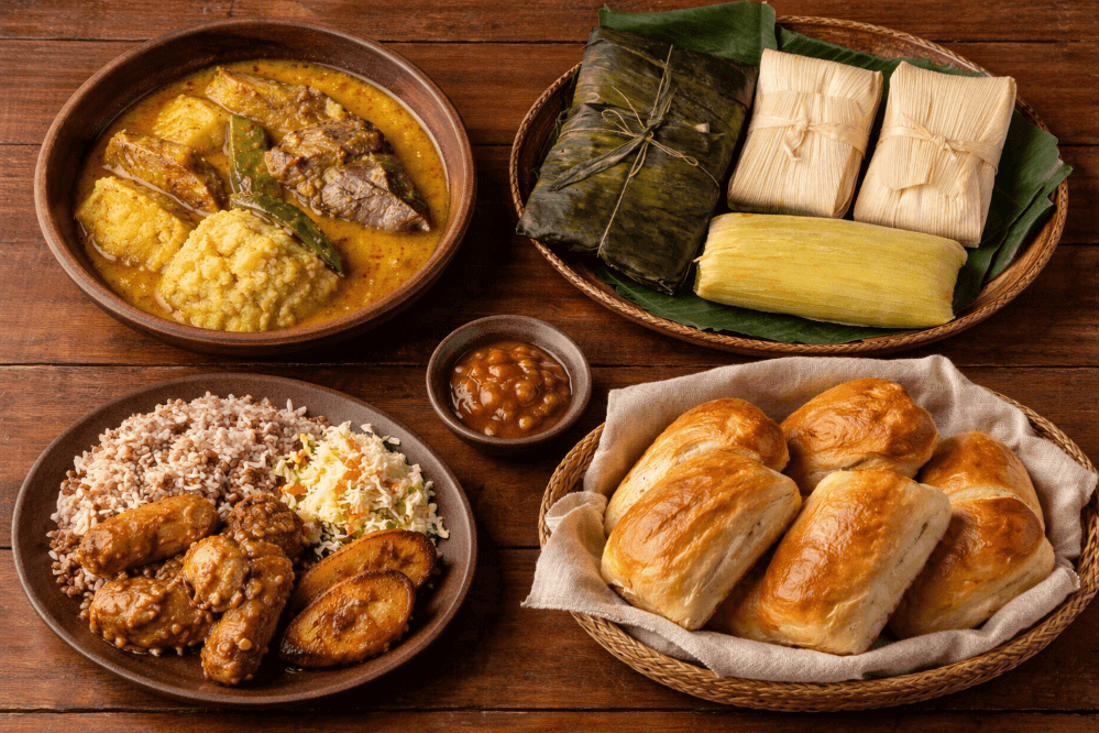
Hudut (fish Seré)
A fragrant fish stew simmered in coconut milk, garlic, and chili, served over mashed green plantains (fufu). Traditionally eaten during Dugu ceremonies to honor ancestors. Hudut isn’t just food — it’s prayer.
Cassava bread
Made from grated cassava root, dried into flat, crispy rounds. No salt, no yeast — just sun and fire. Served with everything, especially fish. UNESCO recognizes Garifuna food as Intangible Cultural Heritage.
Maya cuisine: Food from the Sacred Forest
The Maya have lived in Belize for over 3,000 years. Their cuisine honors the “Three Sisters”: corn, beans, squash — plus wild greens, game, and cacao.
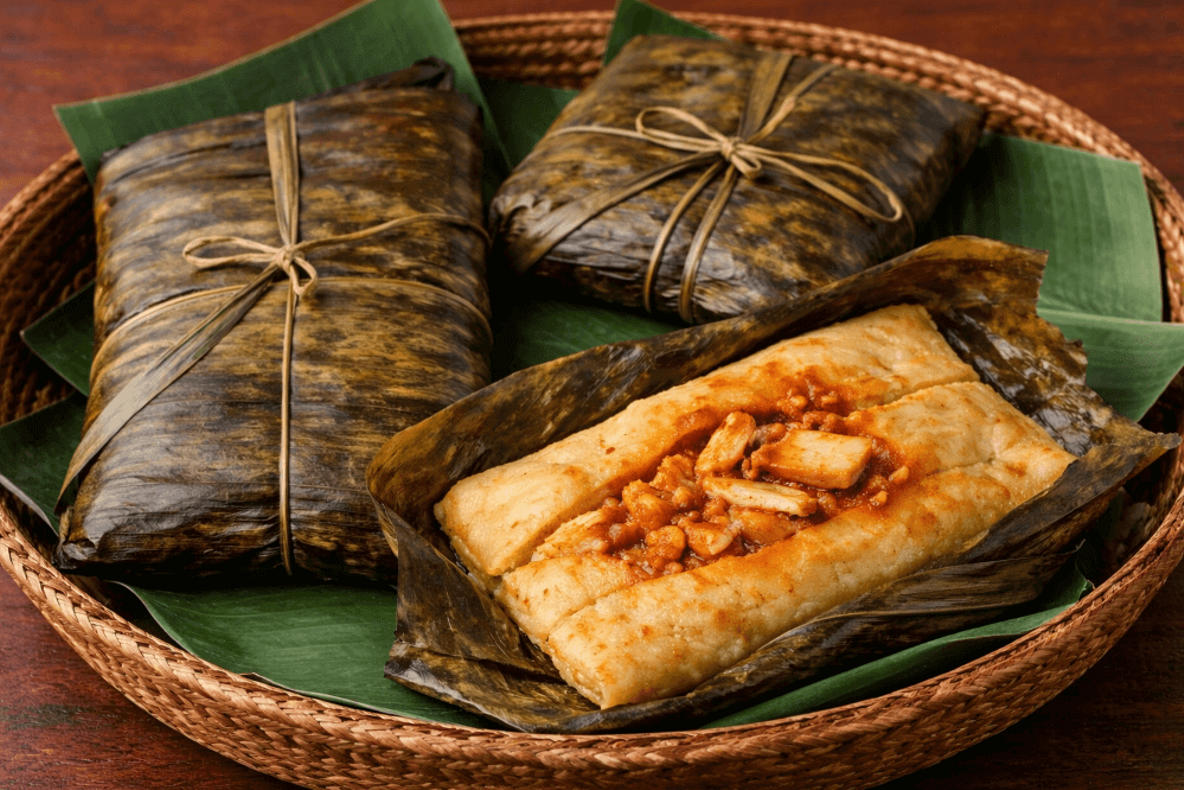
Bol (Tamales)
Not like Mexican tamales. Belizean Maya tamales are larger, wrapped in banana leaves, and filled with chicken, pumpkin, or black beans. Steamed for hours, they’re served at weddings and harvest festivals.
Choco (Cacao drink)
Unsweetened, spiced cacao drink — bitter, frothy, and ceremonial. The Maya believed cacao was a gift from the gods. Today, it’s still prepared for Day of the Dead and planting rituals.
Creole & Mestizo dishes: Everyday comfort
In towns like Belize City and Orange Walk, Creole and Mestizo food dominates daily life.
- Rice and Beans – Cooked in coconut milk with red kidney beans, served with stewed chicken or pork. National dish.
- Panades – Fried corn masa pockets stuffed with fish or beans — street food staple.
- Escabeche – Onion-heavy soup with chicken or turkey, spiked with vinegar. Perfect for rainy days.
Is traditional food in Belize vegan or vegetarian friendly?
Yes — with local knowledge:
- Maya tamales can be made with beans or squash (ask for “sin pollo”)
- Rice and beans is often vegan (confirm no meat broth)
- Fresh coconut water, tropical fruits, and plantains are abundant
Avoid “stewed” dishes (usually contain meat). Say: “Soy vegetariano/a — ¿tiene caldo de carne?” (“I’m vegetarian — does it have meat broth?”)
Where to experience authentic traditional food in Belize
- Dangriga – Heart of Garifuna culture; try hudut at local homes during Garifuna Settlement Day (Nov 19).
- San Antonio, Cayo – Maya village with cooking workshops and cacao ceremonies.
- Belize City markets – Look for panades, salbutes, and fresh coconut bread.
Tip: Avoid resort buffets. Eat where locals eat — small shacks, family kitchens, church feasts.
Climate, culture, and the future of Belizean food
Belize faces challenges: imported processed foods, deforestation, and tourism-driven simplification. But communities fight back:
- Garifuna women’s co-ops selling cassava bread online
- Maya farmers reviving heirloom corn varieties
- Schools teaching traditional cooking to youth
Traditional food in Belize isn’t frozen in time — it’s evolving with pride.
Final thoughts: More thanjust “rice and beans”
To taste traditional food in Belize is to experience a living mosaic of cultures that refused to disappear. Every tamal, every bowl of hudut, every sip of choco carries centuries of memory. For travelers, eating here isn’t consumption — it’s connection.
Explore more Americas travel guides for culturally rich, sustainable journeys across North and Central America.
Frequently Asked Questions
What is the national dish of Belize?
Rice and beans with stewed chicken — but Garifuna hudut and Maya tamales are equally iconic.
Is traditional food in Belize spicy?
Mildly. Heat comes from habanero pepper (cocorite), served on the side so you control the spice.
Can vegetarians eat traditional food in Belize?
Yes — focus on Maya tamales (bean-filled), rice and beans (confirm vegan), and fresh fruit.
Where is the best place to try Garifuna food?
Dangriga, Hopkins, and Punta Gorda — especially during Garifuna Settlement Day (November 19).